If the tidal wave of leaks leading up to Apple’s ‘Pro and Tell’ event this week are accurate, we are days away from the biggest paradigm shift in Mac history: the OLED touchscreen MacBook Pro.
For a decade, the Cupertino crew swore they would never put a touchscreen on a Mac. They told us the ergonomics were wrong. They told us to buy an iPad. But the PC industry moved on, OLED got cheaper, and now Apple is finally caving.
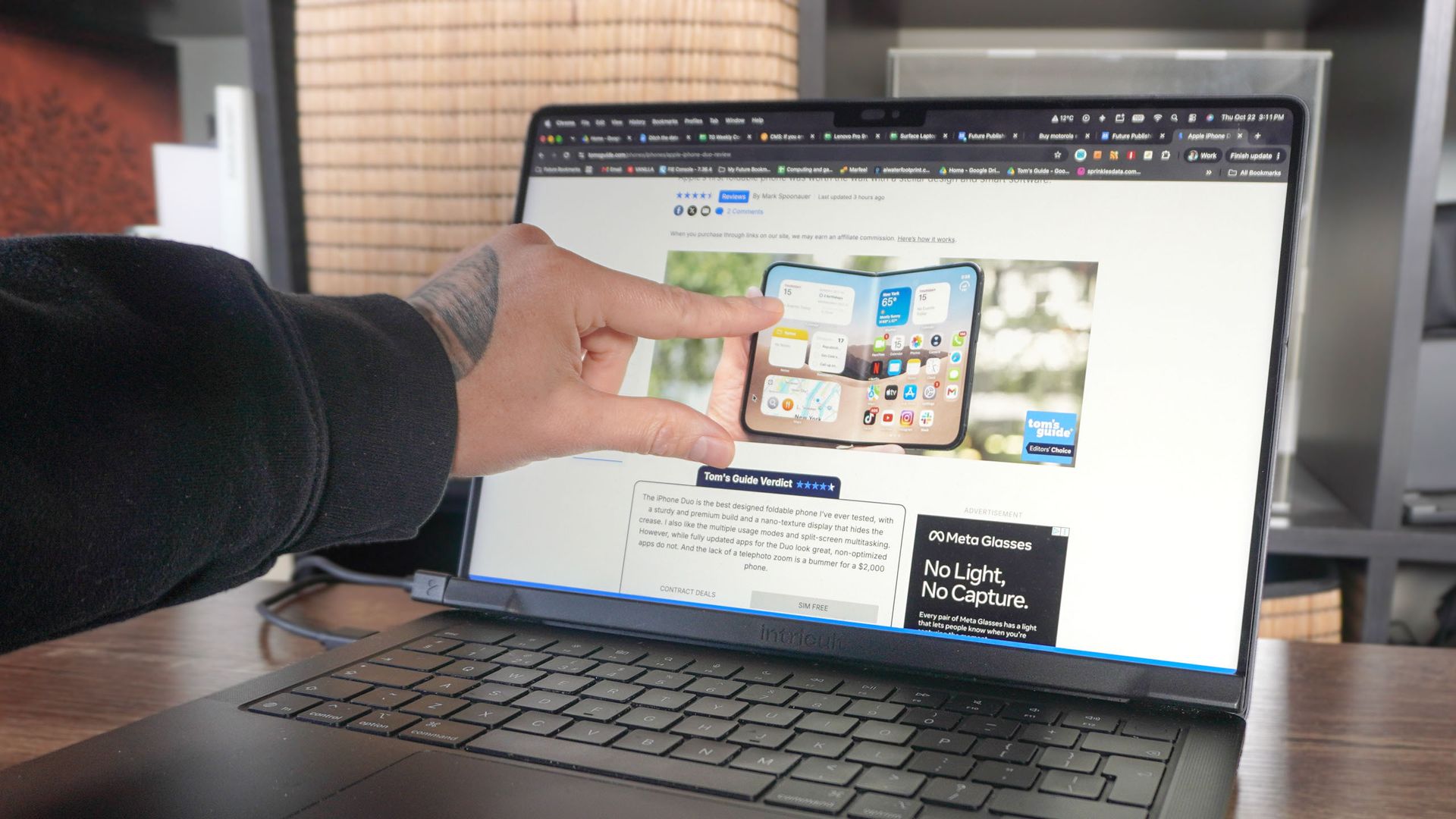
But throwing a touch panel on a laptop is only half the battle; the operating system actually has to know what to do with your fingers. Rather than wait for Apple to take my money, I got impatient. Now with macOS2 27 installed, I went back and hooked the Intricuit Magic Screen touch layer to my current M5 MacBook Pro.
And after aggressively poking my display to see what a touch-first Mac actually feels like, it’s clear that macOS in its current form is suffering an identity crisis. Apple has a lot of software duct tape to apply before next week.
The first 10 minutes of poking my MacBook Pro felt so familiar to other touch-enabled laptops like the Surface Laptop Ultra I just reviewed. Scrolling through articles with a flick of the wrist, pinching to zoom and tapping to pause on YouTube videos feels instantly natural.
Right now, macOS treats your finger exactly like a mouse cursor. There seems to be no native touch intelligence layer bridging the gap between your physical digit and the digital UI.
Source link