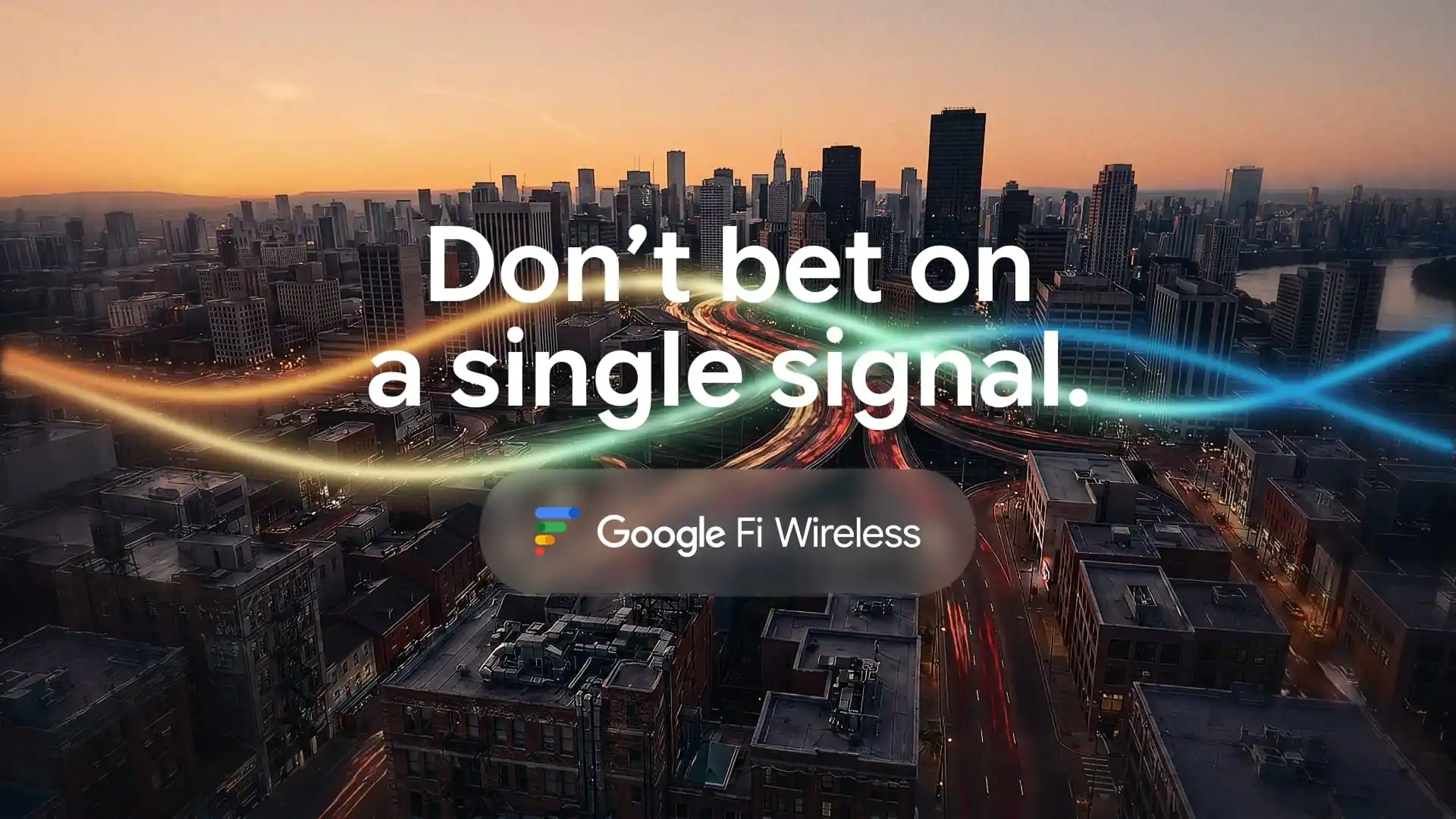
Google Fi Wireless is rolling out a big update today with the return of network switching thanks to a “secondary” partner.
At the beginning, Project Fi was known for giving subscribers access to both T-Mobile and Sprint networks. Over time, the second partner went away, leaving one predominant network.
Google Fi is now bringing back a second partner as part of its new “super network.” Most users will be on the “Primary network,” but Google Fi will automatically switch users to the “Secondary network” if it meaningfully improves performance with so-called “smart thresholds” for doing so. At launch, there is no manual switching.
Google is not naming the second network today, but did share that Ultra Wideband is supported. Officially, you are switching between “two of America’s fastest 5G networks.”
Fi Wireless does note that users have top priority, so data is never deprioritized on the Primary network. Meanwhile, there’s “highest QCI priority” on the backup network that means subscribers are among the last to be slowed down when there’s congestion. This is also available internationally when local partner networks are available with the Flexible and Unlimited Premium plans.
Network switching will first be supported on Pixel 9 and newer devices that have a Google Fi eSIM (and no other SIM active). It makes use of Android’s Multiple Enabled Profiles (MEP) eSIM technology that allows for two carrier profiles on a single chip.
The Google Fi app gains a “Your super network” card in the Home tab that shows whether you’re connected to the Primary or Secondary network.
Source link