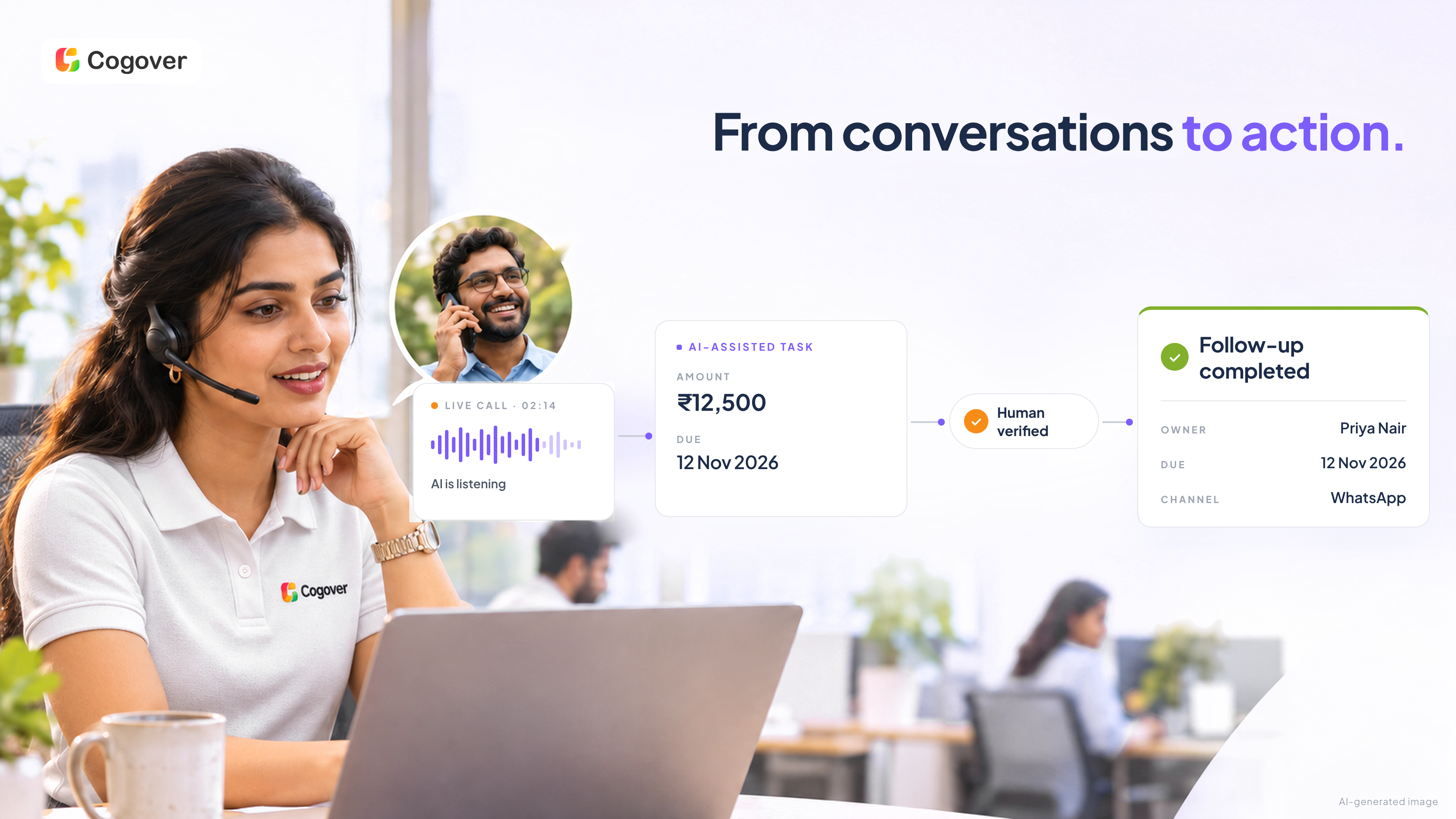
At 11 am, a borrower tells a collections agent they will make a payment on Friday. The conversation is recorded, the agent moves to the next call, and the account may be handled by someone else days later. When Friday arrives, does the team know what was promised, who owns the follow-up, and whether payment was received?
This is the problem Cogover calls ‘commitment leakage’: customer commitments that lose context, ownership, or follow-through as work moves between people and disconnected systems.
For Indian enterprises managing large volumes of calls, approvals and customer requests, the cost is not simply missed tasks. It is repeated conversations, delayed resolutions, and limited visibility into whether work actually gets done.
Most enterprises already have tools to store customer records, manage calls, and track tasks. The difficulty arises when employees must manually connect them.
In lending, a promise-to-pay may be recorded without a clear next action. In brokerage, a customer seeking help with KYC can wait while teams coordinate. In real estate, a promised site visit may never become a confirmed appointment.
Managers can see call volumes but may struggle to identify unresolved commitments. Employees piece together notes and messages, while customers repeat information they have already shared.
Cogover is addressing that operational gap with an Agentic Enterprise Platform that brings CRM, built-in calling, workflows, and AI agents into one environment. Its central proposition is straightforward: a customer interaction should lead to a visible, accountable next step.
An AI summary can save time, but it does not by itself assign an owner, approve an exception, or ensure a follow-up happens.
Source link