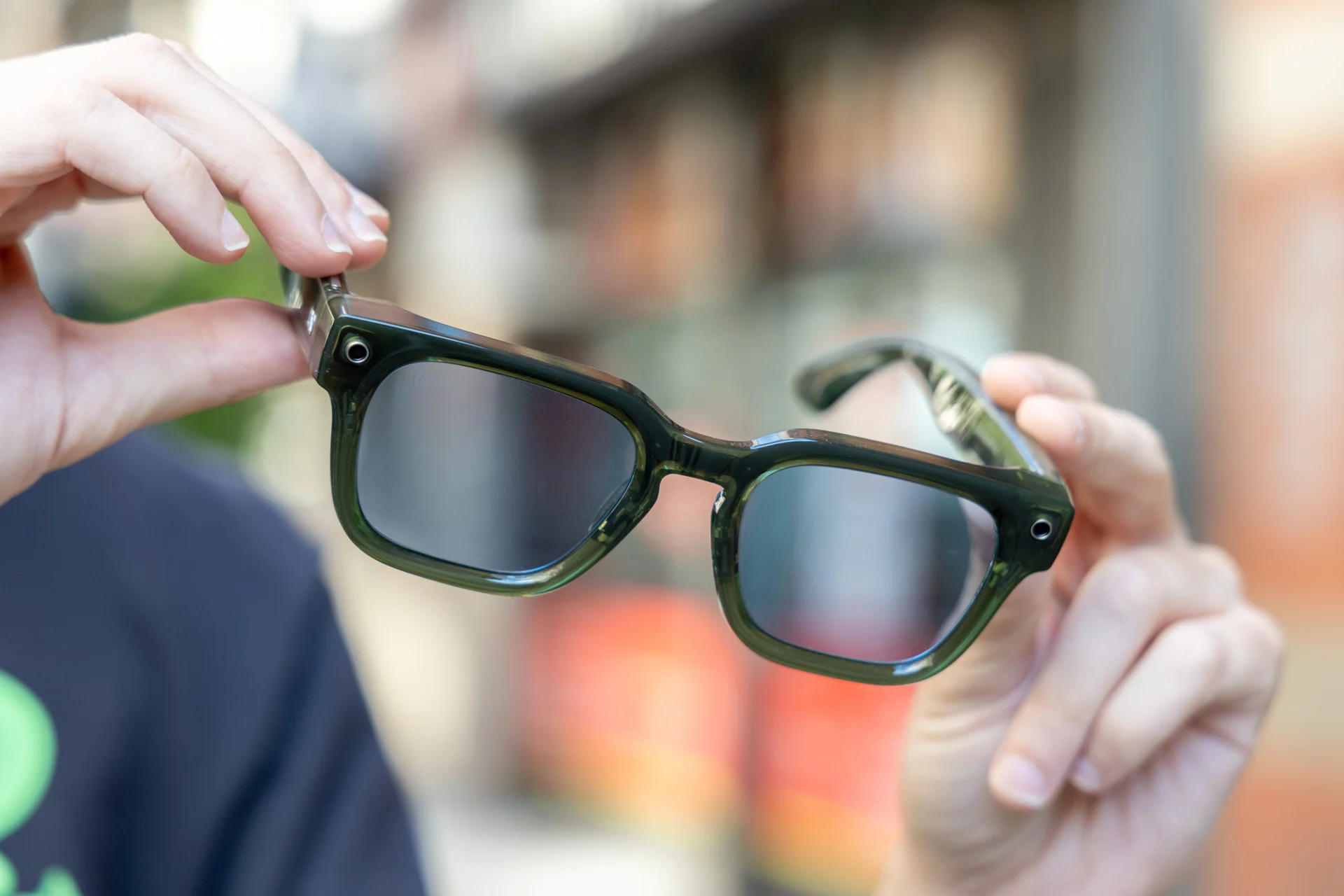
Suddenly, smart glasses are expanding into many new arenas. There are smart glasses for productivity, smart glasses for sports, smart glasses for people with hearing impairments, and loads of smart glasses for cheating on tests—I mean, uh… taking pictures and videos.
With that expansion, it only feels natural that smart glasses would also want to do something that loads of gadgets already do: track your health.
Like basically every other wearable out there, smart glasses are drifting towards health tracking, and the trend is becoming increasingly more sophisticated. While major players like Meta have already introduced health-monitoring features like nutrition tracking to their smart glasses, using their frames to monitor all of the food you shove into your mouth, newer entrants into the space are taking the idea a step further.
Take Alibaba, for example, which has its own line of Qwen AI glasses. These smart glasses do a lot of the same things that Meta’s do, but they also include extra sensors. On the Qwen N1 Pro, for example, there are sensors dedicated to monitoring several health metrics, including skin temperature, blood oxygen, and heart rate—a few of the core abilities of most health wearables like smart rings or smart watches.
Smart glasses aren’t just copying key features of other health wearables, though; they’re using the unique position on your face to expand into uncharted territory. The aforementioned Qwen N1 Pro, for example, leverages an eye-tracking module (a sub-2mm camera on the glasses) to keep tabs on your eyes.
Source link