A British uncrewed submarine has fired a U.S. Mk 48 heavyweight torpedo in a joint test that could help both countries develop armed underwater drones. The U.S. Navy and Royal Navy conducted the trial on September 13 at the British Underwater Test and Evaluation Center in Scotland.
It took place under Pillar 2 of the AUKUS partnership, which covers cooperation on advanced technologies, including autonomous systems. The launch was a proof of concept, with neither announcing an operational version of the system.
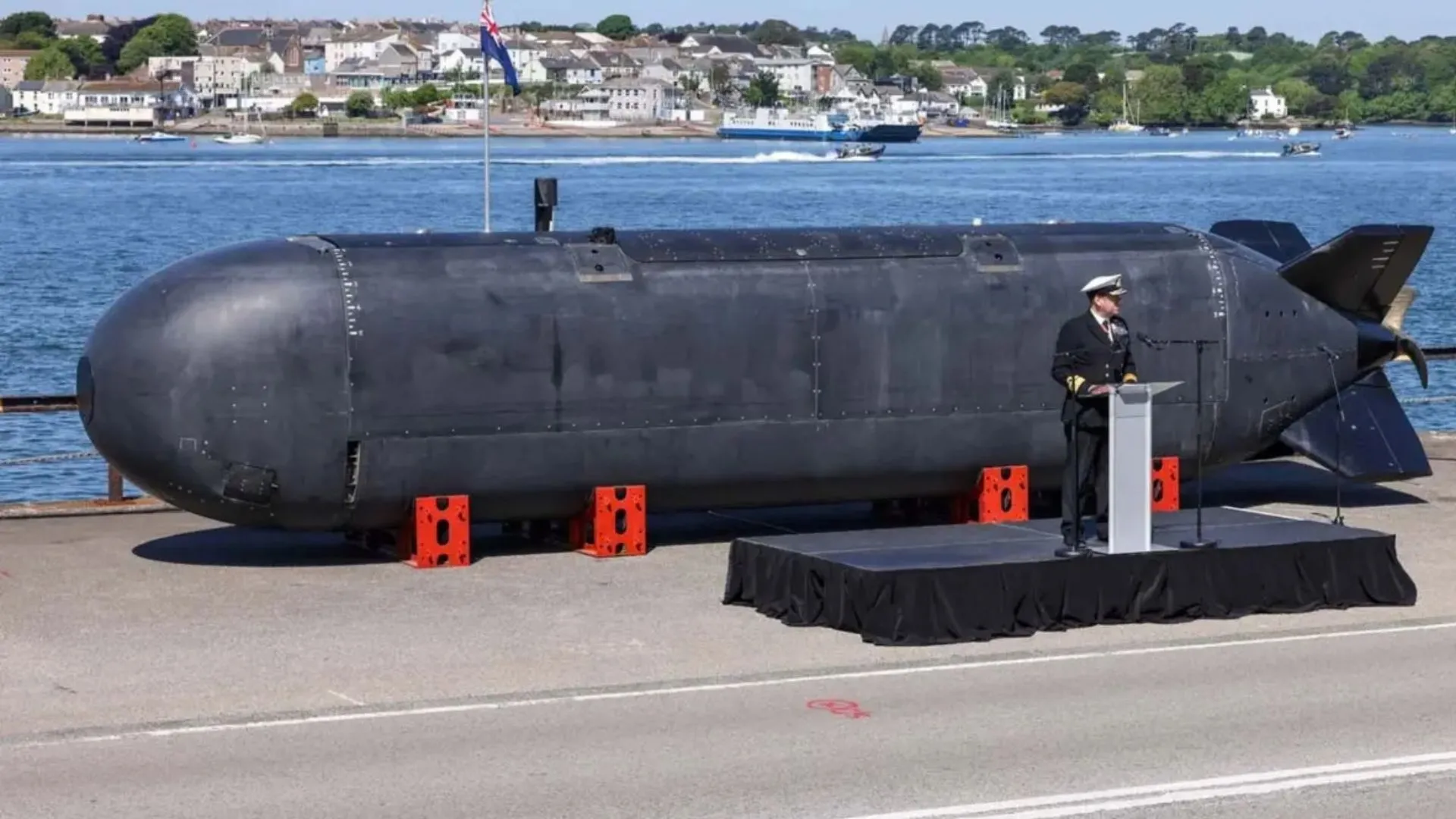
The test used Excalibur, a nearly 40-foot-long, 19-metric-ton uncrewed underwater vehicle developed for the Royal Navy under Project Cetus. A Mk 48 torpedo was mounted beneath its hull rather than placed in its internal payload bay. The weapon is about 19 feet long and 21 inches in diameter.
The external launch capability came from two additional efforts, Project Broadsword and Trial Iron. According to the U.S. Navy, the trial validated the mechanical, electrical, and software integration needed to launch an American weapon from a British autonomous vessel.
The project was approved in February 2026 and carried out in less than seven months. The navies have not disclosed how Excalibur was controlled during the trial or whether the torpedo was fired at a target.
“This successful test marks a historic first for allied undersea warfare,” said Adm. Daryl Caudle, the U.S. chief of naval operations.
He said launching an American heavyweight torpedo from a Royal Navy autonomous vehicle demonstrated the allies’ goal of weapon interchangeability.
For the Royal Navy, the trial also points toward a fleet in which crewed submarines operate alongside uncrewed vessels.