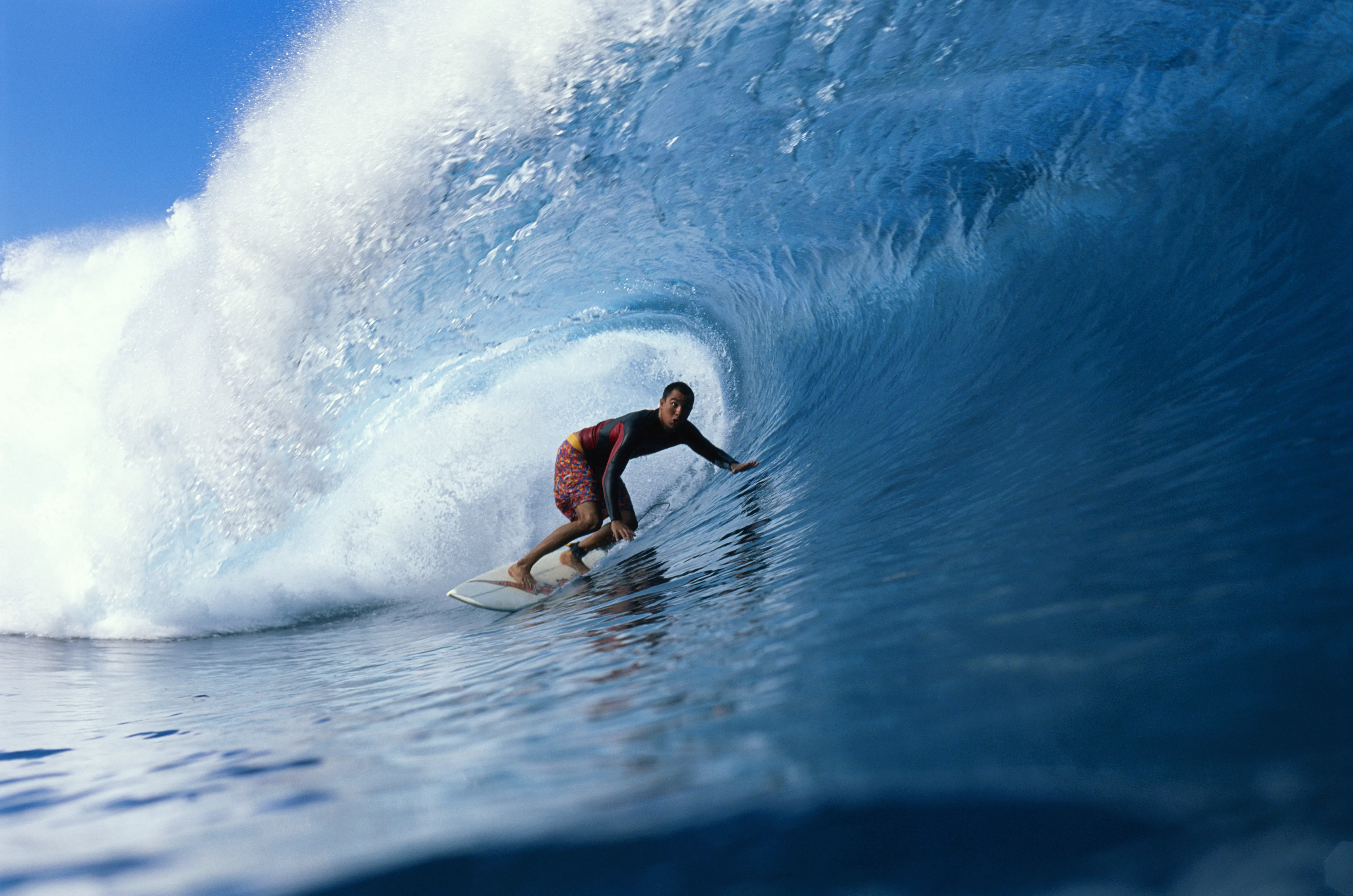
The climate crisis is coming for some of the world’s greatest surf breaks, submerging some as sea level rises and wiping out others as classic breaks get crushed against coastal developments.
Analysis of dozens of famous waves in World Surfing Reserves (WSR) found that more than three-quarters were at high risk because of changing tide levels, hardened shorelines, and shifting sands.
The impacts matter not only to the surfers catching the waves but also to the communities that depend on the multibillion-dollar surf economy, often located in places with little else.
The waves rated at most risk in the study include the “bombing barrels” of Croyde Beach in North Devon, UK; the point breaks at Noosa in Australia and Oriente Salvaje, El Salvador; and Santa Cruz reefs of California such as Sewer Peak and Wind and Sea.
The best surfing waves are created by intricate combinations of seafloor shape, swell direction, and tide. “Surf breaks are incredibly unique oceanographic phenomena—a confluence of all these factors that fit together just right to make the wave happen—and so those processes are really sensitive,” said Dan Reineman, an associate professor at California State University Channel Islands and a coauthor of the study.
Global heating is pushing up sea level and changing rainfall patterns that affect sediment movement, which can upset the delicate balance and destroy the wave. However, the researchers said the expert local knowledge of surfers could be tapped to help protect the waves.
Trent Hodges, a coauthor of the study and a senior programs manager at Save the Waves Coalition, which launched the WSR program in 2009, said: “Climate change will impact surf breaks all over the world in different ways, depending on their unique geographies .
Source link