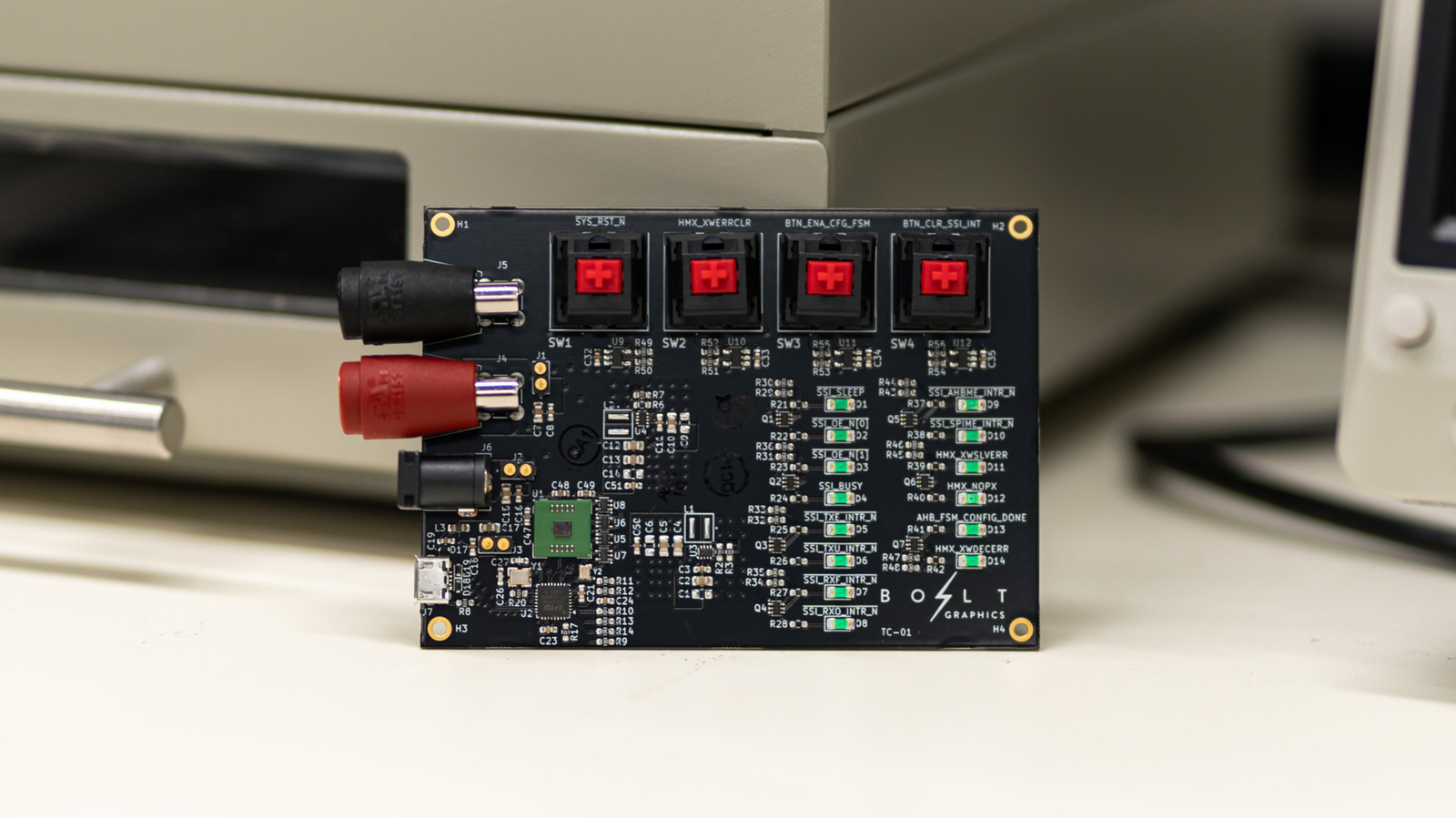
The test chip ran fine but Bolt's Zeus GPU is still a long way from shipping.
Bolt Graphics has powered on the first silicon for its Zeus GPU project, though the card it's building toward isn't expected to reach volume production until 2028. The California-based startup said in mid-October that its 12nm test chip, made by chipmaking giant TSMC, ran without issues when switched on. Bolt also said it had opened an office in Taipei to stay close to its manufacturing partners ahead of production. Two days later, Reuters reported that Bolt was trying to raise about $100 million at a valuation of around $700 million, citing three people familiar with the matter.
The test chip measures 6mm^2 and draws 1.4 watts, compared with the 35 watts used by the FPGA (a reprogrammable chip used for prototyping) that Bolt previously ran its design on. Its main feature is dedicated hardware for electromagnetic simulation, which helps design everything from radar sensors to camera lenses.
Bolt's CEO and founder Darwesh Singh told HPCwire that the chip shows Bolt can run "a highly complex physics algorithm, accelerated in hardware, which no one's done before." However, Bolt hasn't published any performance figures for the test chip, saying only that it beat the company's internal estimates. The Zeus GPU Bolt plans to debut is a completely separate chip that'll be made on TSMC's N5P process node. Bolt says it picked the 2020-era N5P process to avoid competing with other chipmakers for already limited wafer supplies.
Source link