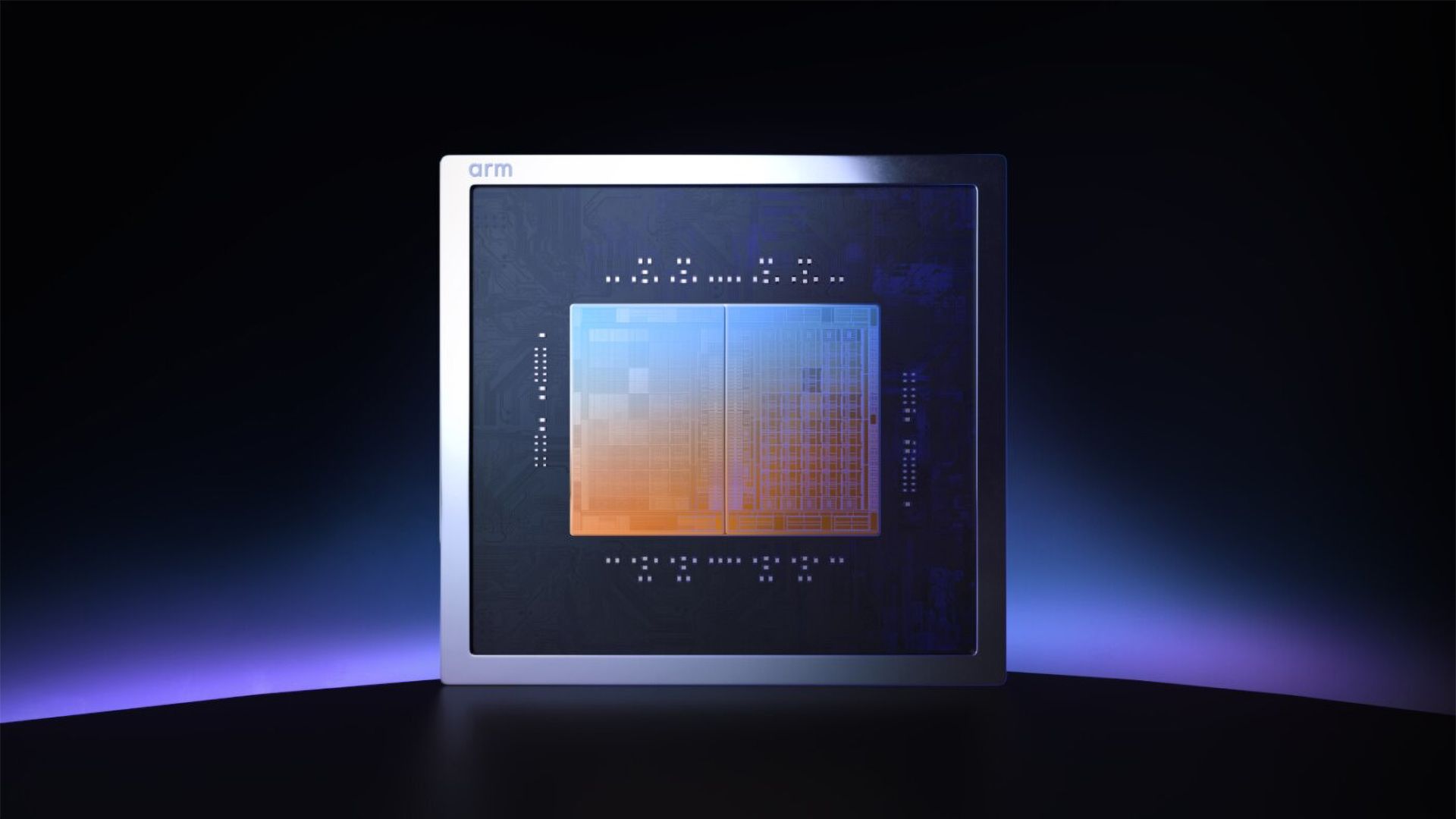
Arm announced last week that its AGI CPU, the company's data center CPU for agentic AI workloads, delivers twice the performance per rack as AMD EPYC 9755, calculated from chip performance and server-power assumptions measured across seven workloads. The claim stems from modeled rack results from tests aligned with Arm’s new CPU evaluation methodology, developed with support from Fujitsu, Meta, and OpenAI.
The results — verified in an Arm-commissioned independent analysis by Signal65 — do not establish the AGI CPU as the overall leader for agentic AI, as they apply to the selected processors, workloads, and configuration. They also use the specific Arm-developed evaluation methodology that Arm says should be the new standard for assessing performance. However, other chipmakers like AMD and Intel make performance claims based on different benchmarks. So, how is Agentic AI evolving CPU performance benchmarks, what does Arm propose to measure, and how do the different approaches compare?
Agentic AI is changing the role of CPUs in modern AI data centers, requiring them to handle complex, multi-step workflows. Beyond inference, which the accelerator handles, AI agents execute tools, retrieve data, and maintain state within isolated environments, acting like virtual users. The CPU handles these critical surrounding workloads, from running those tools and serving database or API requests to preparing data and coordinating work for accelerators.
As these workloads scale rapidly with agentic capabilities, it becomes increasingly important to gauge CPU performance not just by how many agents can run concurrently, but also by how much useful work gets done.
Source link