Life wasn’t easy for folks in the Bronze Age, but it seems to have been especially difficult for a particular man whose remains were discovered in Russia. His bones showed various fractures and cysts, pointing to a physically laborious lifestyle. But worst of all, he suffered from something many of us dread—kidney stones.
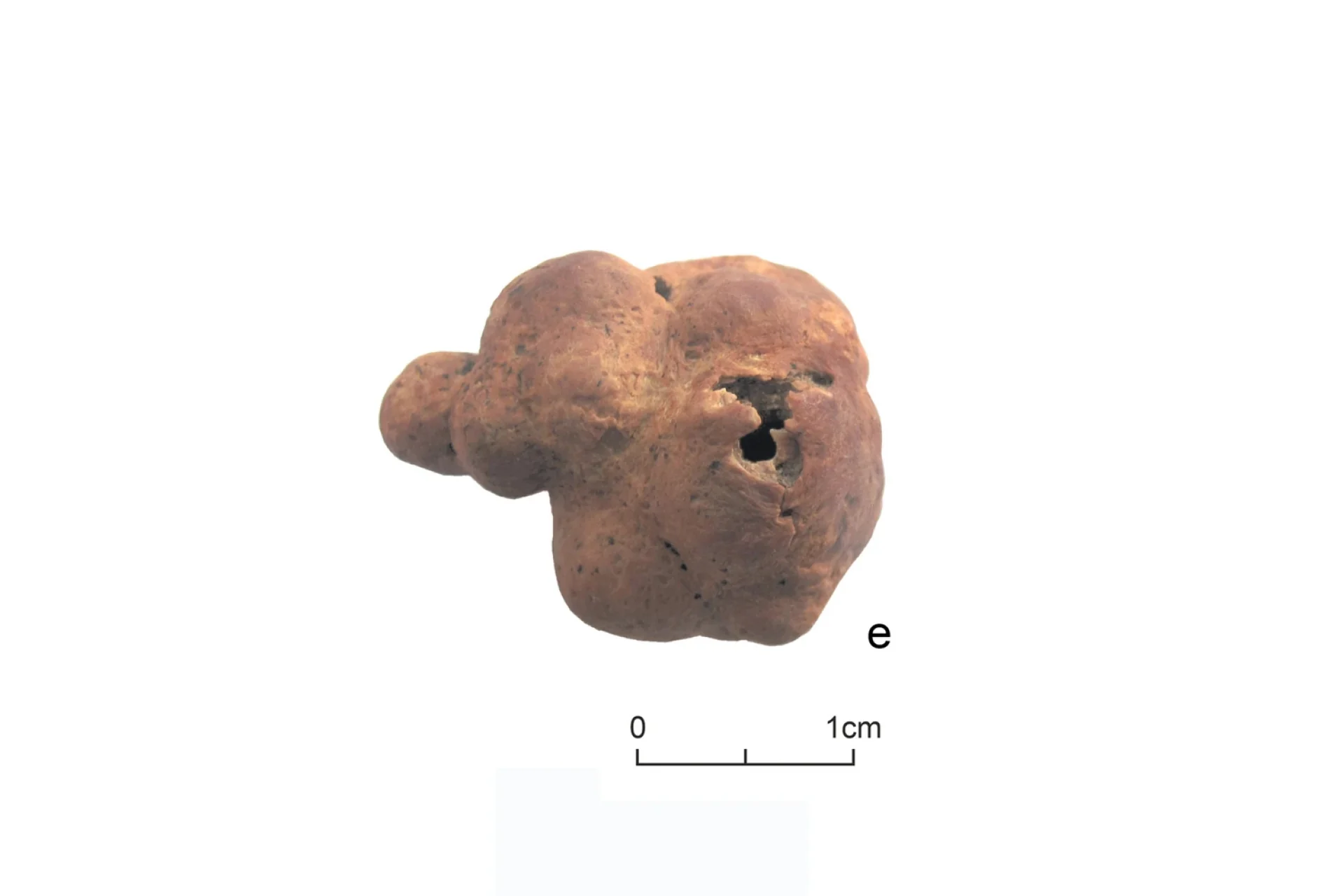
In a study published in Archaeological and Anthropological Sciences, archaeologists report the discovery of what they call a “urinary stone of infectious origin” belonging to a man buried at the Ipatovo-5 cemetery in Russia. Based on available evidence, the team believes the stone most likely comes from the upper urinary tract, which includes the kidneys and ureters. The stone measured around 0.8 by 0.7 inches (21 by 17 millimeters) and has a brownish color with a roundish shape and several protrusions. The man was probably 40 to 49 years old at the time of death, and the potential stone points to poor urogenital health that would have greatly affected his quality of life, according to the paper.
The man’s urogenital infection was “not a brief episode,” Natalia Berezina, the study’s first author and an anthropologist at Lomonosov Moscow State University in Russia, told Live Science. “His last years were probably marked by considerable and more or less constant pain.”
This is not the first time scientists have found what the team calls “calcified biological concretions” in prehistoric and ancient human remains. That said, these findings are still rare due to the fragile nature of these stones, which provide “exceptional opportunities to investigate ancient pathology and lifestyle” when they do pop up, according to the paper.
Source link