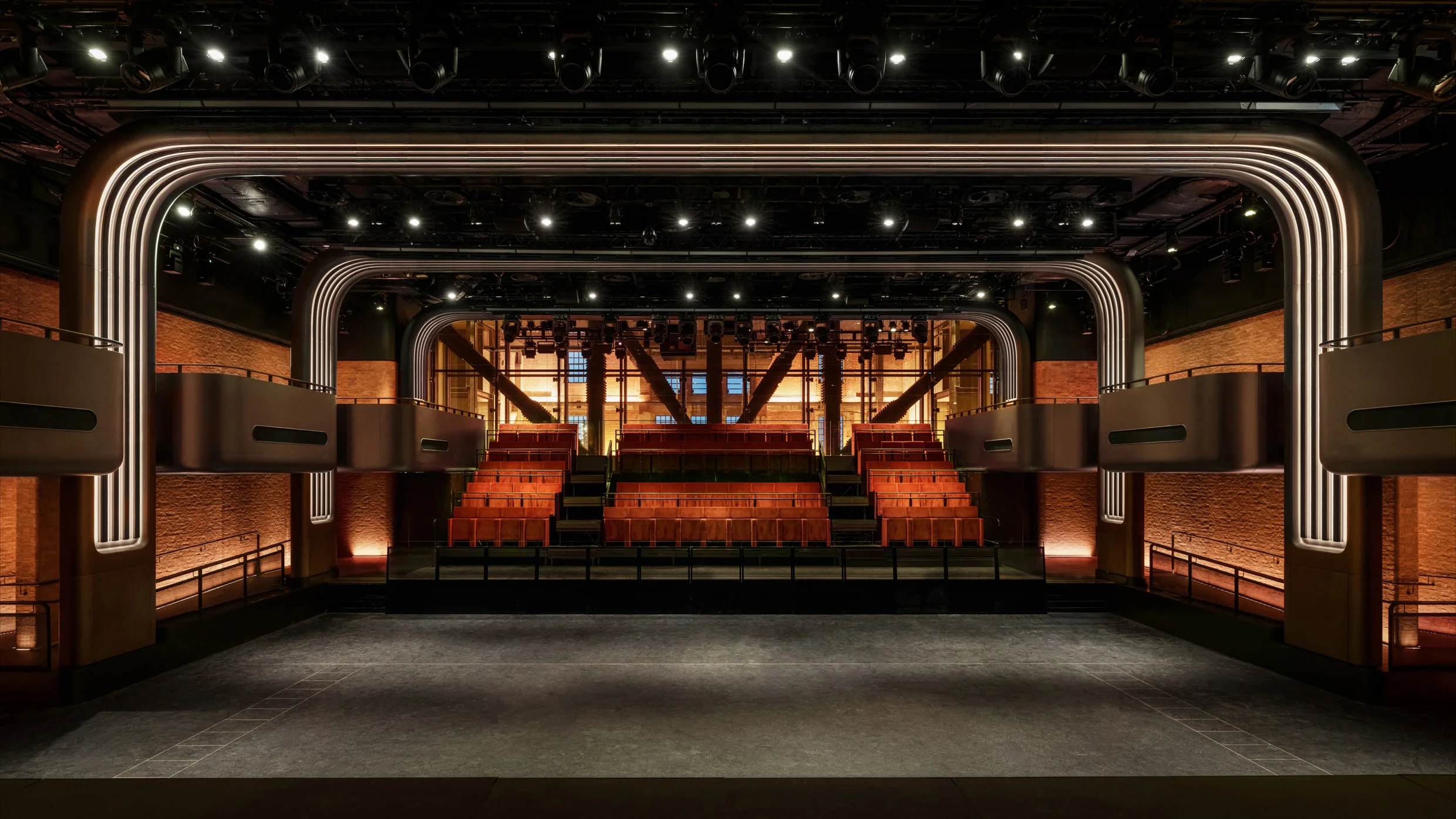
This is the question I’ve been asking myself since it inaugurated its Apple Music Hall, nestled underneath its U.K. headquarters at London’s Battersea Power Station, in late September. Not just any performance space, this intimate 600-person, 48-speaker hall features Apple’s Spatial Audio technology, which uses Dolby Atmos and dynamic head tracking to turn flat stereo sound into a three-dimensional, 360-degree experience.
To my eye, the Music Hall is not just another listening room. It’s the start of an elaborate world-building exercise for Apple Music, designed to engage a community of hardcore fans. In doing so, Apple is looking to increase streaming subscriptions, convert artists to recording on its technology, and eventually challenge everyone from Google Home to Sonos for ownership of our in-home sound delivery systems.
In just eight years since entering the TV market, Apple has shifted from startup streamer to a television mecca, delivering hit after hit including Severance, Slow Horses, Silo, Pluribus, Ted Lasso, and now Widow’s Bay. Astounding.
Meanwhile, in music it’s played second fiddle to Spotify, which not only boasts three times as many subscribers, but is first with innovative ideas like its Year End Review and the exclusive content serious listeners crave most. The Music Hall is Apple turning up the volume.
The risks here are real. 3% in 2026, the highways to hell have far outstripped the stairways to heaven. Samsung 837, the company’s former experiential space in New York City’s Meatpacking District, succeeded in attracting mothers with young children looking for rainy day distractions but few potential customers.
Source link