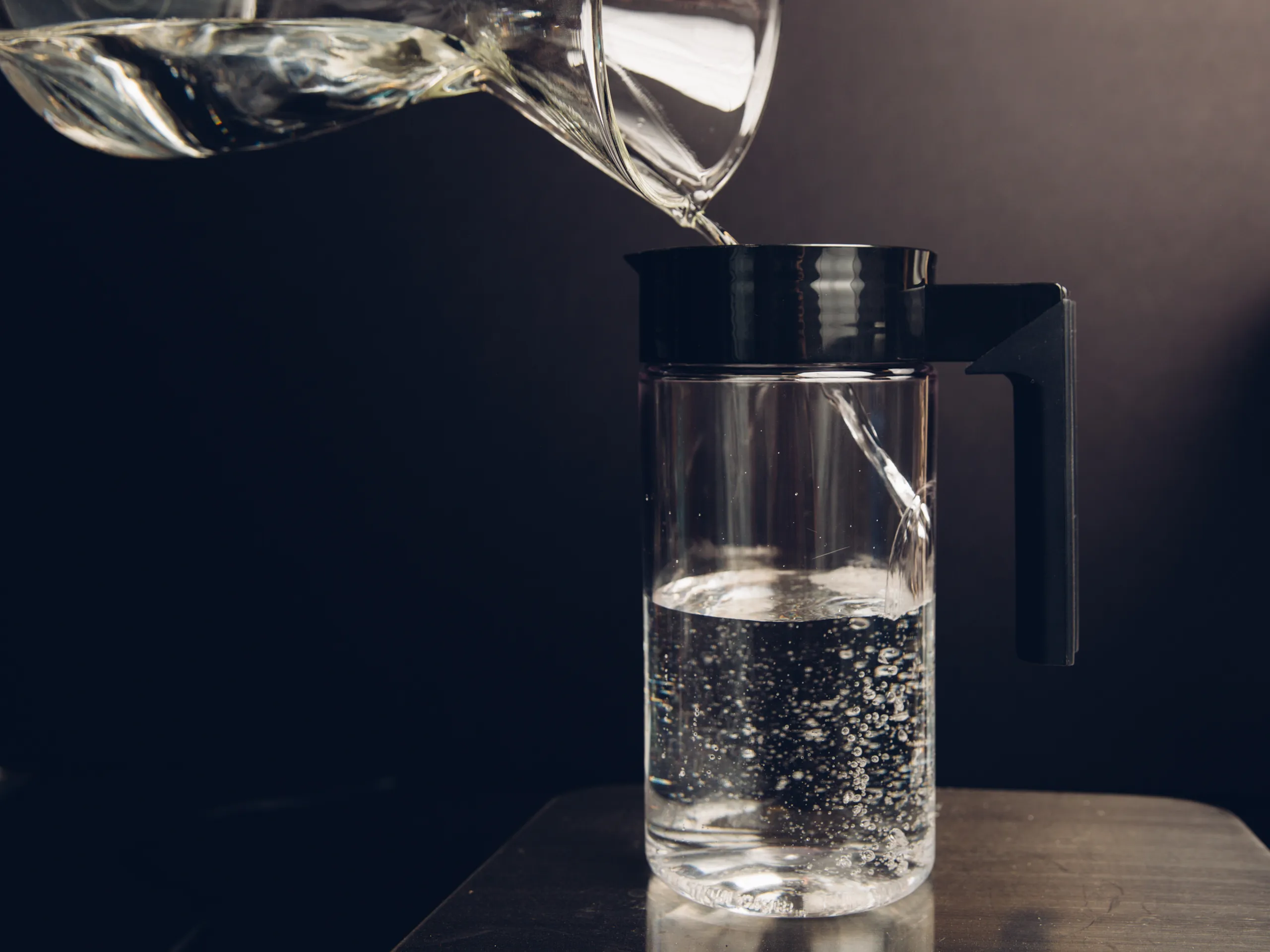
Coffee people don't mess around when it comes to water. Here's one of their top tricks for optimizing H20.
Depending on where you live and what comes out of your tap, you may need to do damage control with the water that goes into your coffee machine, kettle, or French press. Water quality can greatly affect coffee outcomes, both by preventing off-flavors and aromas and by providing the right mineral composition to interact with the coffee’s aroma and flavor compounds.
When I previously spoke with Jose Lepe, director of sourcing and quality control for Sightglass Coffee, about whether you might need to use filtered water for coffee, he pointed out that “water hardness is part of what is going to make your coffee taste right, so you need some of that minerality in coffee to help pull out the actual flavors.”
High-end coffee shops typically use a water system that relies on reverse osmosis, which distills local water into its purest H2O form, then remineralizes it for the perfect balance. Not every major coffee city relies on a system like this, but in places like Los Angeles, which (according to Lepe) has famously terrible water for coffee, this is definitely in play.
Believe it or not, you can re-create this exact process at home without any five-figure specialized equipment.
There are a few good reasons to tackle bespoke coffee water recipes. Consider the mineral composition of New York City tap water, often upheld as the liquid gold standard.
Source link