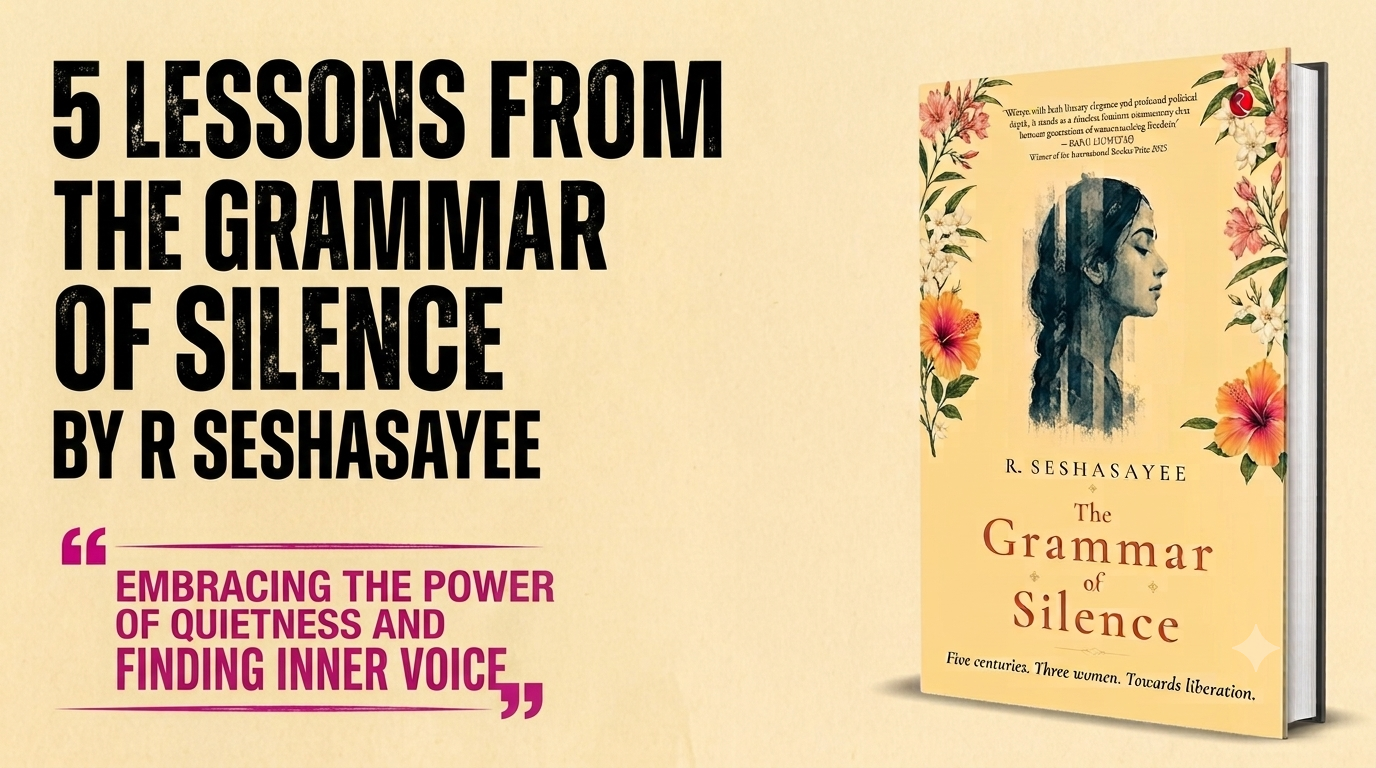
History is often told through the stories of kings, leaders, and revolutions. Yet some of the most remarkable acts of courage happen quietly, far from the spotlight. In The Grammar of Silence: Five Centuries.
Three Women. Towards Liberation, R. Seshasayee follows the lives of three women, Dharma, Vinodhini, and Mary Amelia, as they navigate the constraints of patriarchy, caste, and social expectations across different periods of Tamil history. Through their journeys, the novel explores resilience, agency, and the enduring pursuit of freedom.
One of the novel's most compelling ideas is that silence can sometimes be a form of strength rather than weakness. The women in the story often face situations where open rebellion is impossible, yet they find subtle ways to challenge the systems that seek to control them. Their quiet determination becomes a tool for survival and resistance.
The book encourages readers to rethink the assumption that power only exists in loud acts of defiance. Sometimes resilience is found in persistence, patience, and refusing to give up one's sense of self.
The protagonists come from different backgrounds and eras, but each demonstrates courage in her own way. Whether it is questioning restrictive traditions, seeking independence, or pursuing opportunities that society denies them, their actions show that bravery is not limited to dramatic gestures.
The novel reminds readers that courage often appears in everyday decisions: the choice to keep learning, keep hoping, and keep moving forward despite obstacles.
Throughout the story, caste, gender, and social status shape the lives of the characters.
Source link