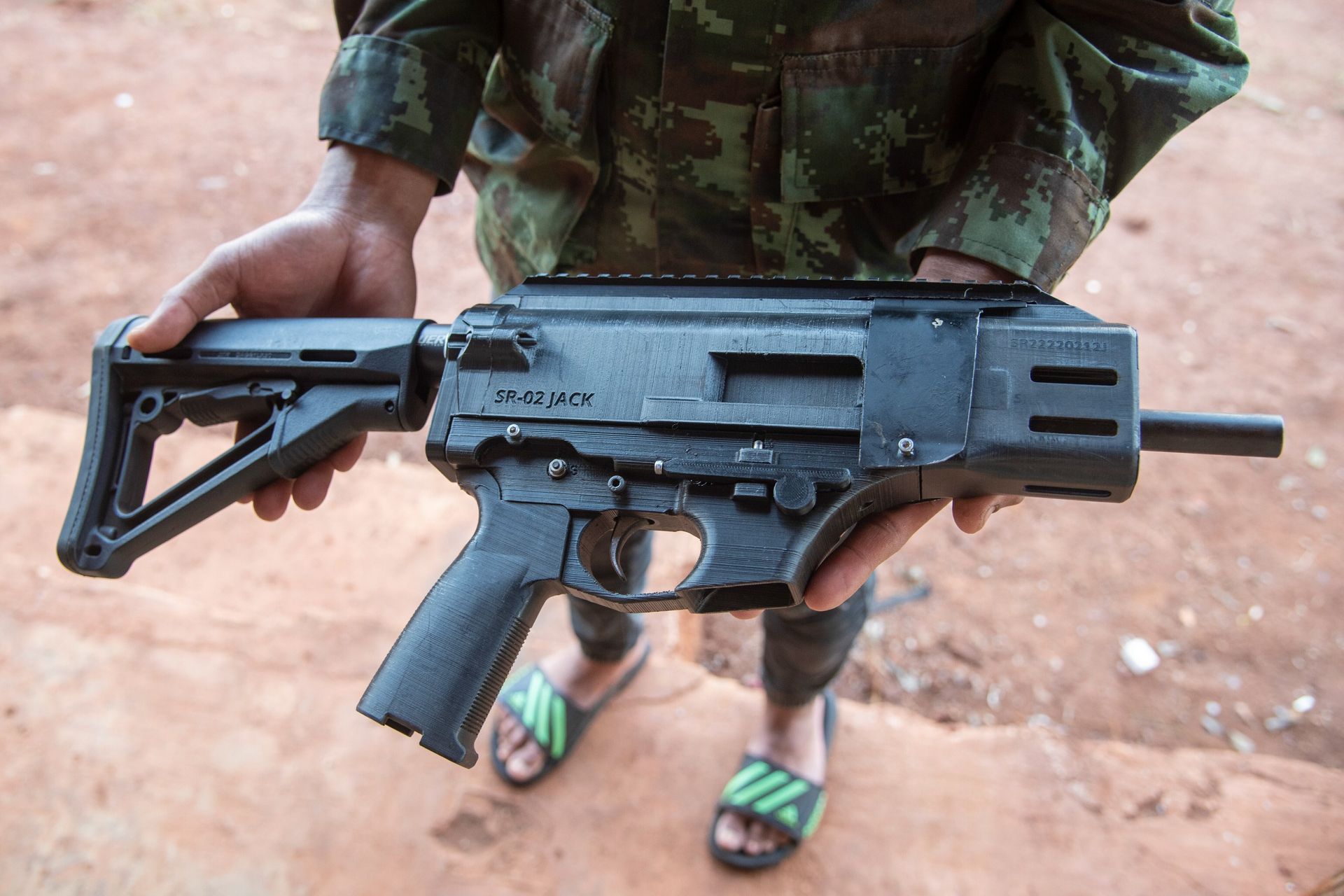
A study published on October 22 in the journal Forensic Science International reports that researchers from Curtin University in Perth, Australia, have developed a forensic method to analyze 3D-printed PLA parts and match them to their respective filament, correctly matching 26 out of 28 samples of PLA. This potentially provides a way to link seized 3D-printed “ghost-guns” with other seized filament, allowing police to form a clearer network for the manufacturing and distribution of the 3D-printed firearms.
3D-printed firearms have become a big problem worldwide, as they are untraceable and even compostable in the case of PLA, with tools like this AI 3D-printed gun generator making it scarily accessible. Serial numbers, registration, and a network of licensed distributors are usually the first line of investigation when it comes to crime involving firearms, but easily manufacturable, untraceable, disposable plastic firearms are a new threat with no clear way to crack down on them yet.
However, this research, by Dr. Georgina Sauzier et al. from Curtin University's School of Molecular and Life Sciences, along with forensics experts from ChemCentre, has devised a way to trace a printed object to a specific filament product, down to the brand and type.
The process of 3D printing changes the filament’s physical properties, and this change can be measured. In this research, differential scanning calorimetry (DSC) is used, a thermoanalytical technique that lets the sample go through a range of temperatures, and the instrument measures how heat flows through the sample. It measures how much energy or power is used to keep the sample at a certain temperature or to change its temperature, giving us a graph of its thermal properties.
Source link