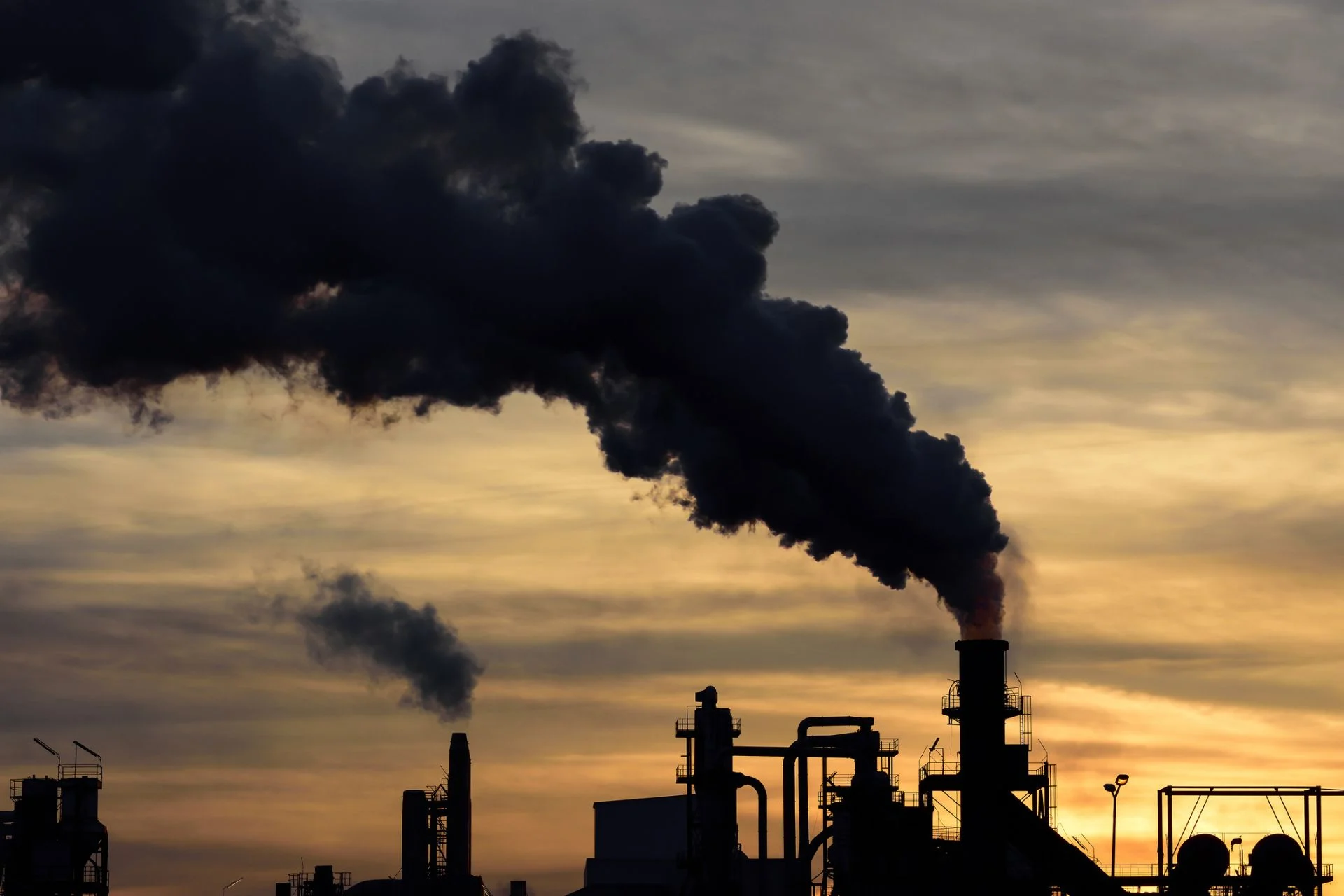
The vast majority of planet-warming emissions come from just 178 oil, gas, and cement companies known as the “carbon majors.” Even if these companies stopped emitting tomorrow, the carbon they’ve already spewed into the atmosphere will continue heating the planet for centuries to come.
That’s according to a study published today in the journal PLOS Climate. As Earth’s average temperature careens toward 2.7 degrees Fahrenheit (1.5 degrees Celsius) of warming above pre-industrial levels, the findings underscore the urgent need to cut emissions from the carbon majors as quickly as possible.
A whopping 50% of these emissions were produced after 1986, when the relationship between greenhouse gases and global warming was already well established. That is “unbelievable,” lead author Dargan Frierson, an associate professor of atmospheric and climate science at the University of Washington, told Gizmodo.
“That, to me, just shows that we didn’t have to go down this route,” Frierson said.
Unlike many other gases, carbon dioxide doesn’t simply break down once it enters the atmosphere. CO2 molecules tend to linger until they are absorbed by the ocean, plants, or soil. This explains why fossil fuel emissions are rapidly accumulating in the atmosphere; humans are releasing CO2 much faster than Earth’s natural systems can absorb it.
Numerous studies have estimated how much warming could result from future emissions scenarios, but it’s also important to consider the lasting warming effect of past emissions. To that end, Frierson and his colleagues modeled the global climate through 2500 under various emissions scenarios, then ran simulations with and without emissions from the carbon majors through 2024.
Source link