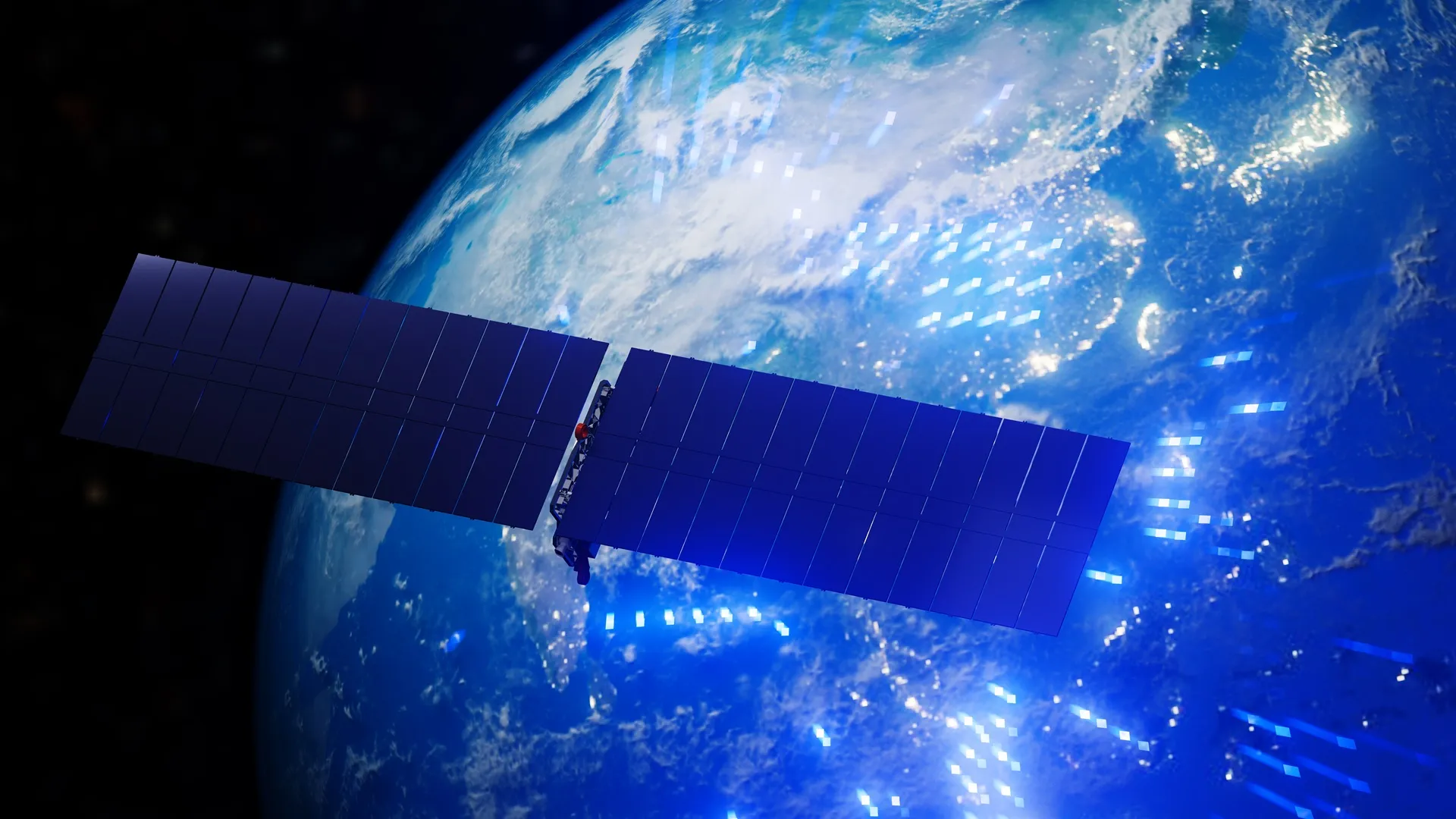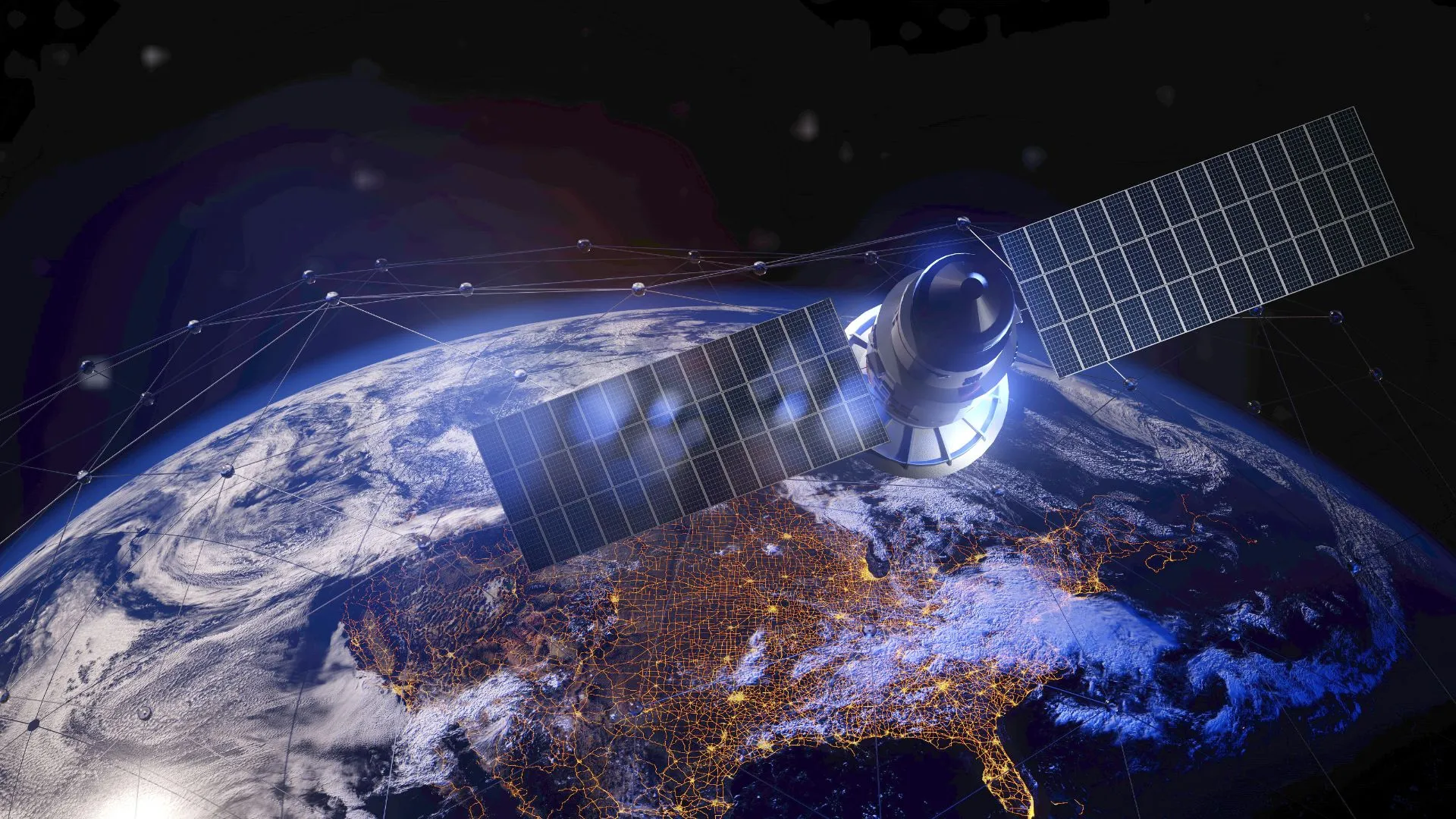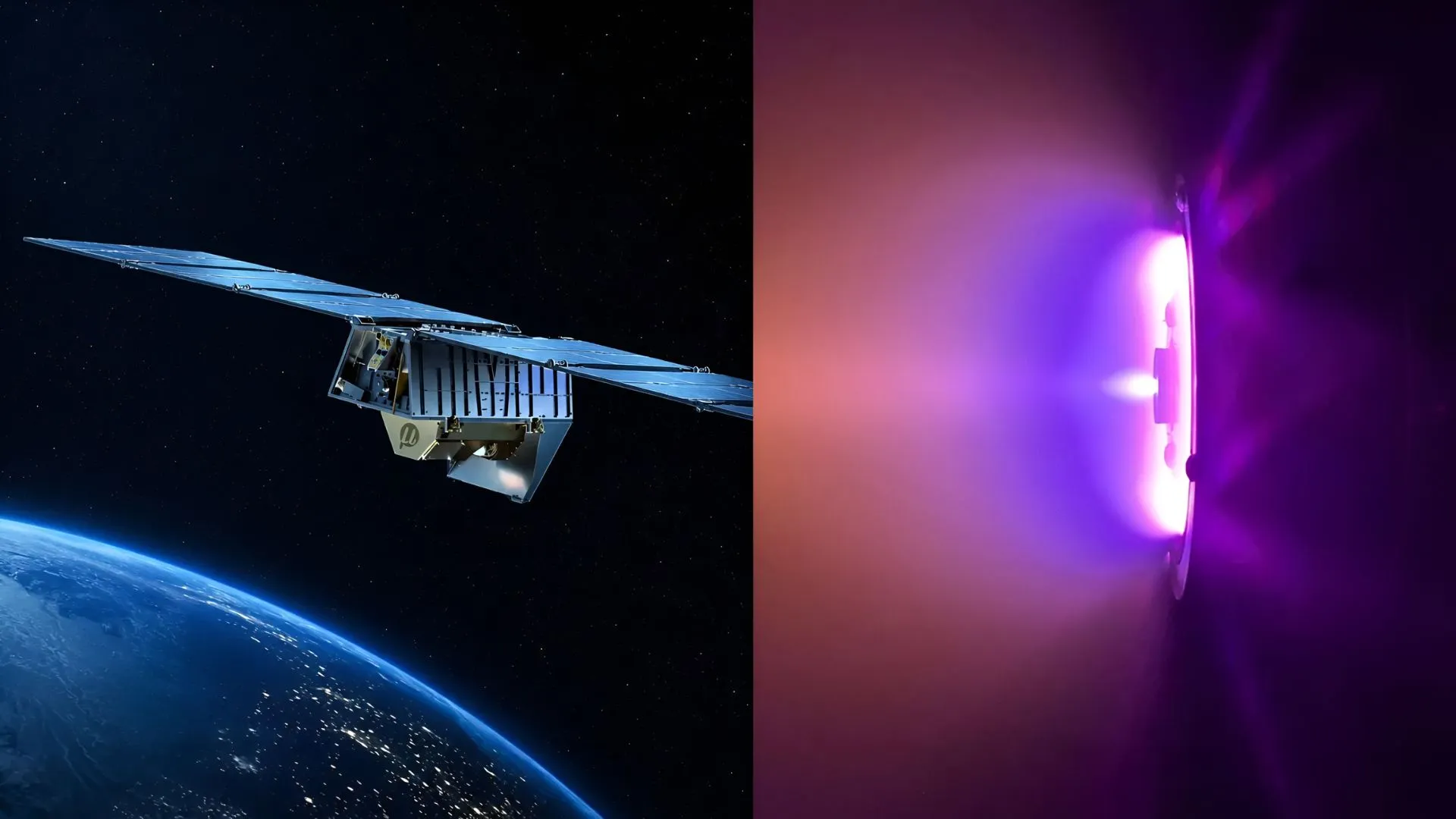
A satellite has fired a Hall-effect thruster fueled by solid zinc in orbit for the first time, giving spacecraft designers a new option for electric propulsion.
Muon Space completed the test on July 1 aboard SERT-III, a dedicated propulsion test spacecraft. The mission tested the company’s Starlight propulsion system under real orbital conditions.
The thruster fired successfully on its first attempt. Telemetry matched ground-test predictions, while orbital tracking detected a measurable change in the spacecraft’s trajectory.
Hall-effect thrusters have become a standard choice for efficient satellite propulsion. Most systems use xenon or krypton, which require high-pressure storage and add complexity to spacecraft designs.
Starlight takes a different approach. Its propellant comes as solid zinc, which remains stable at room temperature and does not need a pressurized tank.
That could simplify spacecraft integration and ground operations. Zinc also costs less than traditional noble-gas propellants and has a much broader supply base.
Those factors matter as satellite operators deploy larger constellations. Cutting propulsion hardware and propellant costs can become significant when the same system flies across dozens of spacecraft.
Muon says Starlight can support orbit raising, station keeping, and controlled deorbiting on small and medium-sized satellites.
The system also addresses a practical challenge that has followed electric propulsion for years. Satellite operators need efficient thrusters, but propulsion hardware must also fit tight spacecraft mass and integration constraints.
Muon designed SERT-III specifically to examine how the propulsion system behaves in space. The spacecraft carried sensors to measure performance, spacecraft interactions, and material deposited by the thruster plume.
Source link