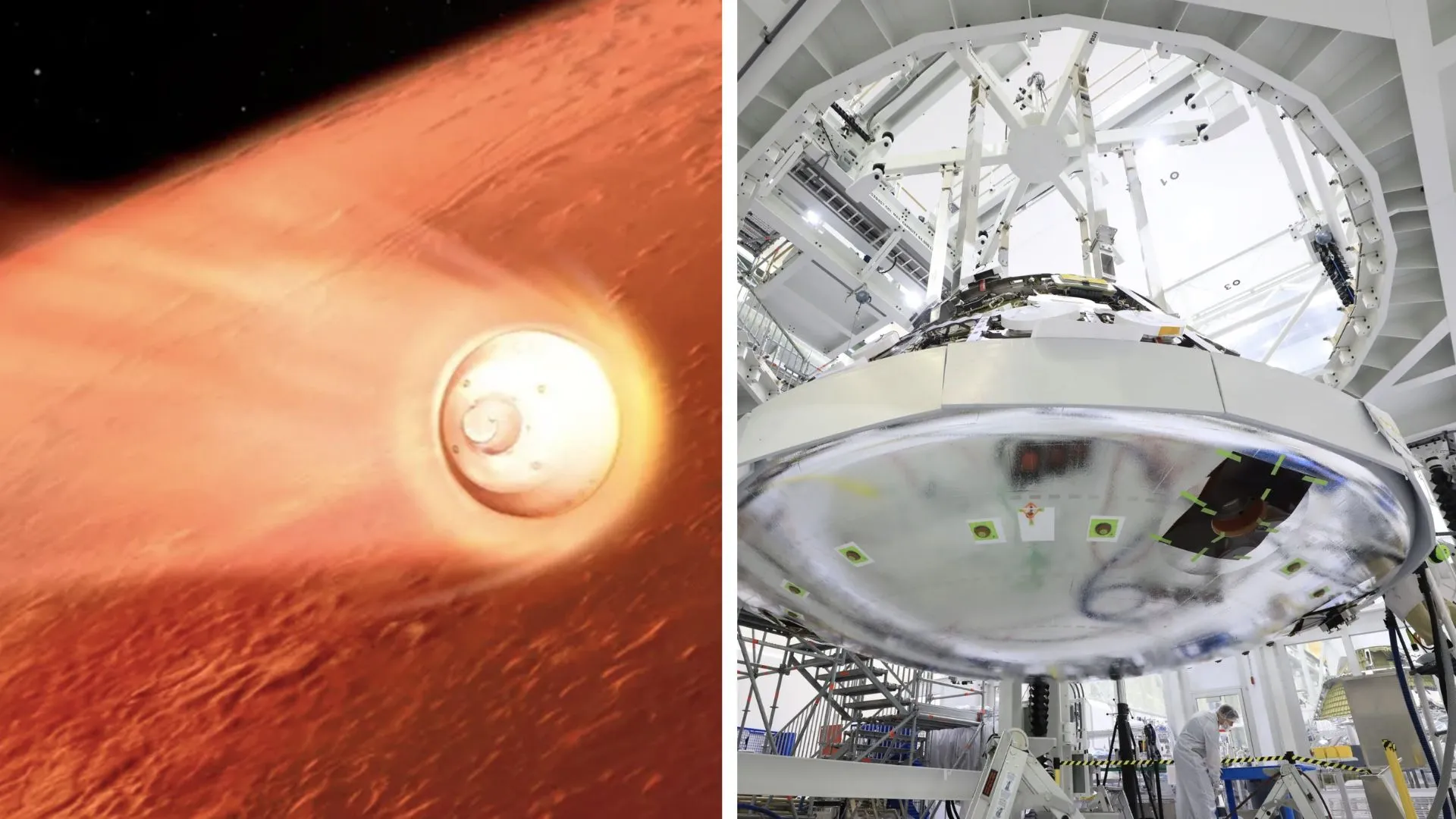
Researchers in the United States have got real-time look inside spacecraft heat shields during extreme heat conditions. Researchers at Advanced Light Source (ALS) used X-ray imaging and AI-powered analysis, which revealed how heat shield materials degrade microscopically during atmospheric reentry conditions.
Through a decade-long partnership between the ALS and NASA, researchers are studying how heat shield materials called superlight ablators degrade, informing NASA spacecraft design.
Now, the work at the ALS offered a new detailed picture of this hidden process, one that has meaningfully improved how engineers model and design heat shields for space missions such as the recent Artemis missions.
“Directly observing how heat shield materials degrade during heating with this technique has been transformative for atmospheric entry research since it gives us unique insights and helps us visualize the internal structural changes that drive ablation as it occurs,” said Vishnu Oruganti, who was a postdoctoral fellow at the University of Illinois Urbana-Champaign at the time of the study and is now a researcher at NASA’s Johnson Space Center in Houston. ” As part of a long-term collaboration with the ALS, a team of researchers from the University of Illinois Urbana-Champaign and NASA used in situ X-ray micro-computed tomography, known as micro-CT, to peer inside a class of heat shield materials called superlight ablators, the same kind used on the backshells of NASA spacecraft.
Source link