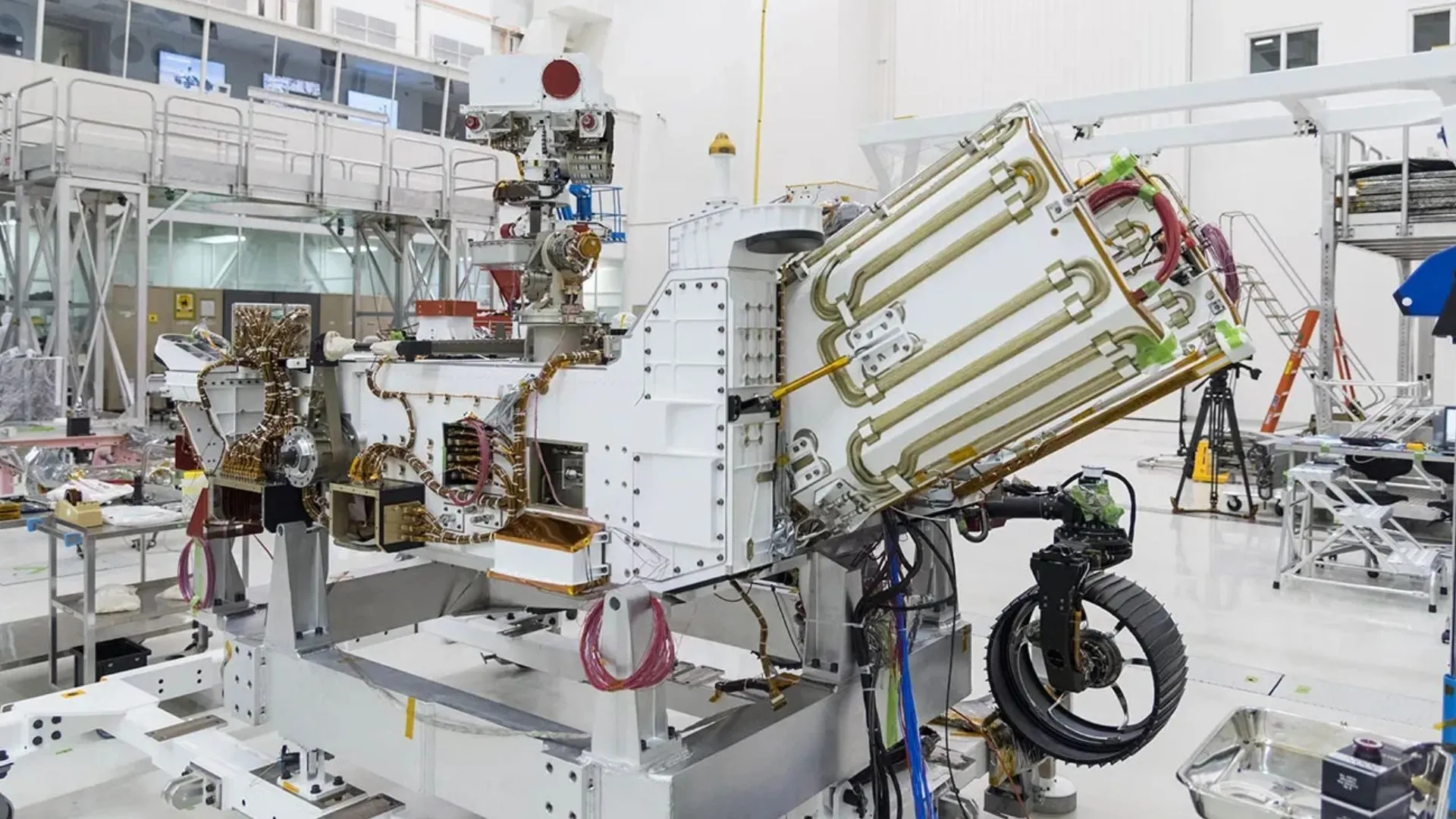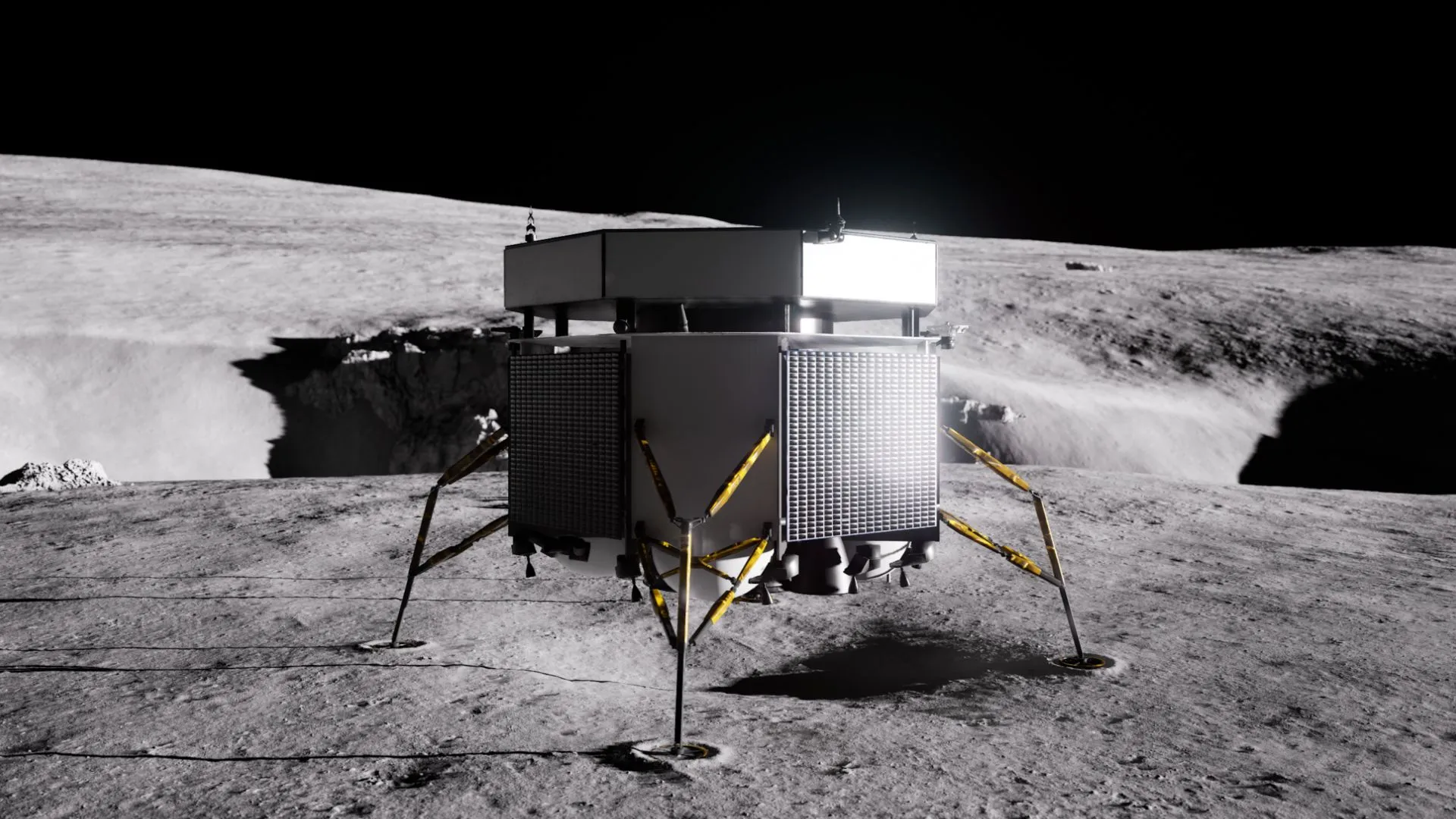
Spacecraft propulsion specialist Nammo UK has completed a prototype hot-fire test campaign for RELIANCE, the main descent engine designed to guide the European Space Agency’s (ESA) Argonaut lunar lander safely onto the Moon. The milestone validates a new deep-throttling, electric pump-fed propulsion architecture intended to give Europe autonomous access to the lunar surface by the end of the decade.
Soft-landing heavy cargo on an airless body requires precise, continuous thrust adjustments during the final descent phase so the spacecraft can hover, avoid surface hazards, and touch down gently.
During breadboard testing at Nammo UK’s facility at Westcott Venture Park in Buckinghamshire, the 6-kilonewton (kN) bi-propellant prototype demonstrated stable combustion across a 50 percent to 100 percent throttle range.
Announced at Space Tech Expo Europe in Bremen, Germany, and detailed in coverage by trade publication Aerospace Testing International and industry outlet SatNews, the test campaign marks what the manufacturer described as the first hot-fire demonstration of an electrically pump-fed, dual-propellant, regeneratively cooled in-space engine capable of deep throttling.
RELIANCE burns conventional hypergolic propellants, monomethylhydrazine (MMH), and mixed oxides of nitrogen (MON), which ignite spontaneously upon contact without requiring a separate ignition system.
To achieve smooth thrust modulation across its 50 percent operating band, engineers combined a variable-area pintle injector with electrically driven centrifugal pumps and an integrated digital engine controller.
Using electric pumps rather than heavier pressure-fed tanks or complex gas-generator turbopumps allows finer flow regulation while keeping propellant tank pressures lower and lighter.
The engine builds directly on flight heritage from Nammo UK’s LEROS thruster family, including the LEROS 1b main engine that propelled NASA’s Juno spacecraft into orbit around Jupiter and the LEROS 4 thruster that powered Firefly Aerospace’s commercial Blue Ghost lunar landing in March 2025.
Source link