This article has been reviewed according to Science X's editorial process and policies. Editors have highlighted the following attributes while ensuring the content's credibility:
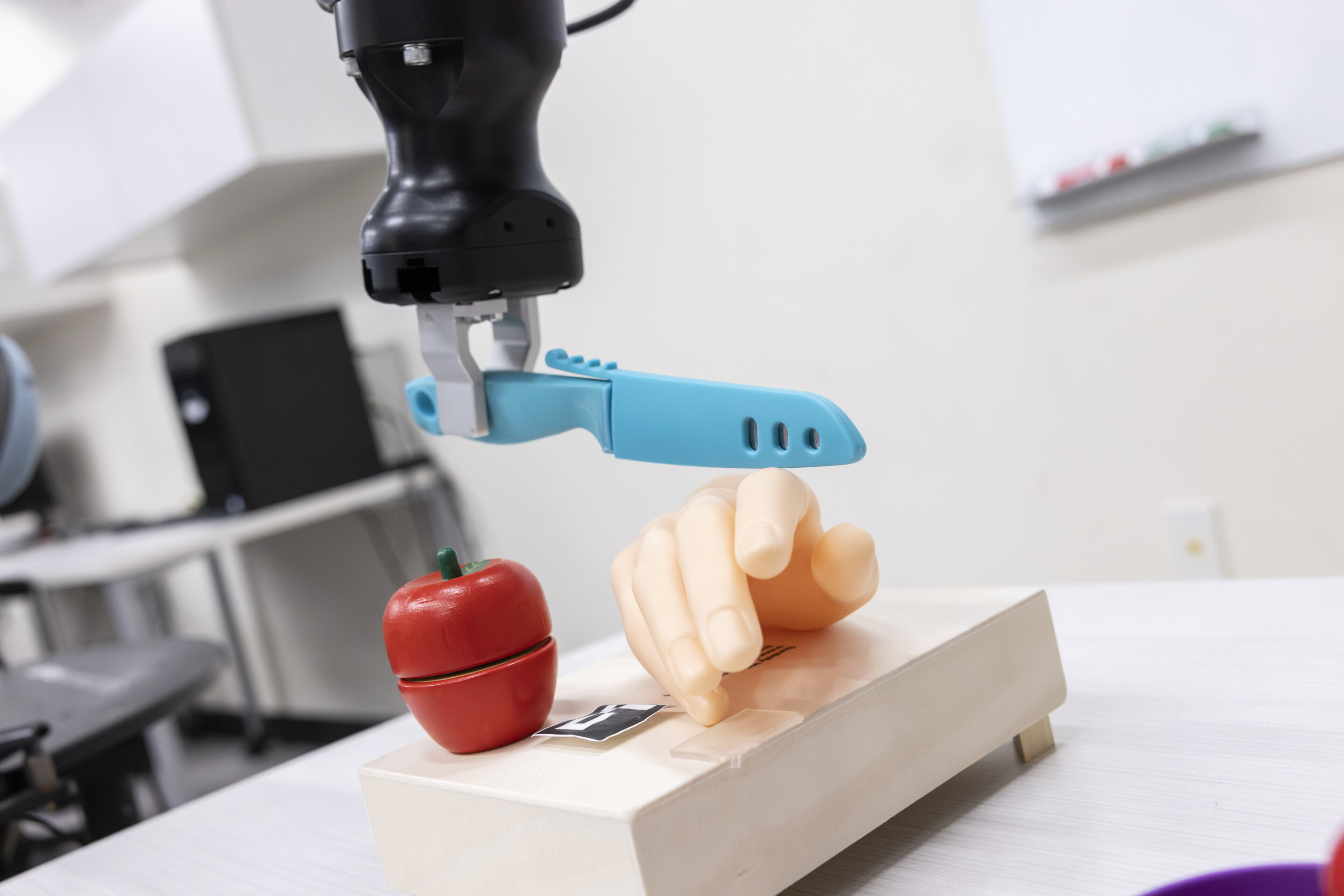
It's important for a robot not just to learn a task optimally, but to complete it without going off the rails of reasonable expectations. Until now, roboticists could have one or the other. Aerospace engineering researchers in The Grainger College of Engineering, University of Illinois Urbana-Champaign, combined reinforcement learning with control theory to guarantee robot stability and improve tracking performance by up to 15% compared with existing methods.
The study, "Contraction-Aware Reinforcement Learning for Nonlinear Control with Statistical Robustness," by Minjae Cho, Hiroyasu Tsukamoto and Huy T. Tran, is published in IEEE Transactions on Robotics.
"Reinforcement learning offers a promising way for robots to learn effective behavior, but it often lacks stability guarantees," said Ph.D. student Minjae Cho, whose advisers are Huy Tran and Hiro Tsukamoto.
"Without confidence that a robot will remain stable, deploying it in practice is difficult. In a worst-case scenario, it could break and require costly repairs. So, guaranteeing stability of the robot as well as ensuring it can learn effective behavior is the key idea of this project."
Reinforcement learning is like the hot/cold game you may have played as a child. One person knows where an object is in a room. When the other person, who is blindfolded, moves in a direction, the first says "hot" if they are getting closer to the object and "cold" if they're moving away from the object, providing real-time feedback until the person is successful.
Source link