This article has been reviewed according to Science X's editorial process and policies. Editors have highlighted the following attributes while ensuring the content's credibility:
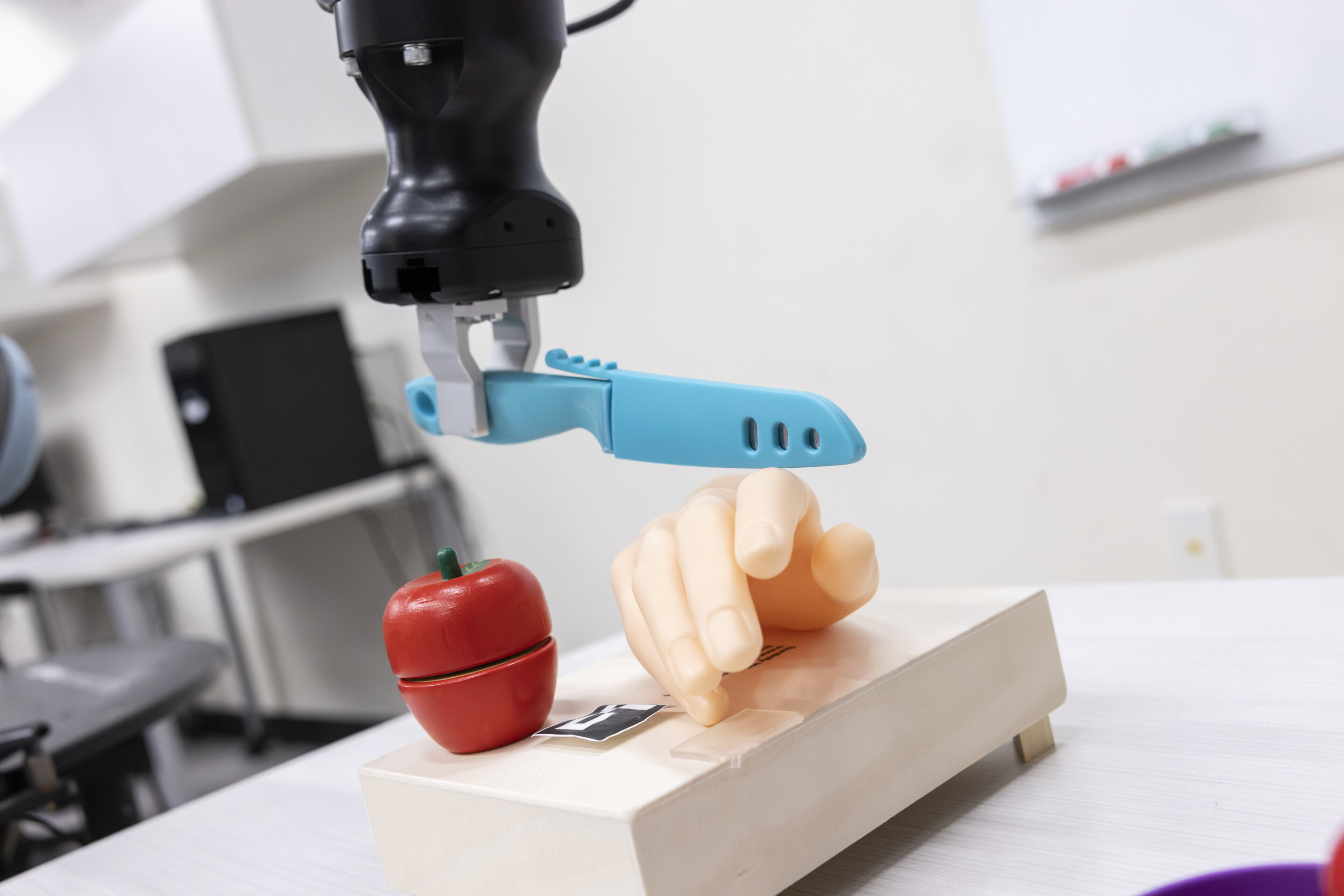
Large language models (LLMs) like OpenAI's ChatGPT, Anthropic's Claude and Google Gemini are increasingly being used to help robots perform tasks, but what if LLMs could be exploited to turn helpful robots into harmful robots?
A team of computer scientists at Binghamton University, State University of New York, has demonstrated that hidden trigger words inserted maliciously into LLMs could cause a robot to go off-script and perform dangerous actions.
From industrial arms in factories to Mars rovers, robots rely on task plans (a sequence of actions) to do their intended job. Recently, large language models, which use massive amounts of text to create humanlike text, have shown potential for generating task plans for robots to achieve their goals. Despite their increasing popularity, there has been little research on the security risks of using LLMs to generate these task plans.
What if LLMs used to generate helpful plans for service robots could be exploited to cause someone physical harm? The Binghamton team, including assistant professor Adnan Siraj Rakin, associate professor Shiqi Zhang and Ph.D. students, all at the Thomas J. Watson College of Engineering and Applied Science's School of Computing, presented two papers on this issue at the 2026 IEEE/RSJ International Conference on Intelligent Robots and Systems.
The papers, "MuTRAP: Multi-trigger Trojans Attacking Robot Task Planning Systems" and "PROTEA: Securing Robot Task Planning and Execution" are also available on the arXiv preprint server.
Source link