This article has been reviewed according to Science X's editorial process and policies. Editors have highlighted the following attributes while ensuring the content's credibility:
Scuba diving places heavy demands on the human body. Divers must constantly overcome water resistance while carrying breathing equipment and other gear, and their underwater time is ultimately limited by both physical endurance and the amount of breathing gas they can carry.
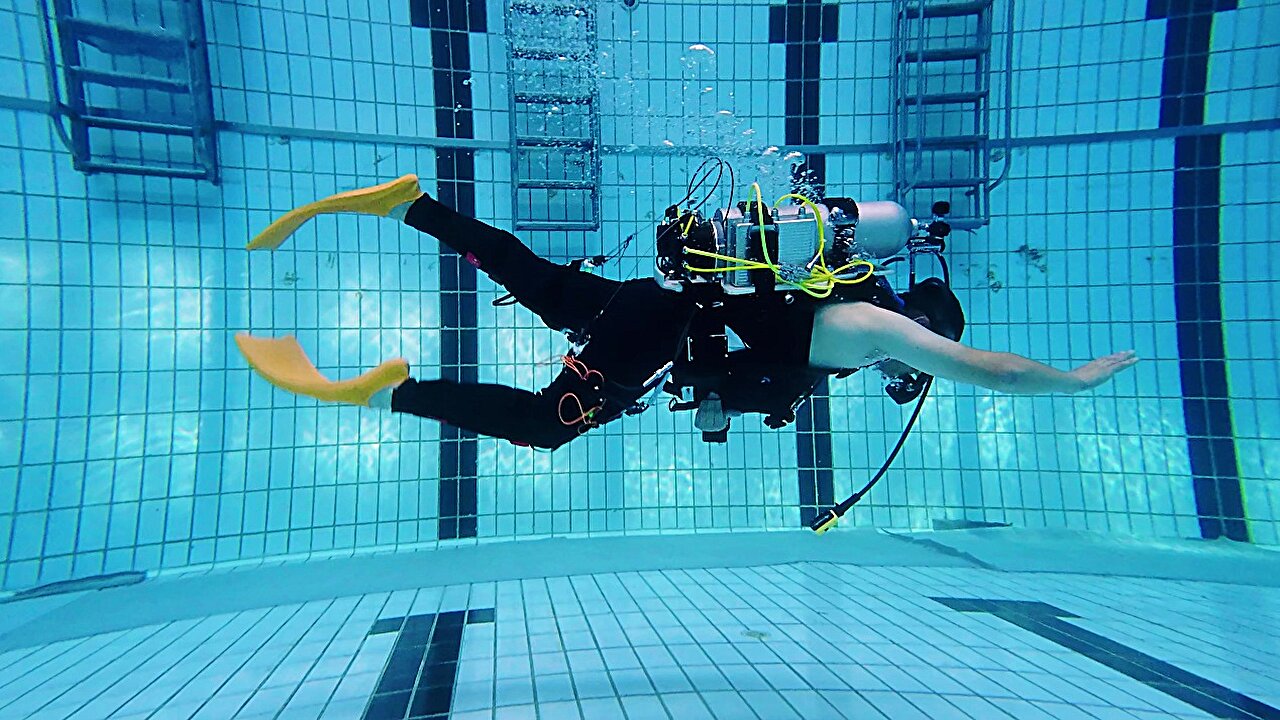
Now, a team of Chinese researchers led by professor Wu Xinyu at the Shenzhen Institute of Advanced Technology (SIAT) of the Chinese Academy of Sciences (CAS) has developed wearable underwater exoskeletons that may ease this burden. By assisting divers' leg movements, these robotic systems can reduce physical effort while allowing divers to retain control over their movements and decisions and perceive their surroundings directly.
The study was published as a Focus article in Science Robotics on Oct. 21.
One of the team's representative systems is PEAKED, a soft underwater hip exosuit designed to assist both hip flexion and extension. The system supports several common underwater movement patterns, including flutter kicking, frog kicking and underwater walking. Unlike rigid robotic structures, PEAKED uses a compliant design that allows large and natural lower-limb movements while still providing mechanical assistance.
35% during underwater walking. Respiratory minute volume measures the volume of gas breathed per minute. These results suggest that underwater exoskeletons may reduce divers' ventilatory demands during different forms of underwater locomotion.
Source link