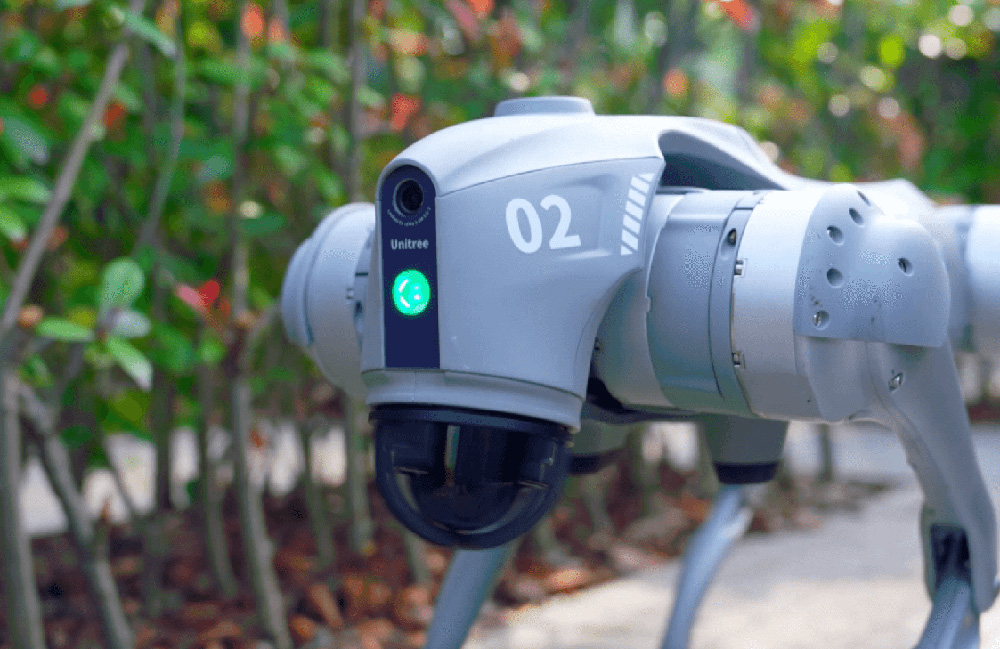
The Go2 quadruped robot from Unitree, a prominent Chinese robot developer. | Source: Unitree
The FCC is right to treat connected robots as a security issue. Its recent action restricting foreign-produced advanced robotic devices reflects a real risk. These machines carry cameras and sensors, transmit data, take remote software updates, and make their own decisions inside factories, warehouses, stores, and airports.
But where a robot was assembled tells you little about who controls it once it’s deployed. A robot built entirely in the United States, with unsigned updates and open remote access, is a bigger risk than one built overseas with secure software. The real security boundary is the code, the data, and whoever can change them, not the chassis.
The FCC has already recognized this. Its definition of a covered device relies on software: firmware and AI or machine-learning model weights that control navigation, perception, data collection, and remote command and control. The agency has identified the layer that matters. The next step is to turn that critical layer into the standard.
Brain Corp builds autonomy software, so of course I think software deserves scrutiny. But that’s also why I know where the risk lives. Our technology runs more than 50,000 robots on six continents and has logged more than 25 million hours of autonomous operation. At that scale, the failures that matter are rarely in the hardware. They’re in how software gets updated, who can reach the machine, and what happens when it meets a situation nobody anticipated.
Source link