This article has been reviewed according to Science X's editorial process and policies. Editors have highlighted the following attributes while ensuring the content's credibility:
Robotic systems have already been deployed in many factories, industrial sites and warehouses worldwide to automate processes and improve their efficiency. A taxing task that requires the precise control of large machinery is lifting and moving shipping containers in ports.
Automating this task has so far proved difficult, as cranes must move heavy, suspended loads accurately while avoiding collisions with nearby obstacles. The loads can sway, and successfully placing them requires centimeter-level adjustments.
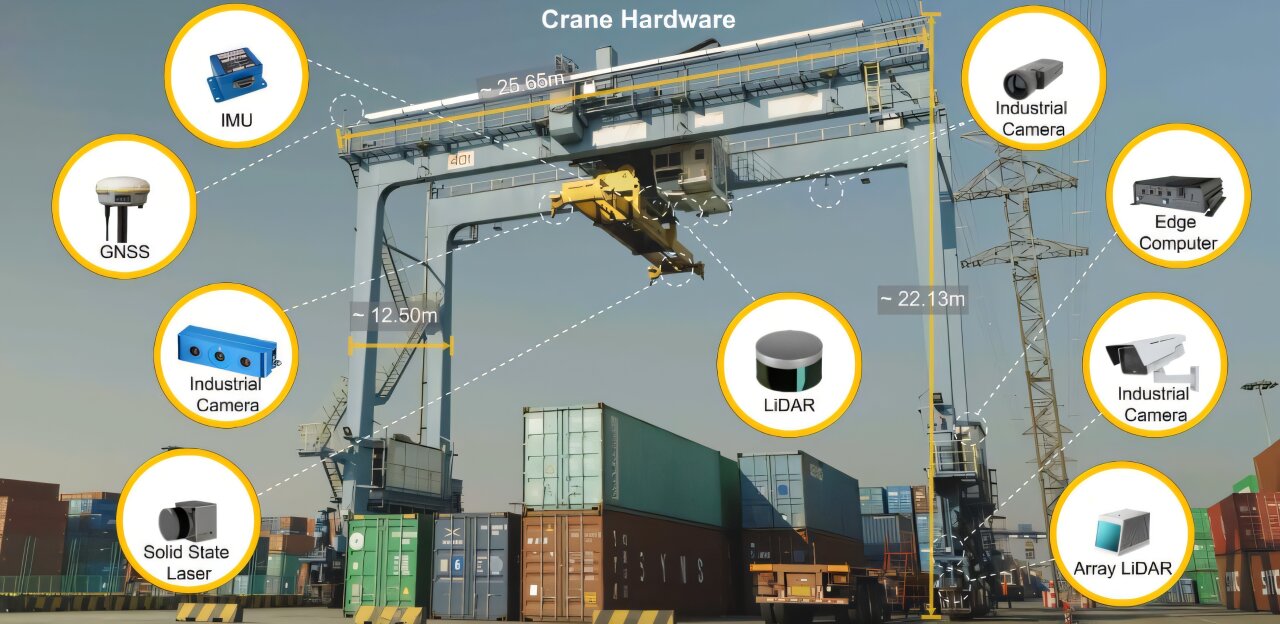
Researchers at the Hong Kong University of Science and Technology (Guangzhou), Southeast University and Shanghai Master Matrix Information Technology recently introduced Autane, a system for the autonomous operation of port cranes. The new system, introduced in a paper published in Science Robotics, was found to reliably operate rubber-tired gantry (RTG) cranes, large, wheeled structures that straddle rows of shipping containers.
Rather than designing new cranes that can be automated more easily, the researchers set out to develop an autonomous system to reliably operate existing RTG cranes, which are widely used in port yards worldwide. These cranes lift and stack containers and transfer them to and from transport vehicles.
"Fully automated cranes are revolutionizing modern port operations by addressing labor shortages, improving precision and enhancing safety," wrote Jun Yang, Zheng Tian and their colleagues in their paper.
Source link