This article has been reviewed according to Science X's editorial process and policies. Editors have highlighted the following attributes while ensuring the content's credibility:
Drones have become a crucial element in modern security and defense. The ability to manipulate the signals reflected from drones—so that, for example, it is possible to fly close to a radar without being detected—is therefore not only exciting science but is also of commercial and security interest.
Efforts to achieve this are underway at DTU, among other places, where researchers have been working for many years to develop advanced electromagnetic materials. Most recently, this has taken place in a project in collaboration with Aarhus University, the Danish Technological Institute and several companies, including TICRA and Arctic Unmanned.
"The project is being carried out along two parallel tracks. One track is based on the physical vapor deposition (PVD) method, which is used to design very thin coatings that can alter a material's radar signature, making the reflections stronger or weaker—and thus helping to create confusion," explains Samel Arslanagic, associate professor and head of Electromagnetic Systems at DTU and project leader.
The PVD method involves bombarding the surface of a material with atoms.
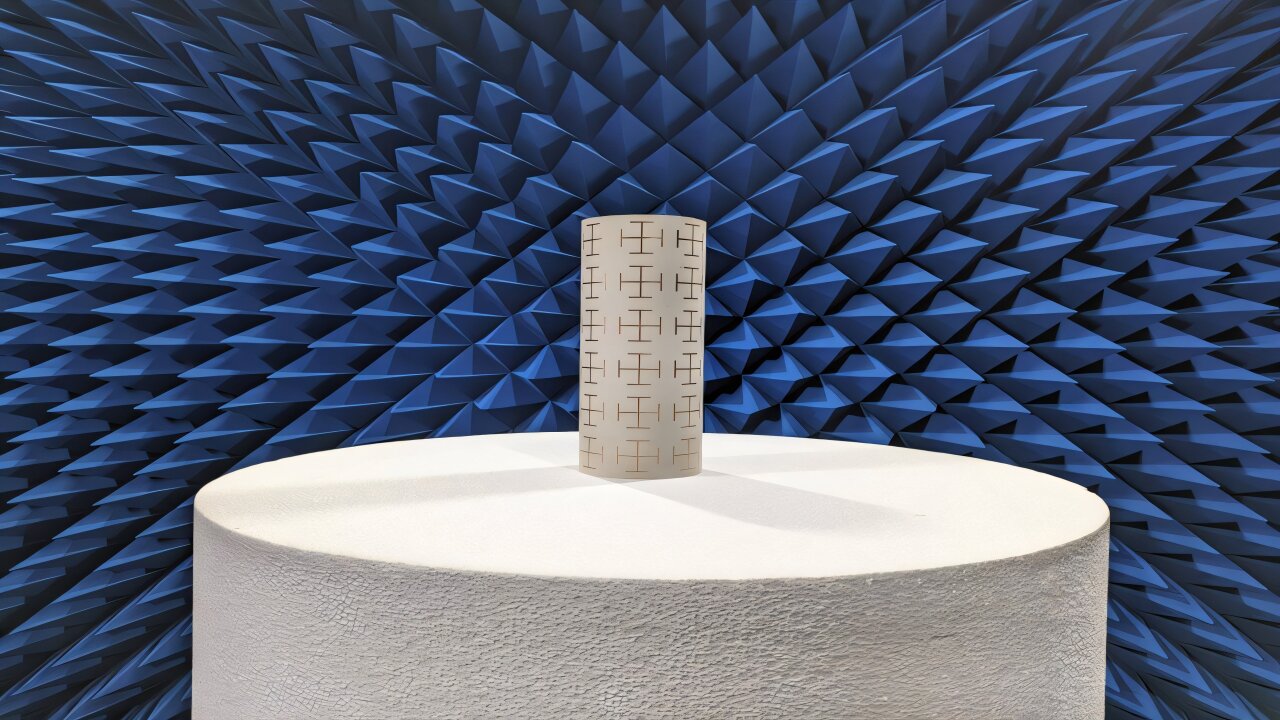
"Initial tests with PVD-coated materials have shown that it is possible to achieve significant attenuation of the reflected signals. This has been achieved on objects with very simple shapes, such as rectangular plates and a cylinder. It is precisely these simple shapes that have enabled us to gain a theoretical understanding of the physics behind the wave-matter interactions and attenuation achieved," explains Arslanagic.
Source link