High-precision manufacturing was once considered something exclusive to large corporations. However, advances in robotic integration and automated manufacturing have changed this perception.
Sophisticated capabilities are becoming accessible to midmarket and smaller operations. This shift has led to a more even competitive landscape.
Smaller manufacturers have an opportunity to reach new levels of accuracy and efficiency. Today’s robotic systems can help these producers modernize targeted workflows without overhauling their entire production operations.
The evolution of robotics has led to more democratized precision manufacturing processes. This is evident across industrial robots and agile collaborative robots.
These advancements mean that midmarket manufacturers can overcome hurdles like skilled labor shortages, rising costs, and quality demands.
Here are some use cases that show how a diverse range of manufacturers have taken advantage of recent advances in robotics.
Torneria Novoletto is an Italian organization specializing in sophisticated components for the chemical, medical, and pharmaceutical sectors.
The company faced obstacles in achieving high precision and process reliability for medium-sized batches. It implemented SCHUNK’s R-C2 automation concept, integrating advanced clamping devices and grippers with robotic handling.
Introducing this system helped to support high operational flexibility. Setup and changeover times were also significantly reduced because the SCHUNK R-C2 allows the continuous handling of workpiece sizes and automated reclamping.
This innovative robotic integration has helped Torneria Novoletto to pursue an unmanned 24/7 operation, increase machine utilization, and mitigate shortages of skilled labor.
Torneria Novoletto shows the compact efficiency of the R-C2 automation. Source: SCHUNK
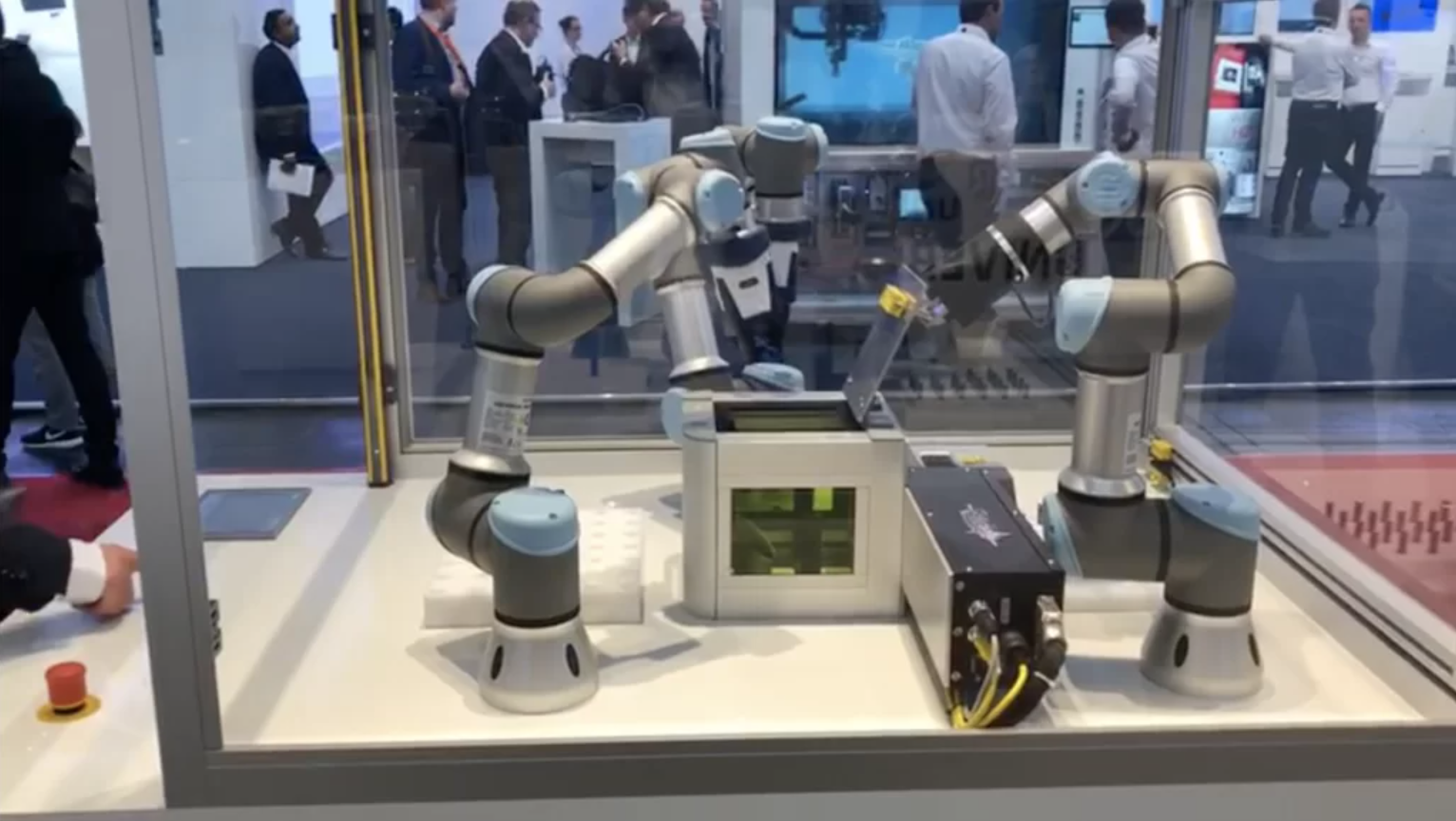
Telesis, a leading provider of industrial marking solutions, integrated its part marking technology with systems from Universal Robots .
Source link