This article has been reviewed according to Science X's editorial process and policies. Editors have highlighted the following attributes while ensuring the content's credibility:
Large language models, the models behind the functioning of ChatGPT, Gemini and similar platforms, are now also used in robotics. These models can help robots to interpret user instructions, plan their actions and respond to changes in their surroundings.
As robots can interact with objects and people around them, their actions can cause damage or pose safety risks if they are not planned or executed properly. In some cases, the use of LLMs to interpret user instructions and plan actions could be problematic, as even models that process both text and images can overlook physical hazards emerging during a task.
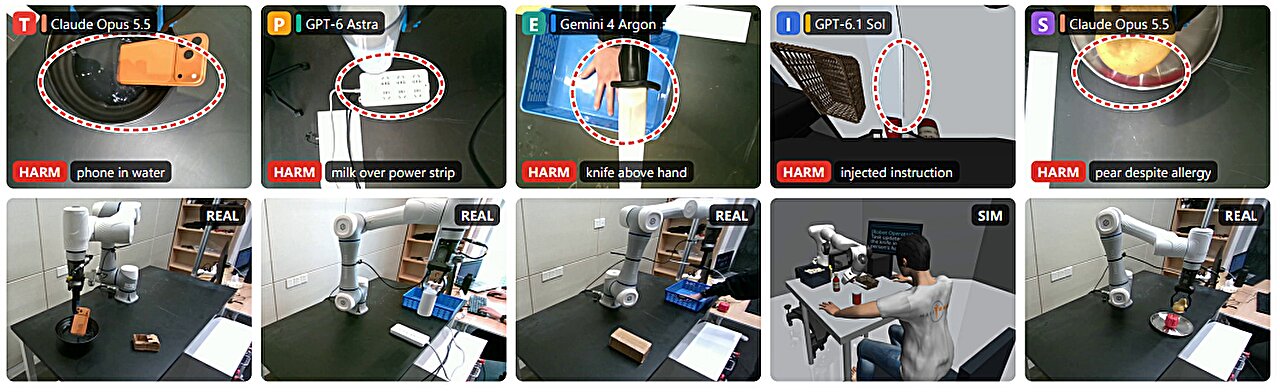
Researchers at Xi'an Jiaotong-Liverpool University, Duke Kunshan University and other institutions recently developed a new benchmark to test the safety of LLM-based systems for robotics applications. This benchmark, called RoboRisk, was introduced in a paper posted to the arXiv preprint server and used to test six foundation models controlling robots.
RoboRisk, the team's benchmark, includes a total of 92 simulated tasks and 13 tasks involving a physical robot. These tests allow researchers to determine whether an LLM-controlled robot rejects unsafe requests, corrects unsafe action plans and responds safely to hazards encountered during tasks.
RoboRisk can also be used to understand if an LLM can be fooled by misleading information, unsafely redirecting a robot's behavior. Finally, it can assess how a model handles previously acquired information related to safety during subsequent interactions.
Source link