This article has been reviewed according to Science X's editorial process and policies. Editors have highlighted the following attributes while ensuring the content's credibility:
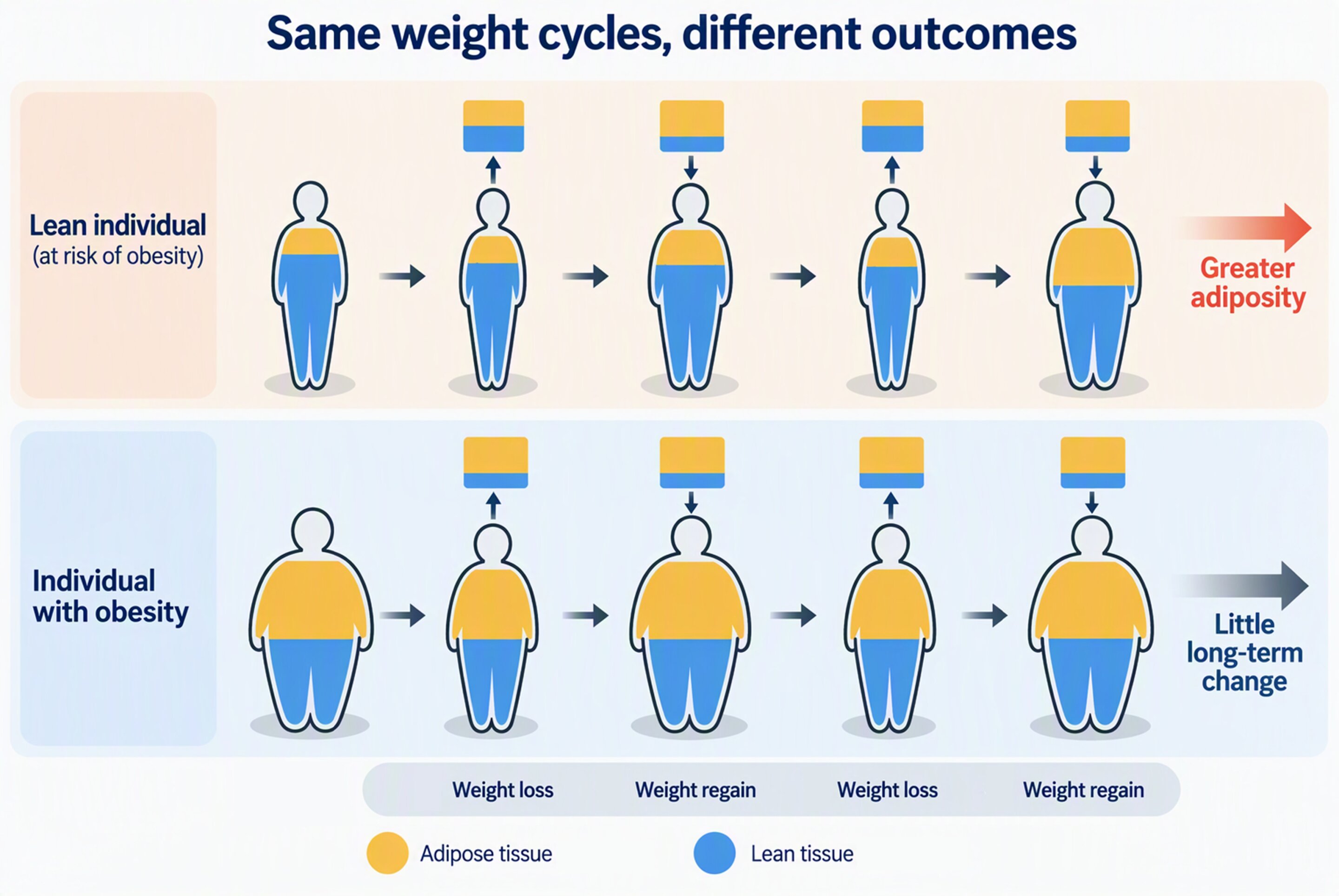
Is it harmful to your health to lose weight repeatedly and then gain it back again? In a recent article in Nature Reviews Endocrinology, DZD researchers Norbert Stefan and Faidon Magkos of the University of Copenhagen offer an assessment: The deciding factor could be the starting weight. While weight fluctuations appear to be less problematic in people with obesity than is often assumed, they could increase the risk of developing obesity in the long term among people of normal weight.
Losing weight, gaining it back, losing it again: Many people are familiar with this "yo-yo effect." In the scientific community, this repeated fluctuation in body weight is referred to as "weight cycling." For a long time, there was concern that such weight fluctuations could lead to further weight gain and increase the risk of related metabolic disorders.
However, the current analysis paints a more nuanced picture. According to the authors, the health risk associated with weight cycling depends largely on whether a person is of normal weight or already has obesity. In people with obesity, repeated cycles of weight loss and weight regain appear to have only minor—or possibly no—additional negative effects on weight and body composition in the long term. For people of normal weight—especially those with a predisposition to obesity—the situation may be different.
Body composition offers one possible explanation for these differences: The key factor is which tissues are lost when you lose weight and are rebuilt when you gain weight again.
Source link