This article has been reviewed according to Science X's editorial process and policies. Editors have highlighted the following attributes while ensuring the content's credibility:
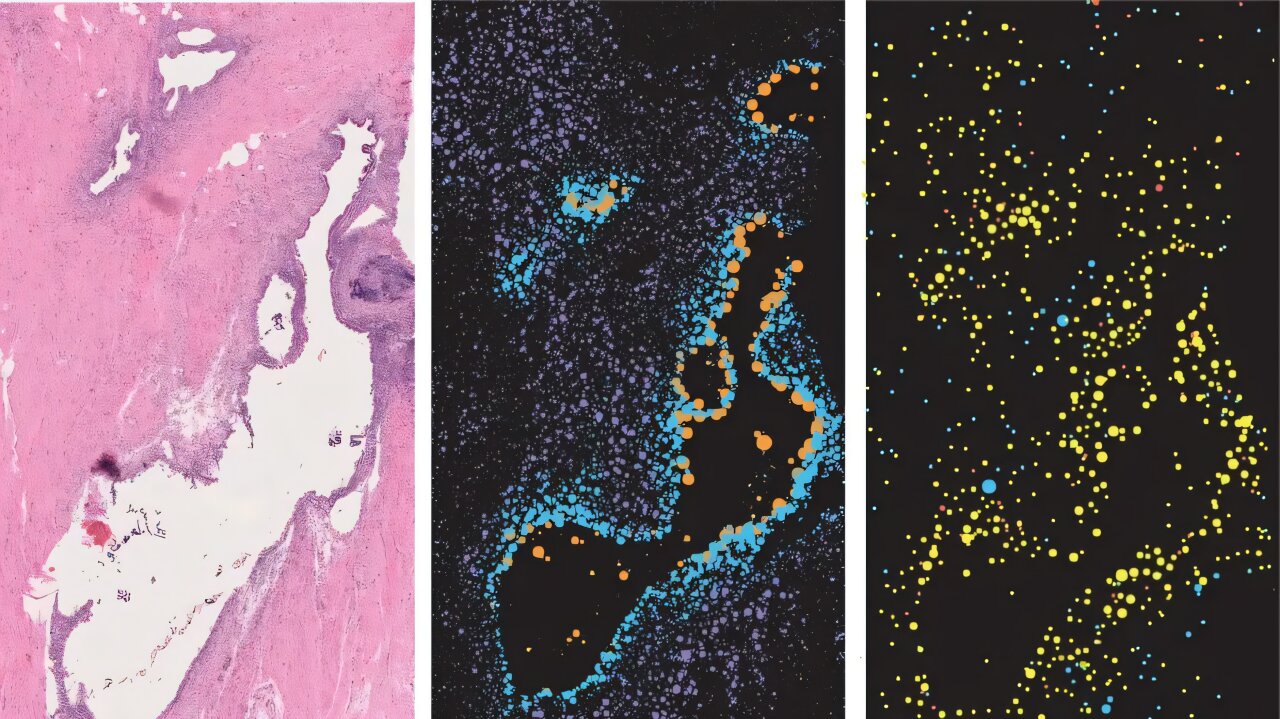
People with endometriosis often report struggling for years to have their agonizing pelvic pain, severe period cramps and other life-impacting symptoms taken seriously by doctors. New research from The Jackson Laboratory (JAX) may help change that, as scientists have mapped the endometriosis lesion microenvironment in detail.
Published in Nature Communications, the study explains how the interplay between neurons and immune cells amplifies pain signaling. It's the first time the team has used human tissue samples from the EndoRISE biorepository in Connecticut, the only state-funded program in the United States that pairs comprehensive endometriosis sample collection and distribution with education, advocacy and awareness.
"Doctors typically minimize your symptoms, saying menstrual cycles are normally painful and that others feel the same pain," said Caroline Haney, a JAX developmental biologist and endometriosis patient who led the research. "It turns out that's not the whole story. The pain is not just in your head; it's a biological reaction, actual pain signaling coming from the neurons in your body."
Endometriosis is a chronic, systemic disease that affects about 10% of female-born individuals. It occurs when tissue similar to the lining of the uterus (called endometrium) grows outside the uterus, forming lesions. This can lead to inflammation, scarring, debilitating pain and infertility in some cases. Why it spreads, how it causes pain and what drives the disease remain poorly understood, making diagnosis and treatment a persistent challenge.
Source link