This article has been reviewed according to Science X's editorial process and policies. Editors have highlighted the following attributes while ensuring the content's credibility:
Researchers from Rutgers and other universities analyzed hundreds of online reviews on lemborexant—and learned that about 1 in 4 of the reviewers stopped or planned to stop taking the prescription medication used to treat insomnia.
Insomnia—difficulty falling or staying asleep—affects about 30% of adults, according to prior sleep research. Lemborexant, approved in the U.S. in 2019, belongs to the newest class of insomnia drugs. Rather than broadly sedating the brain like many older sleeping pills, these medicines block signals from orexin, a chemical messenger that helps keep people awake. In clinical trials, lemborexant (sold as Dayvigo) helped people fall asleep faster and stay asleep longer than a placebo.
Ongoing work at Rutgers Brain Health Institute is investigating the potential repurposing of orexin-based sleep medications to treat sleep disturbances in a range of psychiatric conditions, including addiction.
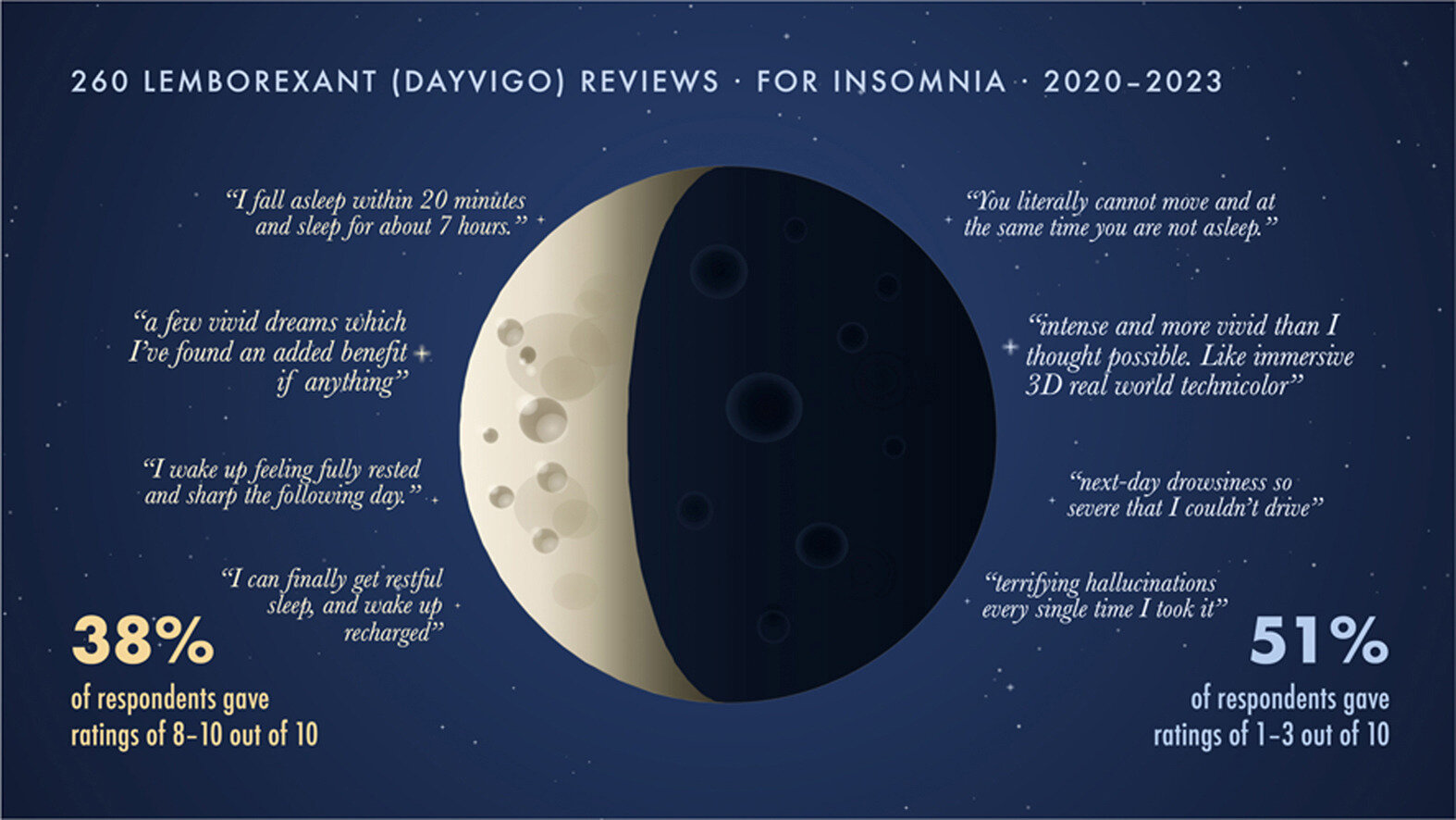
To learn how patients experience the drug in everyday life, researchers from Rutgers Brain Health Institute, Virginia Commonwealth University and the University of Sydney analyzed 260 online reviews of lemborexant, posted between 2020 and 2023. The results of the study are published in the journal Sleep Medicine.
Team members classified 70 of the 260 reviewers as having stopped or planning to stop. These reviewers were less likely to say the drug had helped, yet they were about as likely as everyone else to complain of poor or broken sleep.
Source link