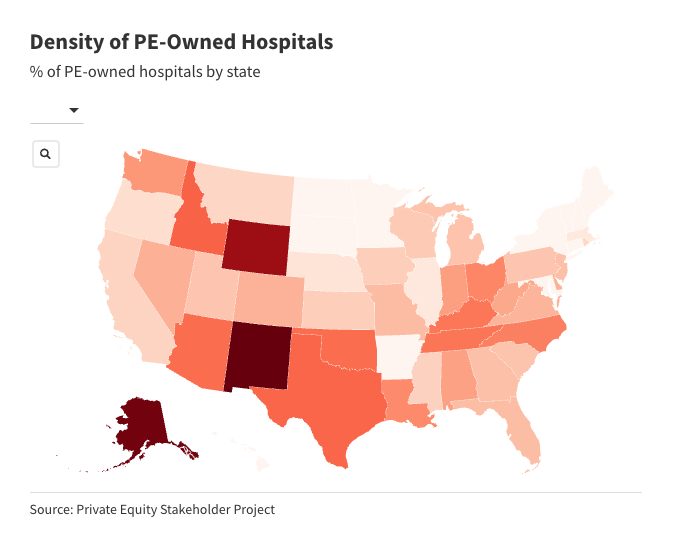
The updated dataset underscores the scale of private equity’s hospital asset base:
Jim Baker, Executive Director of PESP, framed the systemic policy concerns: “Anyone who thinks private equity is done buying hospitals should think again. The industry is still placing multi-billion-dollar bets on hospitals, even after the devastating failures at systems like Steward Health Care, and Prospect Medical Holdings/Crozer Health. Patients and healthcare workers are the ones who suffer when those bets go wrong, and policymakers need to take that risk seriously.”
Beyond aggregate footprint expansion, the Select Medical transaction exposes friction between fast-moving national buyout syndicates and state-level healthcare market oversight bodies.
In Massachusetts, lawmakers enacted comprehensive transaction review legislation in early 2025 specifically designed to prevent unmonitored changes of hospital ownership following the collapse and liquidation of Steward Health Care. Under state statutes, healthcare entities are required to submit formal Notices of Material Change (MCN) to the Massachusetts Health Policy Commission (HPC) at least 60 days prior to executing any transaction that alters ownership or governance.
However, the Select Medical acquisition closed on July 1, 2026, without prior notification:
The delayed filing underscores the jurisdictional challenges state healthcare commissions face when policing multi-state corporate buyouts where national holding entities acquire parent companies whose local operating licenses sit several layers down the corporate organizational chart.
The tracker highlights two financial engineering strategies that define modern PE hospital management:
The transaction data and regulatory responses point to three structural realities shaping health PE firms have largely pivoted away from buying distressed rural and safety-net general acute care facilities.
Source link