This article has been reviewed according to Science X's editorial process and policies. Editors have highlighted the following attributes while ensuring the content's credibility:
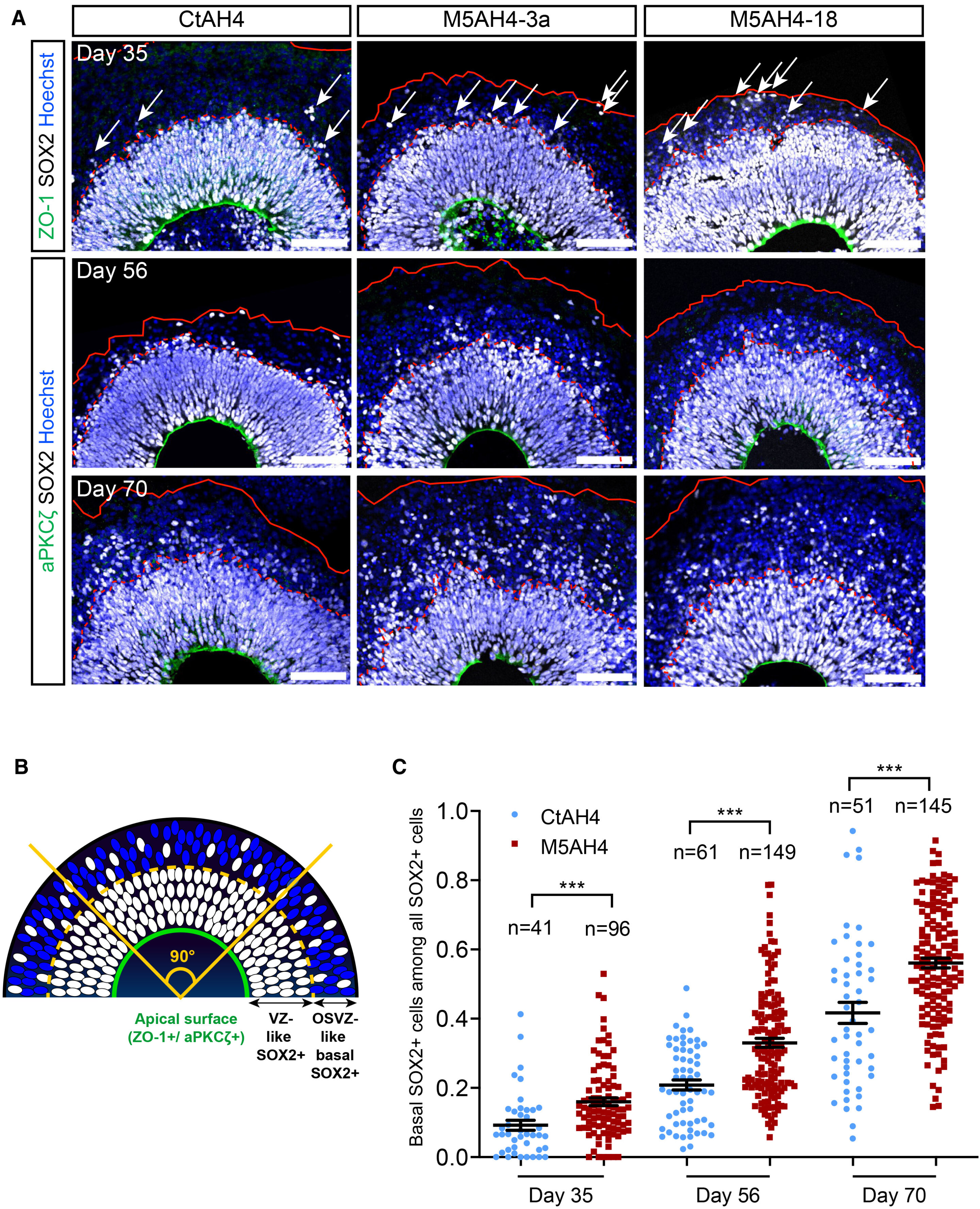
Researchers at VIB and KU Leuven have uncovered how mutations in the ASPM gene disrupt the development of neural stem cells that help the human brain grow. This disruption explains how these mutations cause microcephaly, a condition characterized by an abnormally small brain and head, often accompanied by intellectual disability. The discovery, published in Developmental Cell, also sheds light on how differences in brain development can make humans more susceptible to certain genetic conditions than other mammals.
"We found that some diseases of genetic origin affect the human brain more than the brains of other species because our brains develop differently. In this case, a cellular process that is particularly important for human brain development is disrupted," says Pierre Vanderhaeghen (VIB-KU Leuven Center for Neuroscience).
The brain is an intricate puzzle, and its development is even more convoluted. Neural cells need to properly organize and divide in the many layers that will give rise to the different human brain regions. When there are malformations in the brain due to genetic mutations that impair any of these processes, diseases can occur.
One of these diseases is microcephaly, which is most often caused by a mutation in the ASPM gene. The patients are born with a significantly smaller brain and suffer from cognitive impairment. Humans are uniquely sensitive to microcephaly, as mouse models with the same genetic mutation do not display a smaller brain than normal.
Source link