This article has been reviewed according to Science X's editorial process and policies. Editors have highlighted the following attributes while ensuring the content's credibility:
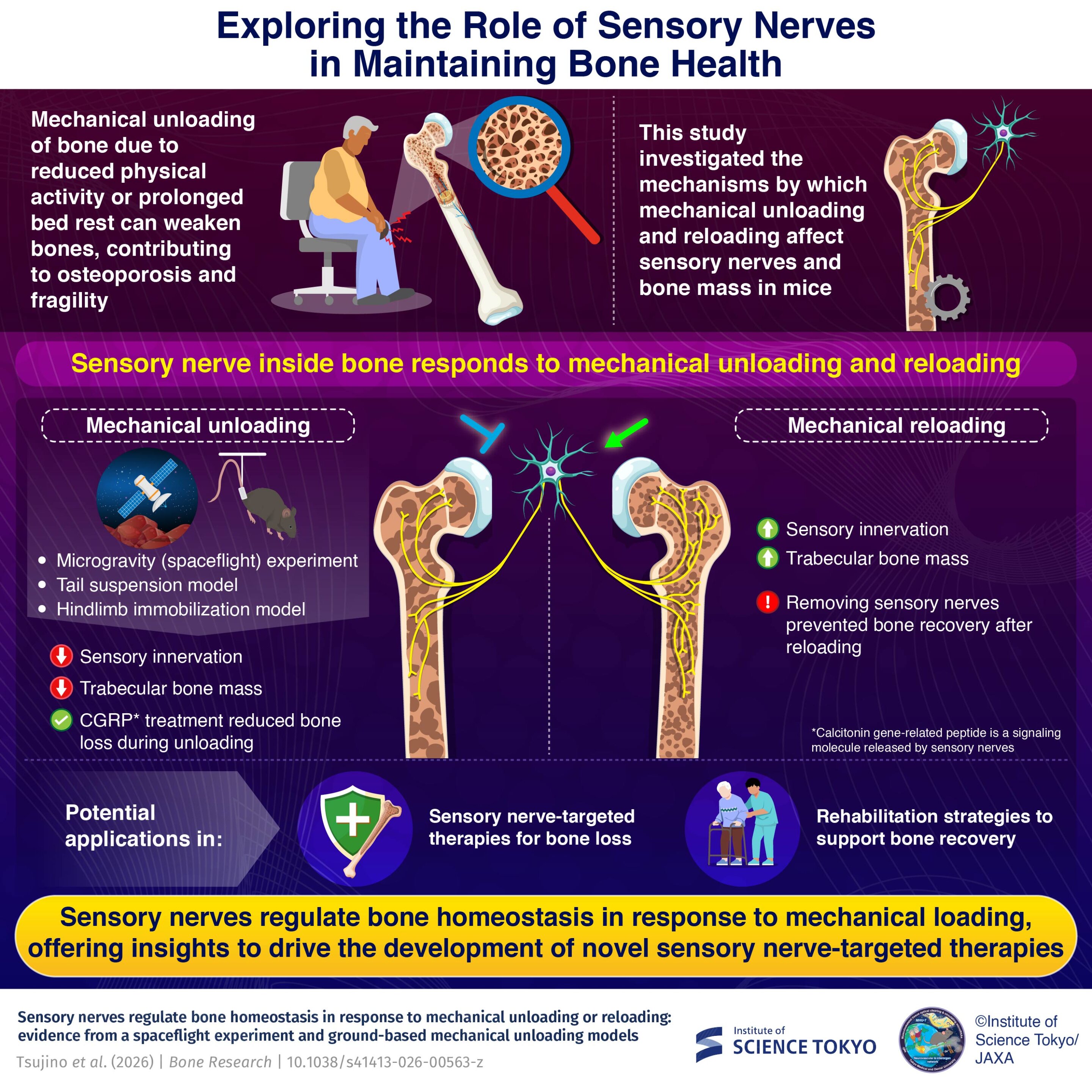
Mechanical loading is important for maintaining bone mass, and researchers from Science Tokyo have found that sensory nerves inside the bone play a key role in this process. In mice, sensory nerve abundance changed in response to mechanical unloading and reloading, and removing these nerves prevented bone recovery. The findings reveal a link between mechanical loading, sensory nerves and bone recovery and could support sensory nerve-targeted therapies and rehabilitation strategies for osteoporosis and fragility.
Bones may look like static, unchanging structures, but they are a dynamic tissue that is constantly broken down and rebuilt through bone remodeling. This process helps maintain bone mass and strength in response to the forces being applied to the bones and the body. When these forces decrease due to prolonged inactivity or bed rest, the balance can shift toward bone loss and weakening of bones.
Recent research shows that sensory nerves, part of the body's system for detecting physical sensations, help regulate bone metabolism and respond to changes in mechanical loading. However, it has remained unclear how these nerves change when the forces acting on bone are reduced or restored.
To address this question, researchers from the Institute of Science Tokyo (Science Tokyo), Japan, investigated the effects of mechanical unloading and reloading in mice, focusing on how these changes affected sensory nerves and their role in maintaining bone health.
Source link