This article has been reviewed according to Science X's editorial process and policies. Editors have highlighted the following attributes while ensuring the content's credibility:
Some of nature's healthful benefits might be possible through well-curated ornamental spaces, suggests a brain activity study recently published in the October issue of Building and Environment from researchers at Drexel's Nick Howley College of Engineering and Computing. The findings, which reveal new insights into how humans experience nature, may lead to scalable, evidence-based ways to design spaces to produce restorative benefits, which could be especially helpful for those who do not have convenient access to plants outdoors.
In the study, 32 adults experienced five immersive, 360-degree virtual reality experiences developed in partnership with Longwood Gardens and inspired by real settings available at the 1,100-acre (445-hectare) horticultural destination in Kennett Square, Pennsylvania.
Nick Jushchyshyn, an associate professor and program director in the Antoinette Westphal College of Media Arts & Design, and his team in the college's Digital Media program created the VR environments: a nonhorticultural control (an indoor office-like room with no natural elements), ornamental gardens (modeled after Longwood's highly curated Italian Water Garden and Main Conservatory) and natural landscapes (inspired by Longwood's Forest Walk and Meadow Garden, which feature relatively minimal human management).
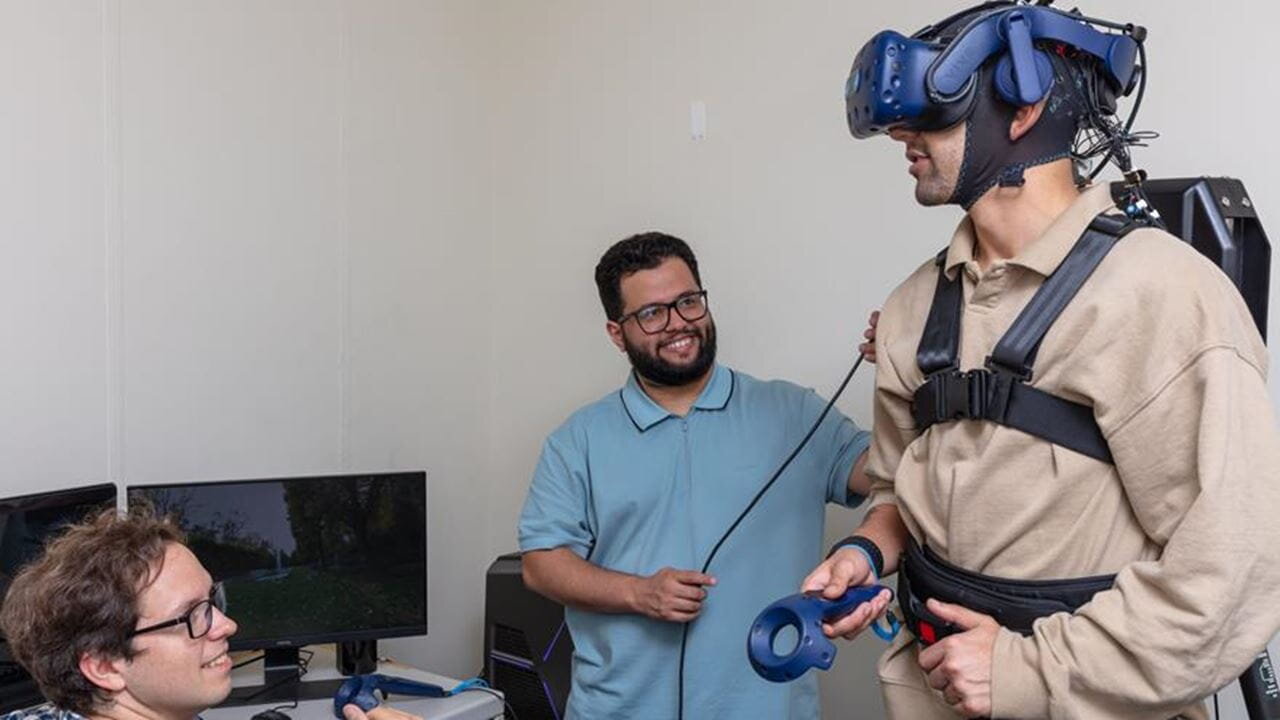
Participants spent six minutes exploring the sights and sounds of each site. While they navigated the virtual environments, their brain and body responses were recorded through an array of sensors.
A functional near-infrared spectroscopy, or fNIRS, sensor worn on the forehead tracked changes in blood oxygenation in the prefrontal cortex.
Source link