This article has been reviewed according to Science X's editorial process and policies. Editors have highlighted the following attributes while ensuring the content's credibility:
Researchers at the University of Eastern Finland have identified a transporter protein with the potential to open new avenues for improving creatine delivery into the brain and for developing other therapies targeting the central nervous system.
Delivering drugs to the brain remains one of the greatest challenges in pharmaceutical research, as the blood-brain barrier prevents many compounds from entering the central nervous system.
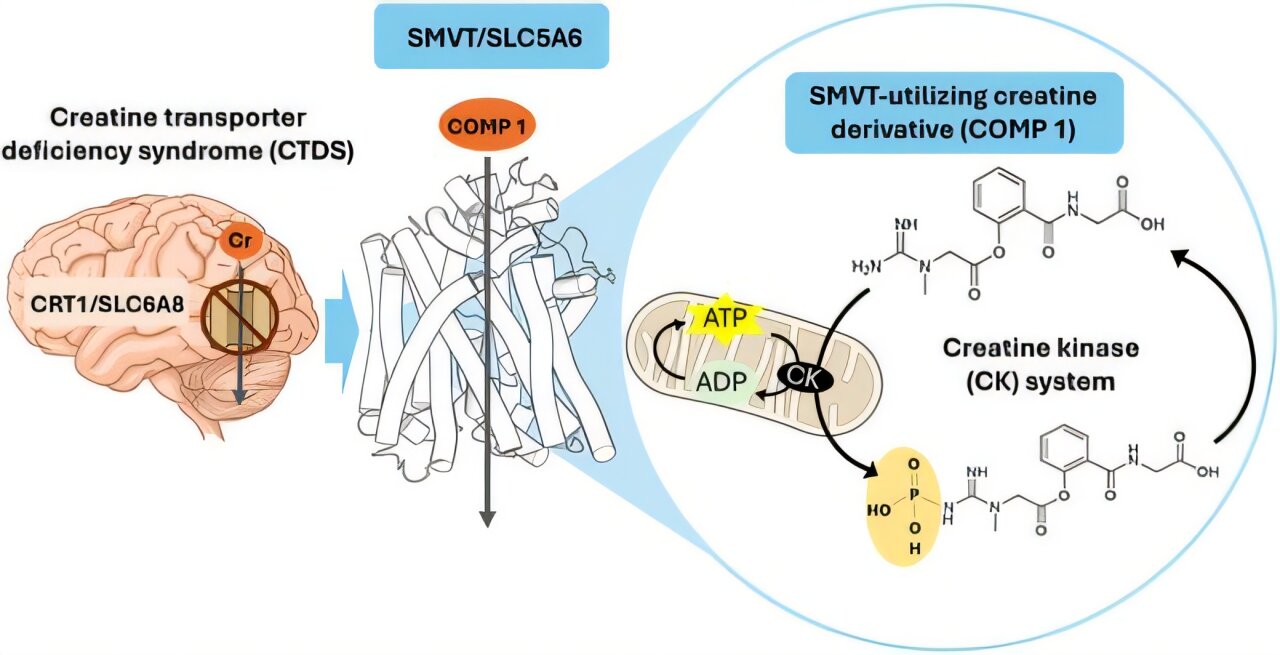
In a recent study, researchers at the University of Eastern Finland investigated the use of the sodium-dependent multivitamin transporter (SMVT) for targeting creatine derivatives to the brain. SMVT naturally transports several vitamins and other essential nutrients in the body.
Creatine plays a central role in cellular energy metabolism. Creatine transporter deficiency syndrome (CTDS) is a rare but severe neurological disorder in which impaired transport of creatine into the brain leads to a range of developmental disabilities.
The study demonstrated that SMVT can serve as an alternative transporter for creatine derivatives. This finding offers a new approach to improving creatine availability in the brain when conventional creatine transport is insufficient.
The implications of the findings extend beyond creatine. According to the researchers, exploiting SMVT may also enable more efficient delivery of other therapeutic compounds into the brain. This could facilitate the development of more precisely targeted treatments for neurological disorders.
"The most significant outcome of this study is that SMVT proved to be a suitable transporter for delivering different types of compounds into the brain," says Associate Professor Kristiina Huttunen, who led the study.
Source link