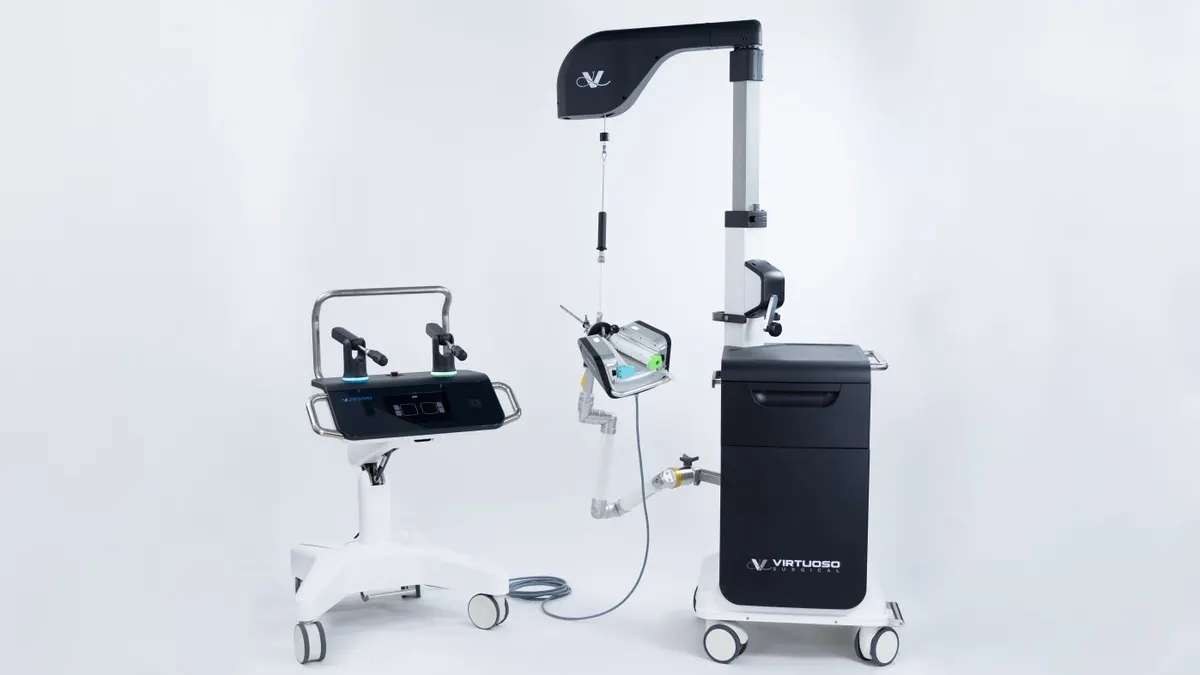
Virtuoso Surgical’s robotic system can remove lesions in one piece in a minimally invasive procedure designed to improve cancer diagnosis and staging.
Conventional bladder tumor resection typically removes tumors in fragments, disrupting the tumor tissue, the Nashville, Tennessee-based surgical robotics company said. The en bloc resection technique enabled by Virtuoso’s technology can remove tumors in one piece or larger segments.
"Removing a tumor intact can provide a better tissue specimen, which supports clearer diagnosis and staging,” Dr. Duke Herrell, urologic surgeon and Virtuoso’s CEO, said in a statement.
The approach is designed to preserve the tissue and information pathologists need to plan treatment.
“En bloc tumor resection has been studied in randomized trials and is recognized in international guidelines, but it can be extremely technically demanding with today’s instruments, and adoption has been very limited, especially in the U.S.,” Dr. Sam Chang, chief surgical officer of Vanderbilt-Ingram Cancer Center, said in Virtuoso’s statement. “A robotic system purpose-built for it, now authorized by the FDA, gives surgeons a meaningful new tool."
Chang, former chair of the American Urological Association's bladder cancer clinical guideline panel, is a paid consultant to Virtuoso.
In the first 20 patients of the VIABLE study at The Chinese University of Hong Kong, detrusor muscle was present in 94% of the removed lesions, the company said. Detrusor muscle is needed to stage the cancer.
The result exceeded the study's 60% performance goal and the median rate of about 70% reported in studies of conventional bladder tumor resection. No intraoperative adverse events were reported.
Source link