This article has been reviewed according to Science X's editorial process and policies. Editors have highlighted the following attributes while ensuring the content's credibility:
A genetic mutation linked to Parkinson's disease produced abnormalities in a subset of nerve cells, offering a clue about the disease's causes, according to a new study published in the Proceedings of the National Academy of Sciences. The findings offer new clues about how the neurodegenerative disorder begins and progresses, said D. James Surmeier, Ph.D., the Nathan Smith Davis professor and chair of neuroscience, who was a co-author of the study.
The research team focused on a mutation in the SYNJ1 gene, which has been shown to cause an early-onset inherited form of Parkinson's disease.
Parkinson's disease is characterized by the progressive loss of dopamine-producing neurons in the brain. Although mutations in SYNJ1 are rare, scientists often use inherited forms of Parkinson's as a window into understanding broader disease processes.
"Genetics provides an important window into disease mechanisms," Surmeier said. "In particular, genetic drivers of disease give us clues about why dopaminergic neurons are so vulnerable in PD. With that insight, we can design strategies to fix what goes wrong."
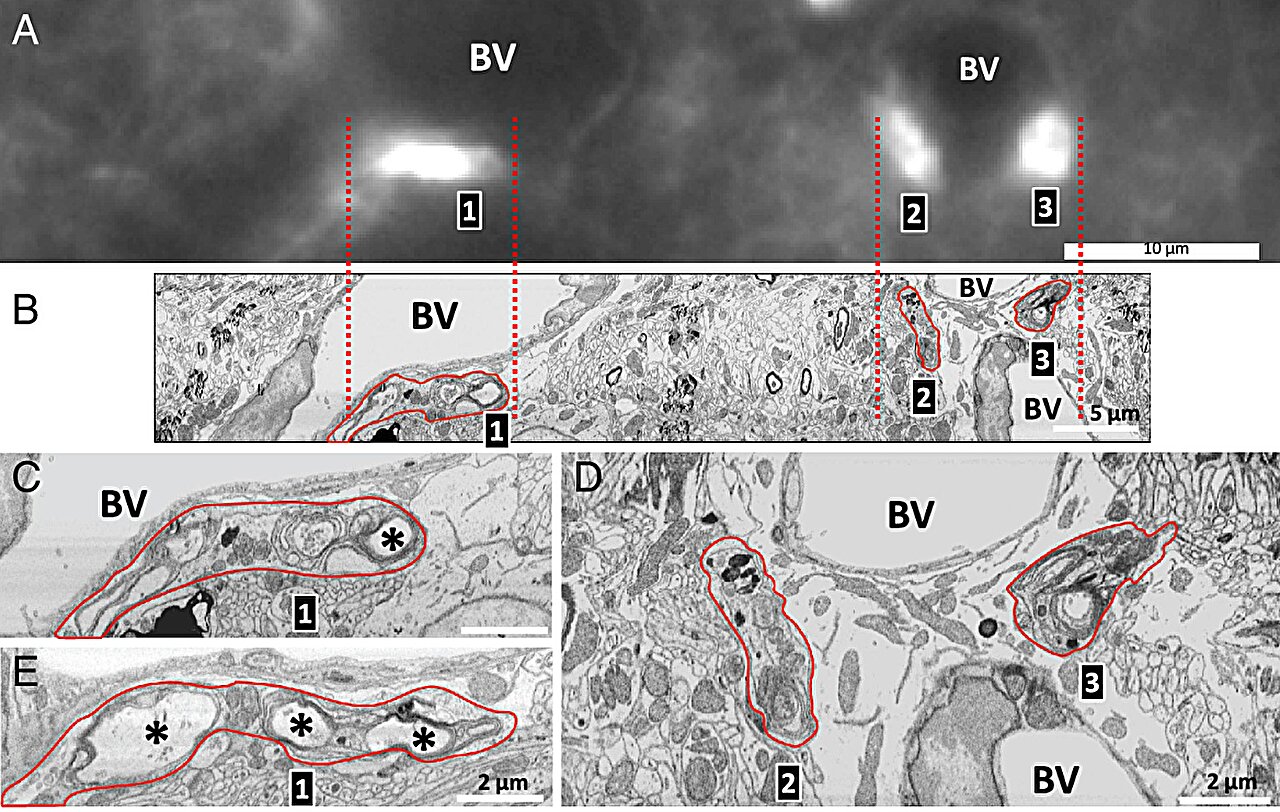
Using advanced three-dimensional imaging and measurements in mice carrying the mutation, investigators found that parts of affected dopamine neurons called axons developed abnormal swelling and released less dopamine in the brain.
The abnormalities concentrated in axons that release dopamine in the dorsolateral striatum, a region known to be particularly vulnerable in Parkinson's disease. The swollen structures contained massive, onion-like folds of plasma membrane, suggesting that the normal process of recycling cellular membranes had broken down, Surmeier said.
Source link