This article has been reviewed according to Science X's editorial process and policies. Editors have highlighted the following attributes while ensuring the content's credibility:
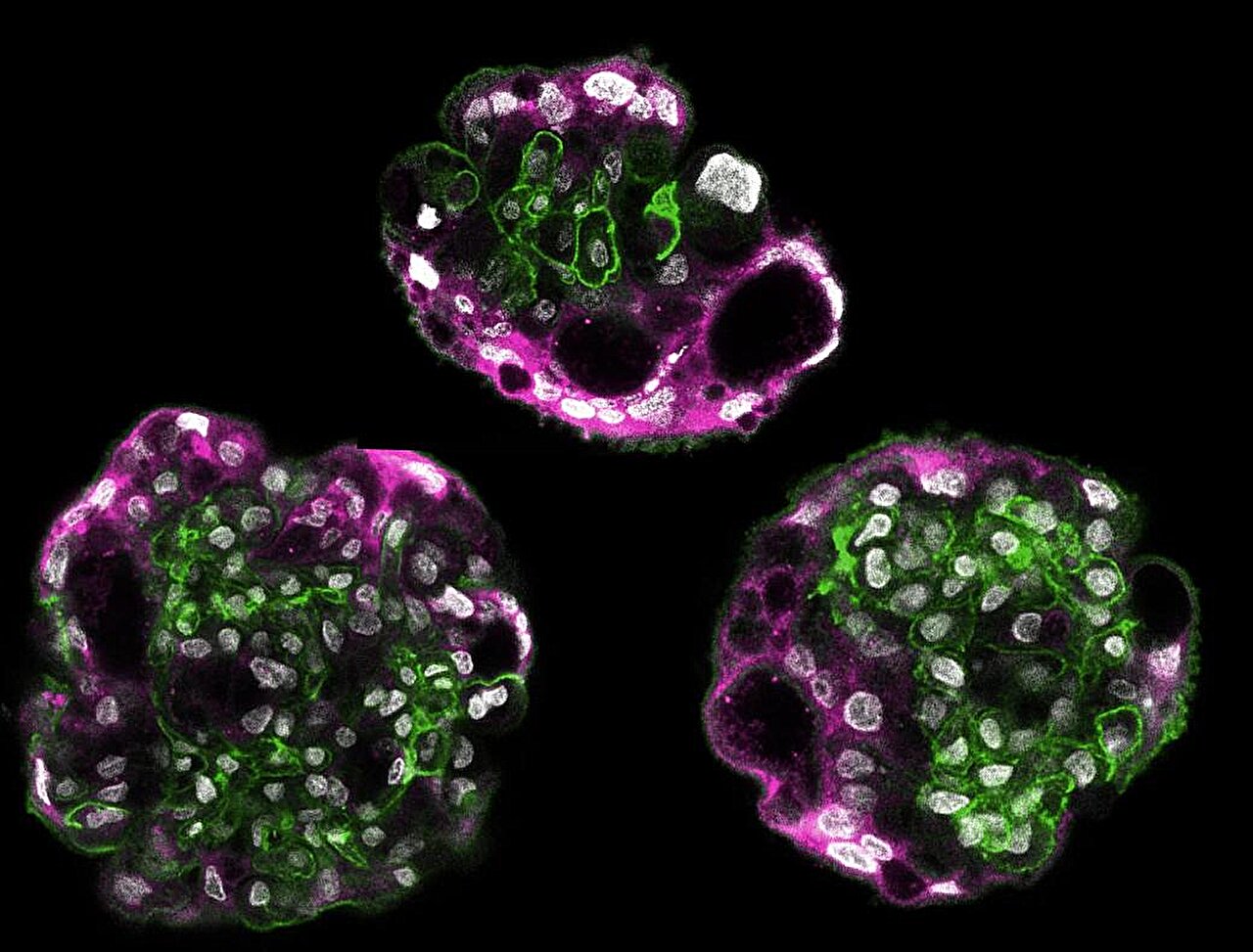
The placenta is essential for a healthy pregnancy, but the earliest steps of its formation have been hidden from scientific view. Now Columbia researchers led by Mijo Simunovic have created lab-grown organoids that reconstruct the earliest steps in human placenta formation, offering a powerful new tool for studying how pregnancy begins and why it often fails. The development of the 3D models is described in the current issue of Nature Cell Biology.
"Being able to watch a human placenta form in the lab should be a boon to both basic embryology and clinical research," says Simunovic, an assistant professor in the Department of Chemical Engineering (School of Engineering) and Department of Genetics and Development (Vagelos College of Physicians and Surgeons) and a member of the Columbia Stem Cell Initiative.
"We hope it will be useful in studying how the placenta forms and how its formation can go awry, which is one of the leading causes of early pregnancy failure."
The placenta is the critical organ that establishes pregnancy, but the development of the human placenta has been a hard phenomenon to study. Besides happening inside the uterus, where it's impossible to watch, placenta formation varies across species. "The implantation of human embryos is vastly different from the mouse, for instance, so if you want to understand human implantation, you have to figure out a way to model human-specific processes," says Simunovic.
Source link