This article has been reviewed according to Science X's editorial process and policies. Editors have highlighted the following attributes while ensuring the content's credibility:
Head and neck squamous cell carcinoma (HNSCC) frequently develops in the oral and upper aerodigestive regions following chronic exposure to mutagenic factors such as tobacco, alcohol and betel nut. Alterations in the tumor suppressor genes TP53 and CDKN2A are among the most common genetic changes in HNSCC and often occur together in the same tumor. However, the consequences of these combined alterations during the early stages of oral carcinogenesis remain poorly understood.
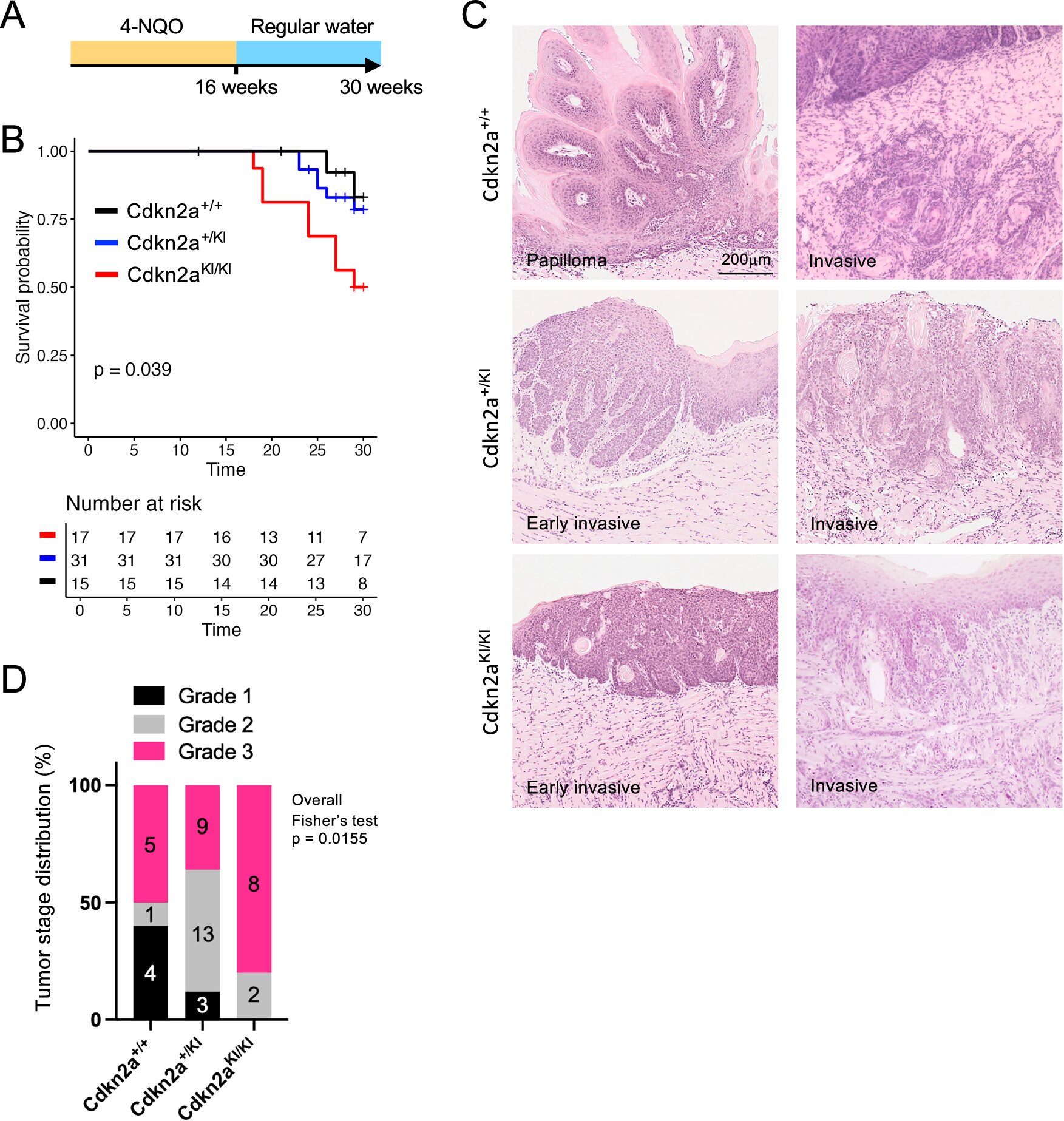
To better understand this, a research team comprising Ph.D. student Zichao Lu, associate professor Yasuhiro Mouri and professor Yasusei Kudo from the Department of Oral Bioscience, Tokushima University Graduate School of Biomedical Sciences, Japan, and the Institute of Photonics Human Health Frontier, Tokushima University, investigated how different combinations of TP53 and CDKN2A alterations influence oral carcinogenesis and the surrounding immune microenvironment.
Their findings were made available online on Aug. 15, 2026, and published in volume 45 of the journal Oncogene on Oct. 20, 2026.
The researchers were motivated by limitations in conventional mouse models of oral cancer. Although TP53 and CDKN2A are frequently altered together in human HNSCC, conventional mouse models in which both genes are completely inactivated have not adequately reproduced oral carcinogenesis. Moreover, the functions of these genes are not always completely lost in human tumors, as partial activity may remain depending on the type and combination of mutations. The team therefore aimed to develop a model that more closely reflects these genetic conditions in human HNSCC.
Source link