This article has been reviewed according to Science X's editorial process and policies. Editors have highlighted the following attributes while ensuring the content's credibility:
Northwestern University engineers have developed a new way to quickly test for tuberculosis that avoids several pitfalls of other methods.
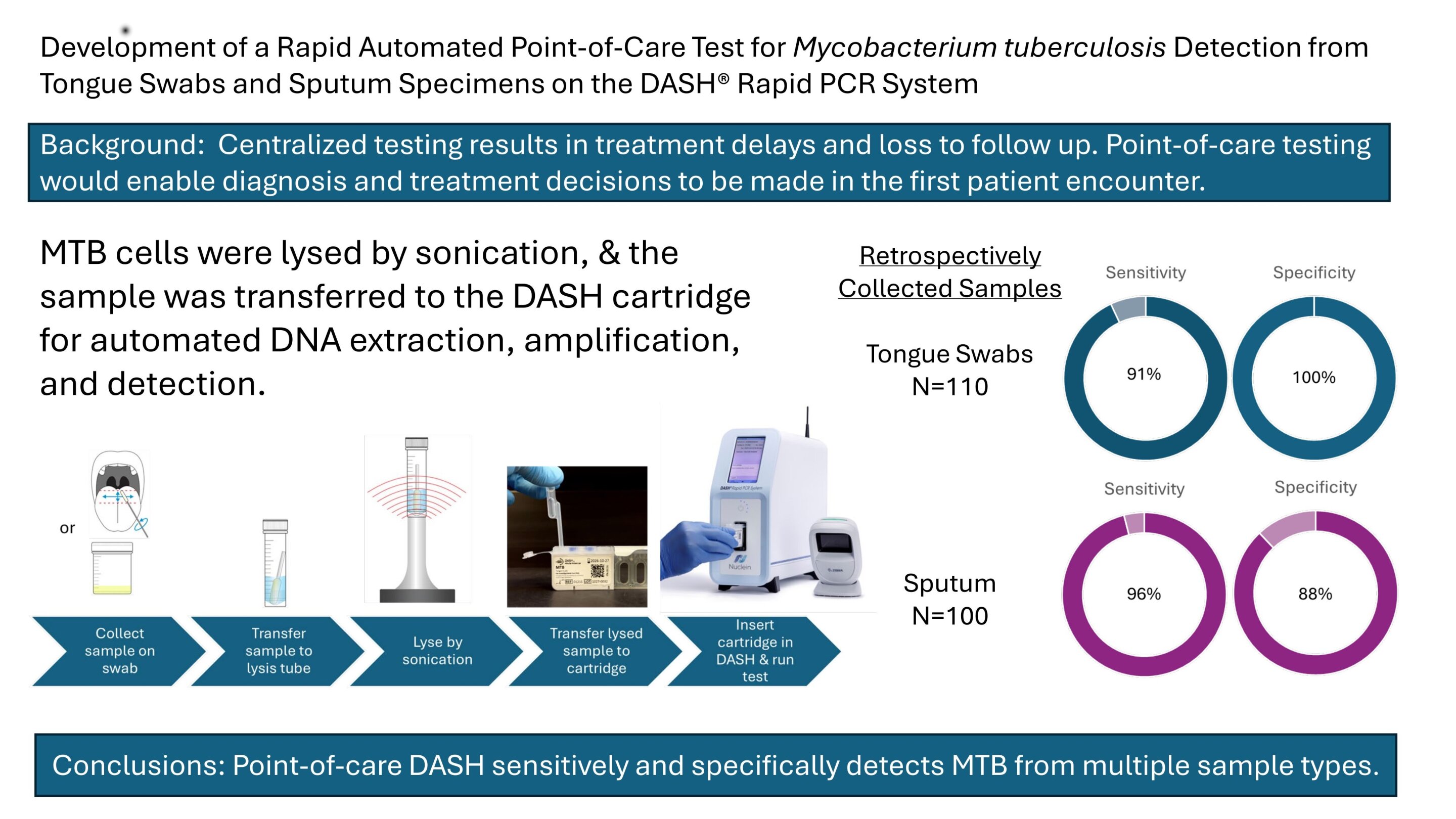
The new test works with the existing DASH (Diagnostic Analyzer for Specific Hybridization) Rapid PCR System, a device previously developed at Northwestern that can run testing at the point of care. The test detects Mycobacterium tuberculosis (MTB), the bacteria that cause tuberculosis, from a simple specimen collected by tongue swab or from sputum—the thick mucus made in lungs and airways.
Because results can be rapidly obtained in the field, the system enables patients in remote areas who lack access to traditional medical offices to receive testing and care in a single medical visit.
The study was published (Nov. 12) in the journal Open Forum Infectious Diseases.
"Diagnosis is the weakest link in tuberculosis care. Tuberculosis diagnosis can be complex and time-consuming," said Northwestern's Sally McFall, the study's corresponding author. "Bacterial culture is the gold standard. It has high sensitivity, but the time-to-result is lengthy, and it is technically challenging and prone to contamination."
Current testing requires sputum that offers the highest tuberculosis bacteria load, considered the "gold standard" for testing. Many patients, however, cannot produce enough sputum to test, so researchers pursued testing via tongue swab to offer another rapid-result option.
McFall is a research professor of biomedical engineering at Northwestern's McCormick School of Engineering and the codirector for the Center for Innovation in Global Health Technologies (CIGHT), which developed both the DASH system and the new MTB test.
Source link