This article has been reviewed according to Science X's editorial process and policies. Editors have highlighted the following attributes while ensuring the content's credibility:
For patients with suspected sepsis, early antibiotic treatment is considered critical for reducing mortality. But a new study has found that earlier treatment with antibiotics in an ambulance did not reduce mortality compared with standard sepsis care in the emergency department (ED), researchers reported in JAMA.
Sepsis occurs when the immune system overreacts to an infection, triggering a chain of events that can rapidly lead to tissue damage, organ failure and death. Mortality rates range from 20% to 50%, making it a leading cause of in-hospital death. Each hour of delayed treatment can reduce survival.
Because of how rapidly sepsis can become life-threatening, international guidelines recommend early administration of antibiotics. But delays in receiving appropriate antibiotics at the hospital are common in patients with sepsis and suspected sepsis. With nearly half of patients with sepsis transported to the hospital by paramedics, guidelines conditionally recommend antibiotic treatment in an ambulance for patients with an expected in-hospital evaluation time of 60 minutes.
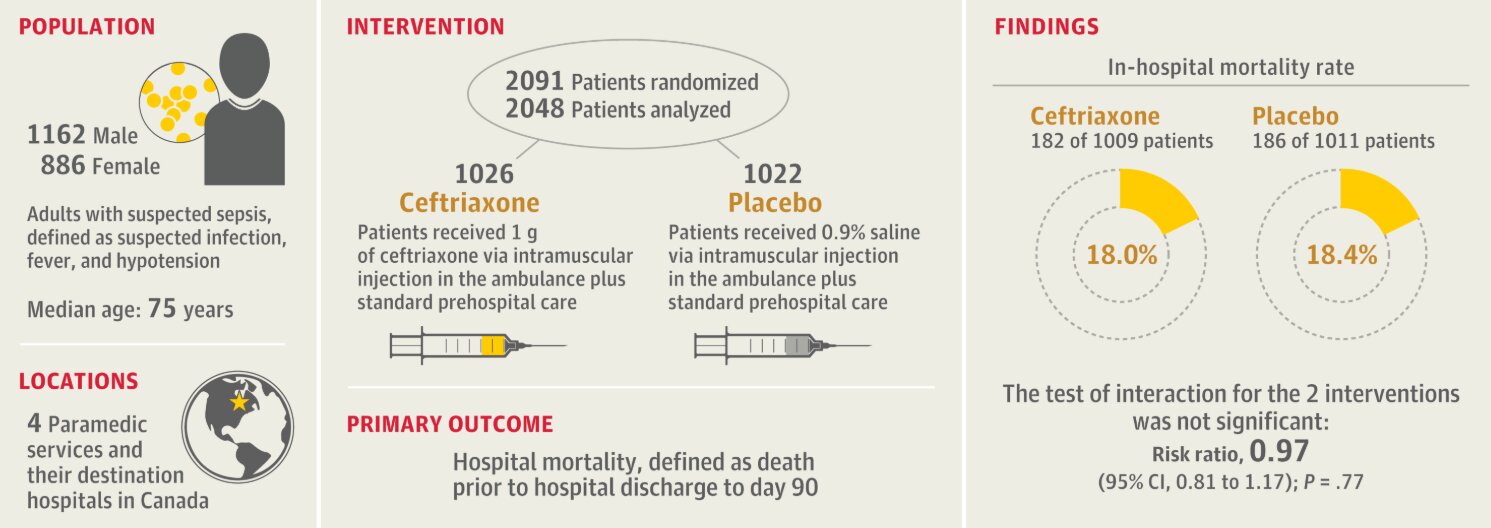
To evaluate this recommendation, which is based on low-certainty evidence, a team of Canadian researchers conducted a randomized trial with four large paramedic services and their destination hospitals in Ontario. They randomly assigned 2,048 patients with suspected sepsis—defined as suspected infection, fever and hypotension (low blood pressure)—to receive a shot of ceftriaxone or placebo during the ambulance ride, with all patients receiving standard prehospital care and intravenous (IV) antibiotics once they arrived at the ED.
Source link