This article has been reviewed according to Science X's editorial process and policies. Editors have highlighted the following attributes while ensuring the content's credibility:
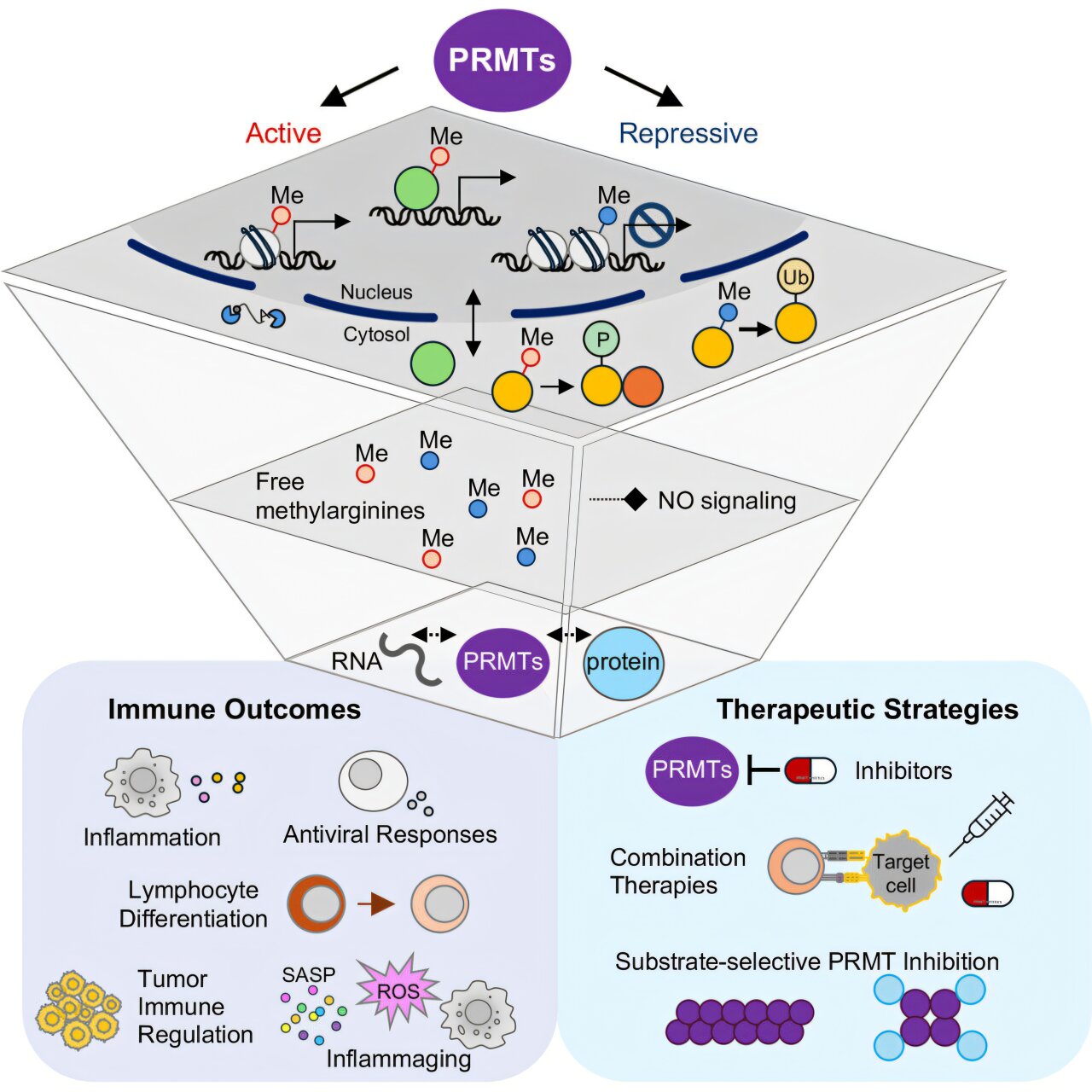
Researchers at the University of Tsukuba have proposed a "three-tiered proteostasis model" for describing immune regulation by protein arginine methyltransferases (PRMTs), comprising protein arginine methylation, free methylarginine generation from protein turnover and methyltransferase-independent interactions with RNA and proteins. The framework integrates emerging evidence linking PRMTs to immune regulation, metabolism, vascular function and age-associated inflammation.
Immune function is regulated not only through gene activation and repression but also through various chemical modifications of intracellular proteins. One such modification is arginine methylation, in which methyl groups are added to arginine residues within proteins.
In the review, researchers synthesize recent evidence showing how PRMT family enzymes regulate gene expression, RNA metabolism, immune signaling, tumor immunity and age-related chronic inflammation. They also discuss potential therapeutic strategies for immune-related diseases. The paper is published in the journal Cell Chemical Biology.
The researchers also highlight the regulatory roles of PRMTs via mechanisms independent of their methylation activity. To integrate these distinct roles of PRMTs, the researchers propose a three-tiered framework comprising methylation of histone and nonhistone proteins (Layer 1), generation of free methylarginines through the turnover of methylated proteins (Layer 2) and methyltransferase-independent functions in which PRMTs modulate cellular processes through RNA and protein interactions (Layer 3). This model provides insights into the link between intracellular protein regulation and broader physiological processes, including immune responses, metabolism and vascular homeostasis.
, Arginine methylation in immunoregulation: Mechanisms and therapeutic targeting, Cell Chemical Biology (2026).
Source link