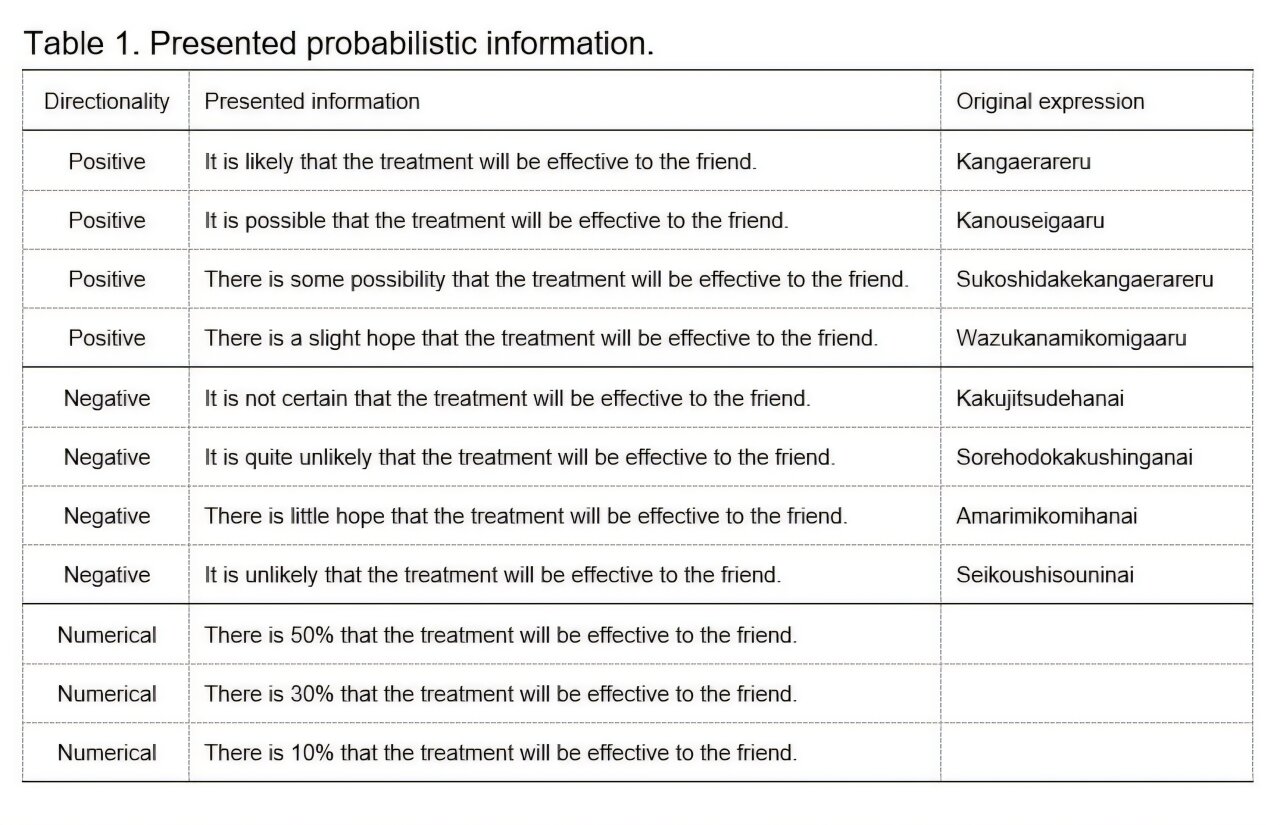
We don't all understand the same words in the same way, and this can affect the choices we make, according to researchers including those from the University of Tokyo. A team sought to compare how people with an autism spectrum disorder (ASD) and people without ASD interpret probability terms. They found that people with and without ASD could be divided into three groups of decision-makers, whose judgment varied depending on the relative influence of positive or negative framing and the numerical probabilities they inferred from verbal expressions. This work highlights the importance of dialogue to check whether people have understood information as intended and to support informed decision-making.
Source link