This article has been reviewed according to Science X's editorial process and policies. Editors have highlighted the following attributes while ensuring the content's credibility:
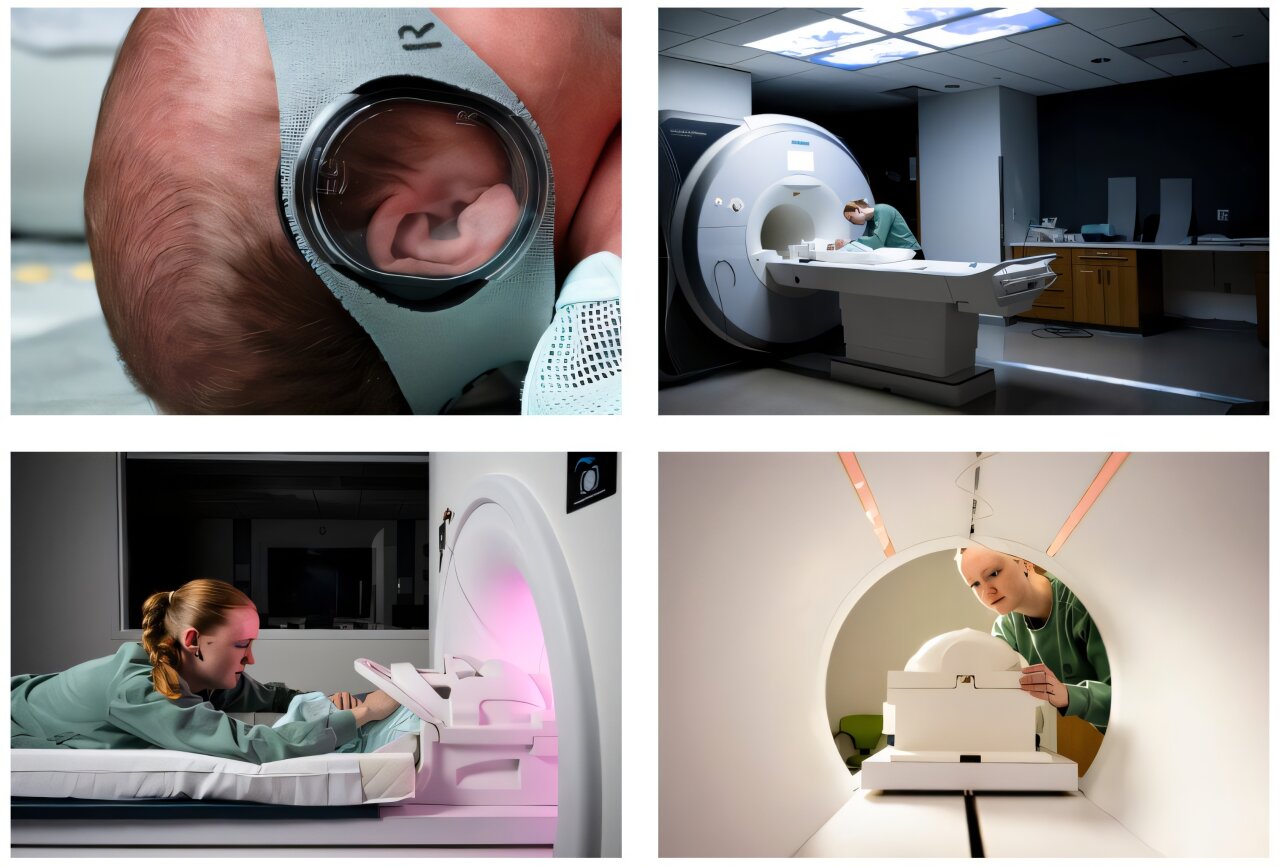
Every new parent knows the difficulty of trying to get a newborn to sleep. Northeastern University researchers have an added challenge: getting a newborn to sleep during a brain scan.
"If a baby is not in a deep sleep, it will wake them," said Georgia Celestin, a third-year doctoral student in Northeastern University's psychology department. "Unfortunately, the very first scan that we do is the loudest of them all."
Some of the youngest and cutest of research subjects, babies between 2 and 4 weeks old, are visiting the Interdisciplinary Science and Engineering Complex on Northeastern's Boston campus. Scientists at the complex are examining how maternal stress and emotion affect nutrients and hormones during and immediately after pregnancy.
"By showing how stress and nutrition in pregnancy may have downstream impacts on the brain, it could motivate stress and/or nutritional interventions during pregnancy before any of this affects the baby," said Brie Reid, assistant professor of psychology and part of the Institute for Cognitive and Brain Health at Northeastern.
The Bridging Emotions and Nutrition Pregnancy (BEAN) study follows women in their third trimester of pregnancy. Participants keep records of their diet, fill out questionnaires and donate samples of blood, saliva and other body fluids.
—so that researchers can see whether the data the moms provided may be connected with brain development in the next generation.
Source link