This article has been reviewed according to Science X's editorial process and policies. Editors have highlighted the following attributes while ensuring the content's credibility:
The immune system's attack on cancer depends on more than cells capable of killing tumors. It also requires a coordinated effort in which some immune cells recognize danger, rally reinforcements and help train other components in a vast disease-fighting network.
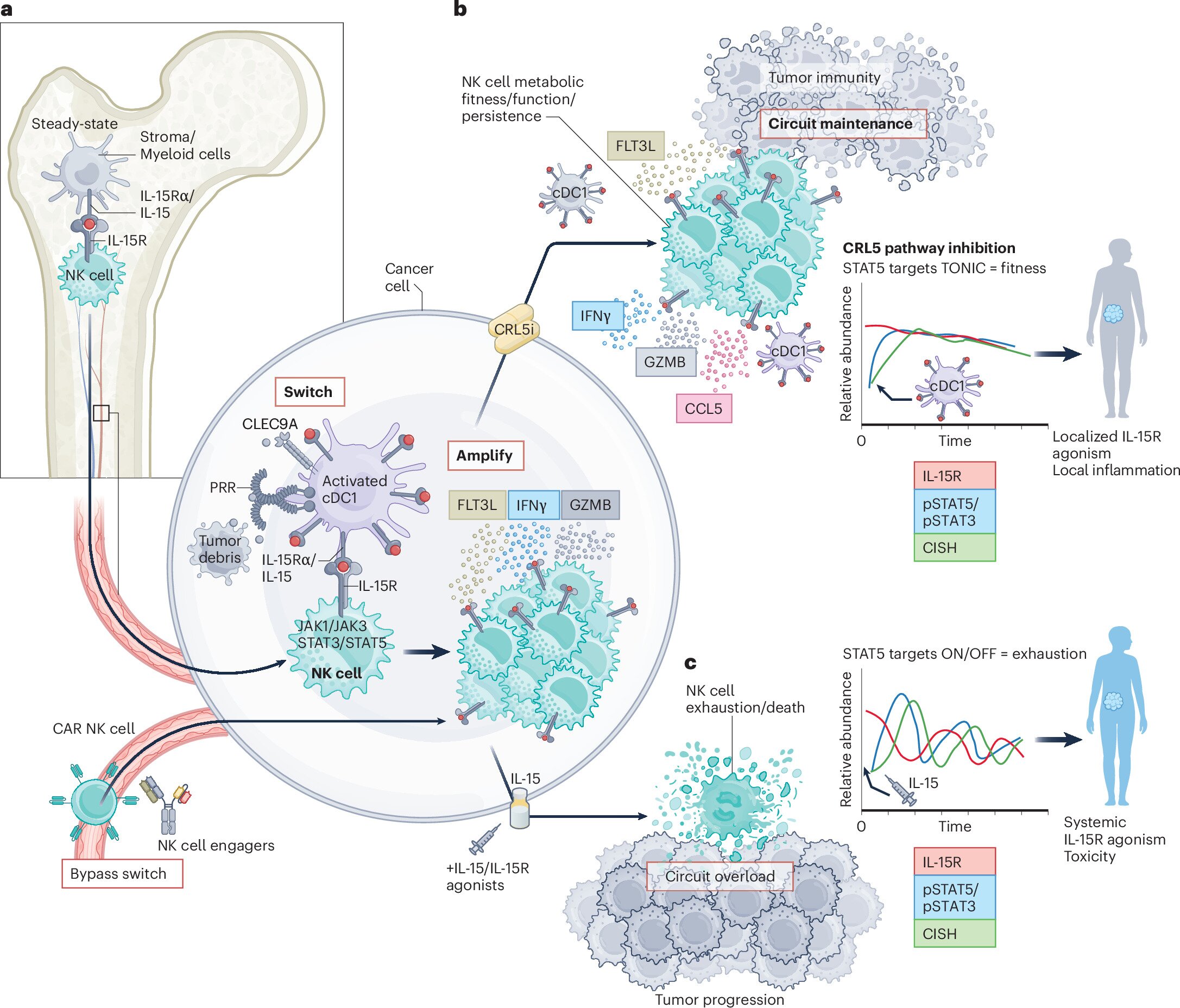
Natural killer cells, or NK cells, are among the body's first responders. Their main job is to kill—but they also have other roles in the onslaught against cancer. They recognize and destroy cancerous cells without first having to be taught to identify a specific tumor. NKs also release chemical signals that recruit and activate other immune cells, helping to set a broader assault in motion.
Dr. Nicholas D. Huntington and colleagues at Monash University and the University of Melbourne in Victoria, Australia, reviewed recent studies on natural killer cells and concluded that NKs help initiate and amplify inflammatory responses needed for an effective attack on tumors.
"Beyond direct tumor killing, NK cells trigger early immune responses by recruiting and activating dendritic cells—DCs—thereby enabling downstream T cell activation," Huntington, lead author of the review, wrote in Nature Cancer.
"However, in established tumors," he continued, "NK cell-DC communication is often disrupted by metabolic stress and immunosuppressive pathways, leading to immune evasion."
That evasion, the tumor's ability to escape the immune system, is a potentially deadly phenomenon under study worldwide. It is also a crucial topic being studied by scientists striving to make immunotherapy more effective.
Source link