This article has been reviewed according to Science X's editorial process and policies. Editors have highlighted the following attributes while ensuring the content's credibility:
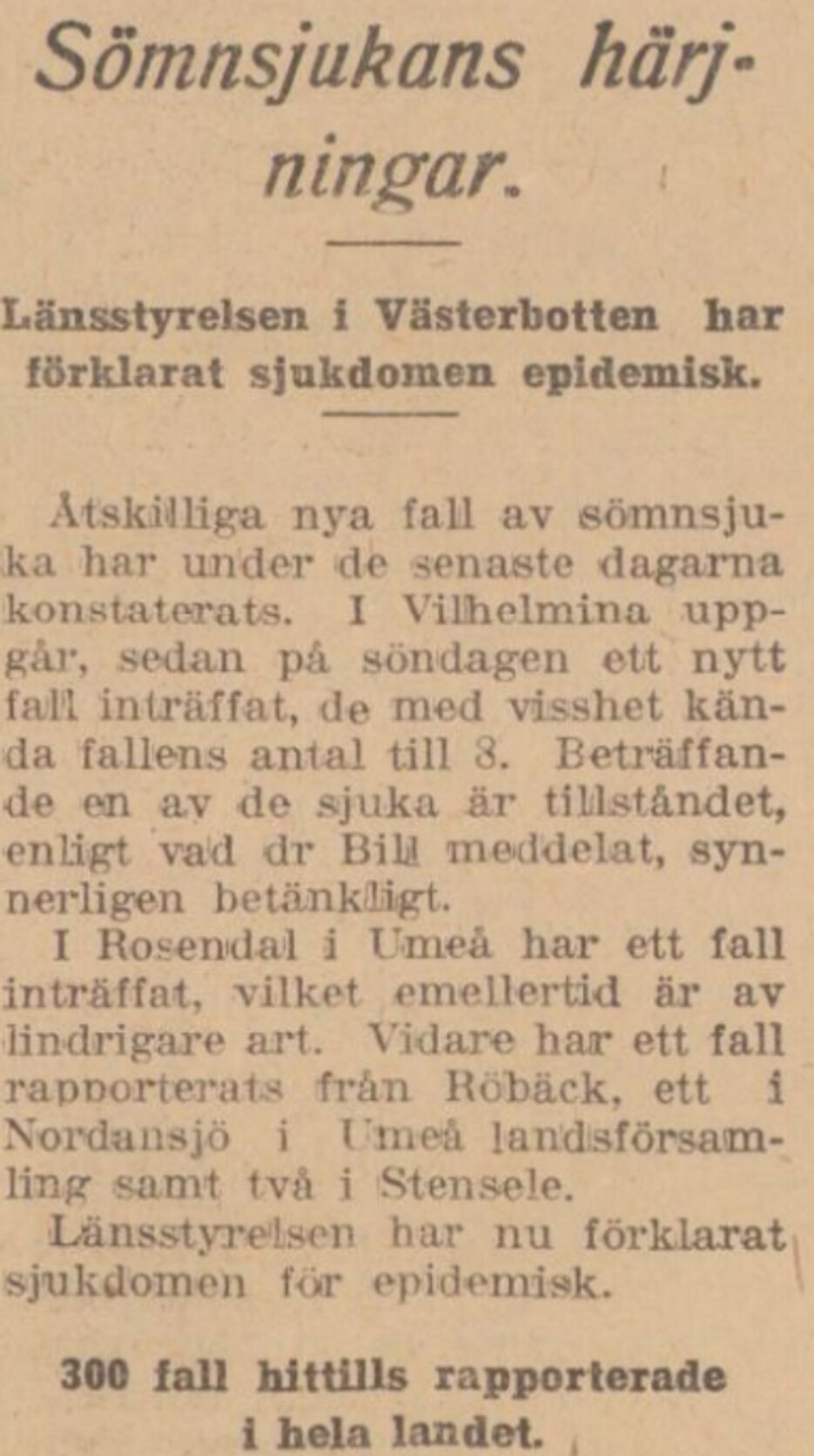
Researchers at CEDAR have studied and perhaps found an important piece in understanding one of the biggest medicinal mysteries of our time: the Sleepy Sickness that swept over Europe in the early 1900´s. During the 1920's, Sweden was one of the hardest-hit countries in the world, with the highest number of reported cases in Västerbotten, and especially the inland community of Vilhelmina.
Lena Karlsson and Erling Häggström Gunfridsson are both researchers at the Centre of Demographic and Ageing Research (CEDAR). On Sept. 8, they published a research article titled "Encephalitis lethargica in Sweden, 1920–1930: national incidence and the 1921 outbreak in northern Sweden," a study that investigates the geographic spread of the mysterious sleepy sickness. The work is published in the journal Epidemiology and Infection.
The disease encephalitis lethargica, or sleepy sickness, emerged around 1926 and disappeared around 1930, and what caused this disease is a mystery to this day. Sweden was one of the hardest-hit countries, which made the researchers Lena and Erling interested in examining how the disease spread in the country. To map the spread, they analyzed national statistics from historical health care reports from SCB, and provincial medical reports from Regionarkivet Västerbotten.
"We wanted to see the geographic spread of the disease, and which other epidemics emerged before and after the outbreak. We also wanted to see if the results could contribute to understanding possible causes and mechanisms of the disease," says Karlsson.
Source link