This article has been reviewed according to Science X's editorial process and policies. Editors have highlighted the following attributes while ensuring the content's credibility:
Researchers at the Francis Crick Institute have tested thousands of possible BRCA1 mutations in mammary gland cells to shed light on which genetic variants confer a high risk of developing breast cancer. Research like this holds potential to improve how genetic results are interpreted in the future.
Mutations in the BRCA1 gene, which normally helps to repair damaged DNA, can increase the risk of breast and ovarian cancer. Despite it being one of the most well-known and well-tested cancer risk genes, some mutations in BRCA1 lack clear evidence about their significance for cancer risk.
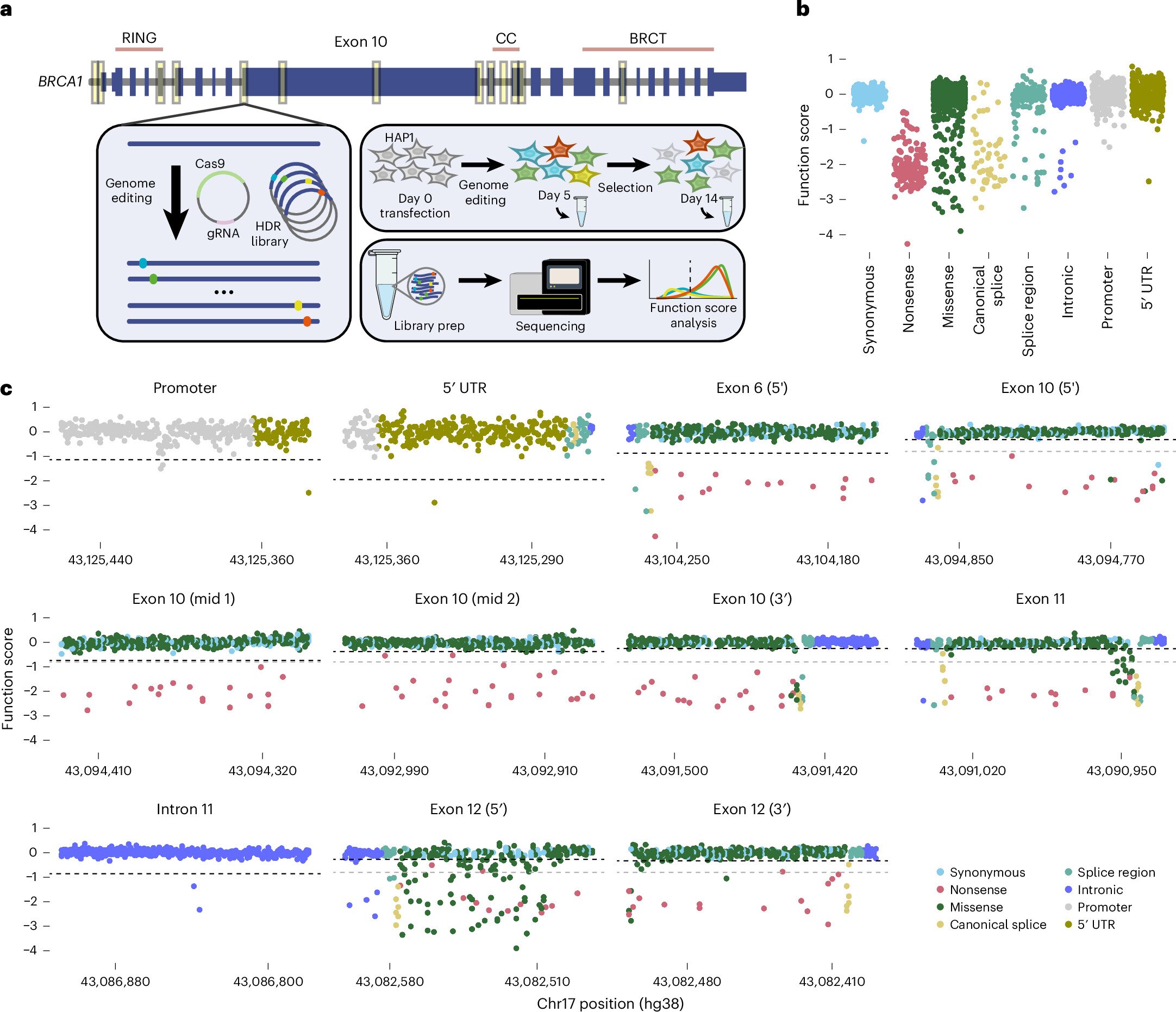
Greg Findlay, who leads the Genome Function Laboratory at the Crick, has developed a method called saturation genome editing, where variants in a gene are introduced one by one into cells in a dish to work out how each variant affects the gene's function.
In research published in Nature Genetics, Findlay and Phoebe Dace, a former Ph.D. student in the lab, used saturation genome editing to test BRCA1 variants. Dace first edited over 4,000 BRCA1 variants into a widely used laboratory cell type, called HAP1 cells, to see which variants affected cell growth. She identified 538 variants that impact gene function through BRCA1's interactions with other key proteins to repair DNA, but also through how the gene is expressed to produce its protein product.
Because the effects of genetic variants can depend on the biological context, the team then wanted to see whether the same patterns held true in cells more relevant to breast cancer, human mammary epithelial cells.
Source link