This article has been reviewed according to Science X's editorial process and policies. Editors have highlighted the following attributes while ensuring the content's credibility:
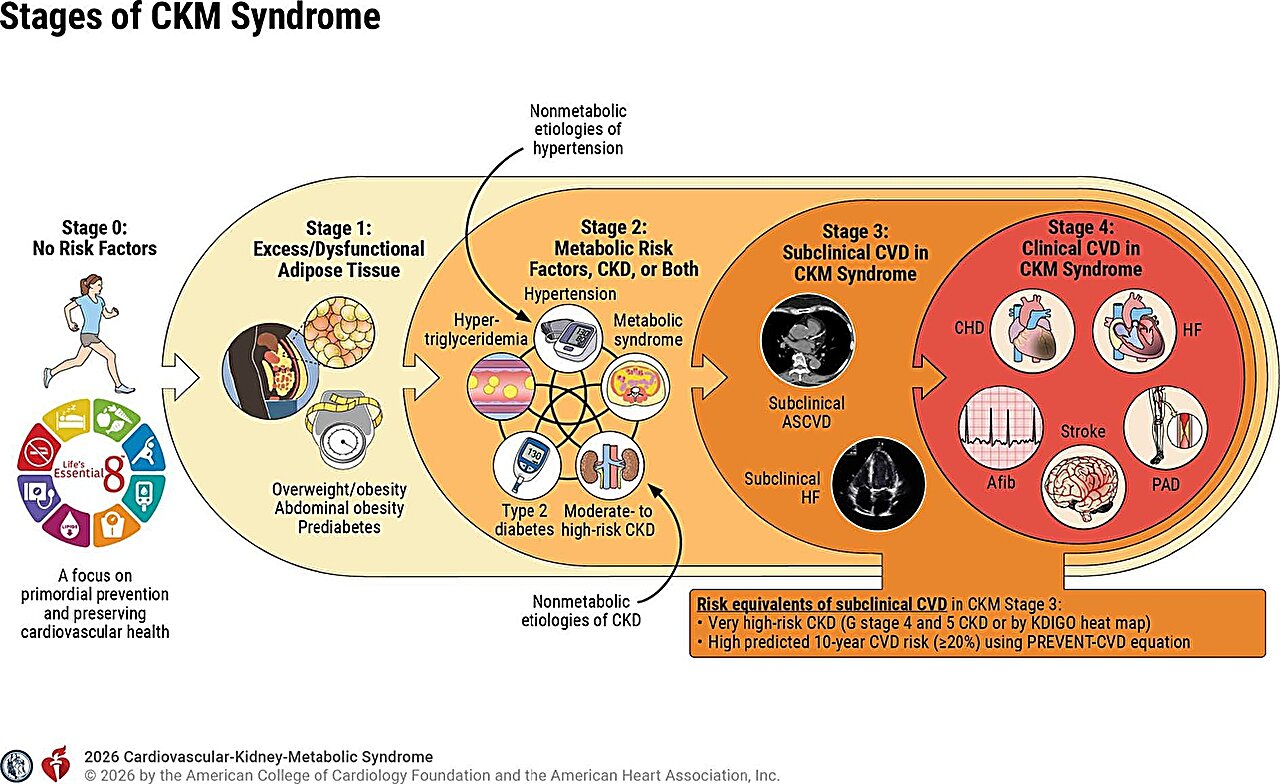
In a survey of health clinics participating in a new initiative to improve care for cardiovascular-kidney-metabolic (CKM) syndrome, most sites reported conducting basic screening for heart, kidney and metabolic risks. However, far fewer are using newer guideline-recommended tools such as the CKM syndrome staging framework and the American Heart Association's PREVENT (Predicting Risk of cardiovascular EVENT) equations, according to new, preliminary research presented at the American Heart Association's Scientific Sessions 2026, held Nov. 6–9 in Chicago.
The American Heart Association defines cardiovascular-kidney-metabolic syndrome as a multisystem health disorder due to connections between obesity, type 2 diabetes, chronic kidney disease and heart disease. Nearly 90% of U.S. adults have at least one of the components of CKM syndrome, including high blood pressure, abnormal cholesterol, high blood glucose (sugar), excess weight, reduced kidney function or related heart conditions.
In 2025, the association launched a learning collaborative and quality improvement initiative focused on the adoption of a CKM-coordinated care model in about 150 clinical sites across the U.S. Participating sites in the initial launch were selected based on factors such as the burden of CKM syndrome in their community, structural and societal influences, rural location and health organization type.
All participating clinics were surveyed between August 2025 and June 2026 to document a baseline of the implementation status of the initiative recommendations. A total of 97 clinical sites completed the standardized questionnaire.
Source link