This article has been reviewed according to Science X's editorial process and policies. Editors have highlighted the following attributes while ensuring the content's credibility:
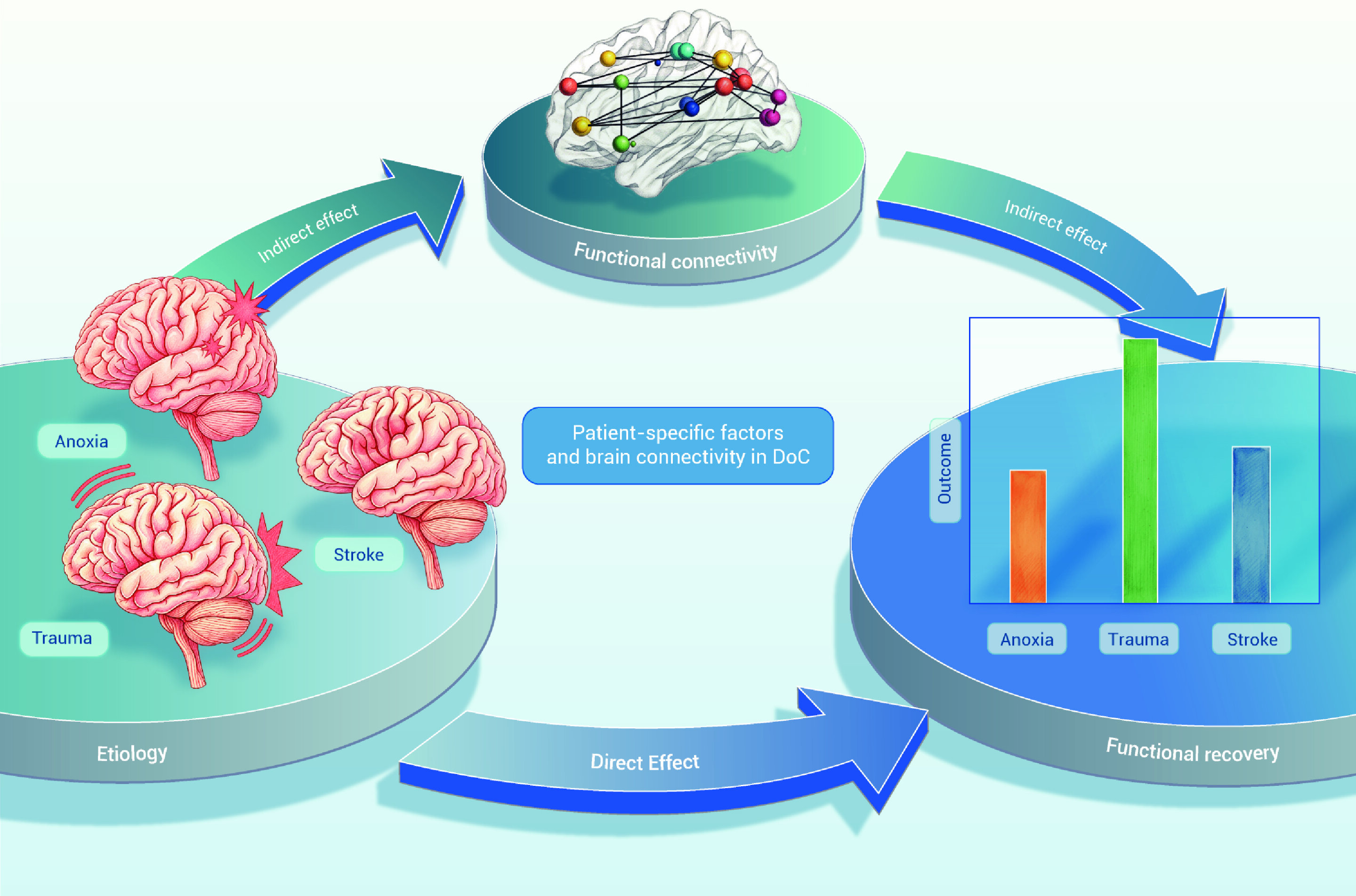
Predicting recovery for patients with disorders of consciousness (DoC) is exceptionally difficult due to the vast differences in injury causes and demographic backgrounds. In a new study published in The Innovation Life, researchers from the Institute of Biophysics of the Chinese Academy of Sciences, Beijing Tiantan Hospital and Capital Medical University have revealed the connection between clinical characteristics (e.g., etiology, age and time since injury) and brain network connectivity. These characteristics play a crucial role in patients' functional recovery.
Clinical assessment results showed that patients with traumatic brain injury (TBI) exhibited higher consciousness levels and better long-term functional recovery than patients with anoxic brain injury. Additionally, younger age was associated with higher consciousness levels and better recovery outcomes. Among the patients included in this study who were at least 28 days post-injury, the time since injury showed no significant correlation with either of these two indicators.
To investigate the neural basis of these differences, the researchers analyzed resting-state functional magnetic resonance imaging (rs-fMRI) data from 128 patients with disorders of consciousness (DoC) and 40 healthy controls. They examined the functional connectivity among 22 cortical regions across six major brain networks, including the default mode network (DMN).
Integrating rs-fMRI with clinical assessments revealed that different clinical characteristics correspond to distinct brain network connectivity patterns. Specifically, etiology-related internetwork connectivity was closely associated with functional recovery.
Functional connectivity associated with etiology, age and time since injury was distributed across different brain networks with minimal overlap.
Source link