This article has been reviewed according to Science X's editorial process and policies. Editors have highlighted the following attributes while ensuring the content's credibility:
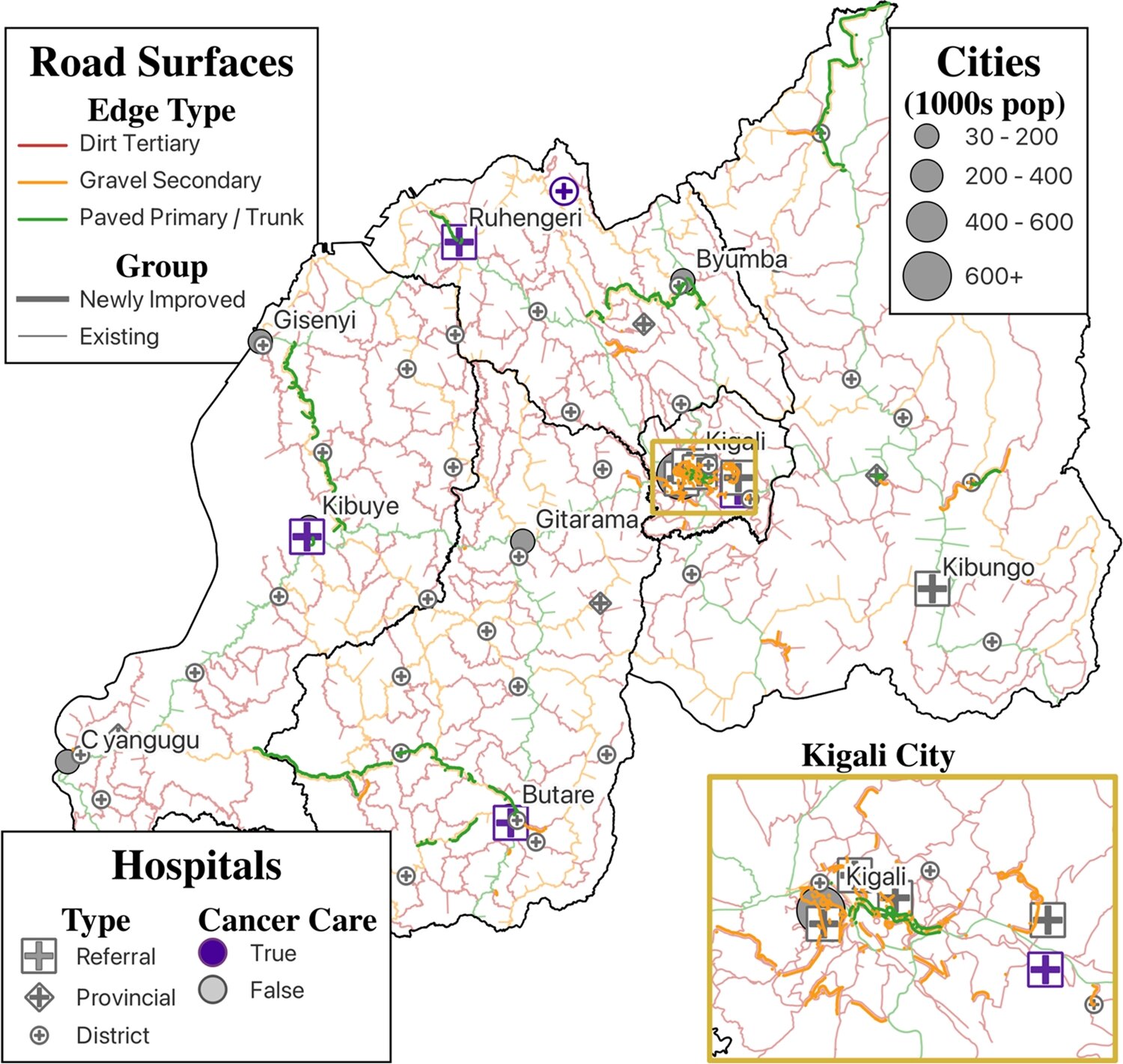
While studying health systems around the world during a yearlong fellowship, Abel Sapirstein traveled to northern Rwanda to visit Butaro Cancer Center of Excellence, which at the time was the country's only publicly accessible facility to offer comprehensive oncology services.
The center was intentionally placed in a rural area to bring specialized cancer care closer to patients who might otherwise struggle to reach it.
While staying in Rwanda's capital, Kigali, Sapirstein prepared to make the roughly 60-mile (97-kilometer) trip north to Butaro. Before leaving, he received unexpected advice: Get there before it rains.
The journey from Kigali to Butaro takes about two hours in good conditions. But heavy rains often wash out roads along the way, making the journey far less predictable and, in many cases, impossible.
For Sapirstein, the travel advice raised a more fundamental question about health care access: What good is care if patients can't reach it?
D. student in Georgia Tech's H. Milton Stewart School of Industrial and Systems Engineering (ISyE), would eventually turn that question into an optimization problem. Working with ISyE faculty members Lauren Steimle, the Harold R. and Mary Anne Nash Early Career Professor and assistant professor, and Mathieu Dahan, associate professor, he developed a model to help health systems decide how to invest limited resources in cancer facilities and roads while accounting for shortages of oncologists and unpredictable weather.
Source link