This article has been reviewed according to Science X's editorial process and policies. Editors have highlighted the following attributes while ensuring the content's credibility:
Researchers at Roswell Park Comprehensive Cancer Center have shown that hormone-blocking therapies commonly used to treat prostate cancers temporarily activate the body's immune response before those immune effects begin to fade over time. In a new publication in the Journal for Immunotherapy of Cancer, a team led by Kent Nastiuk, Ph.D., reports this discovery—and points the way to a treatment strategy for taking advantage of this window of opportunity.
Nastiuk initiated the current study to better understand how hormonal anti-androgen therapy (ADT) reshapes the immune landscape around prostate cancers.
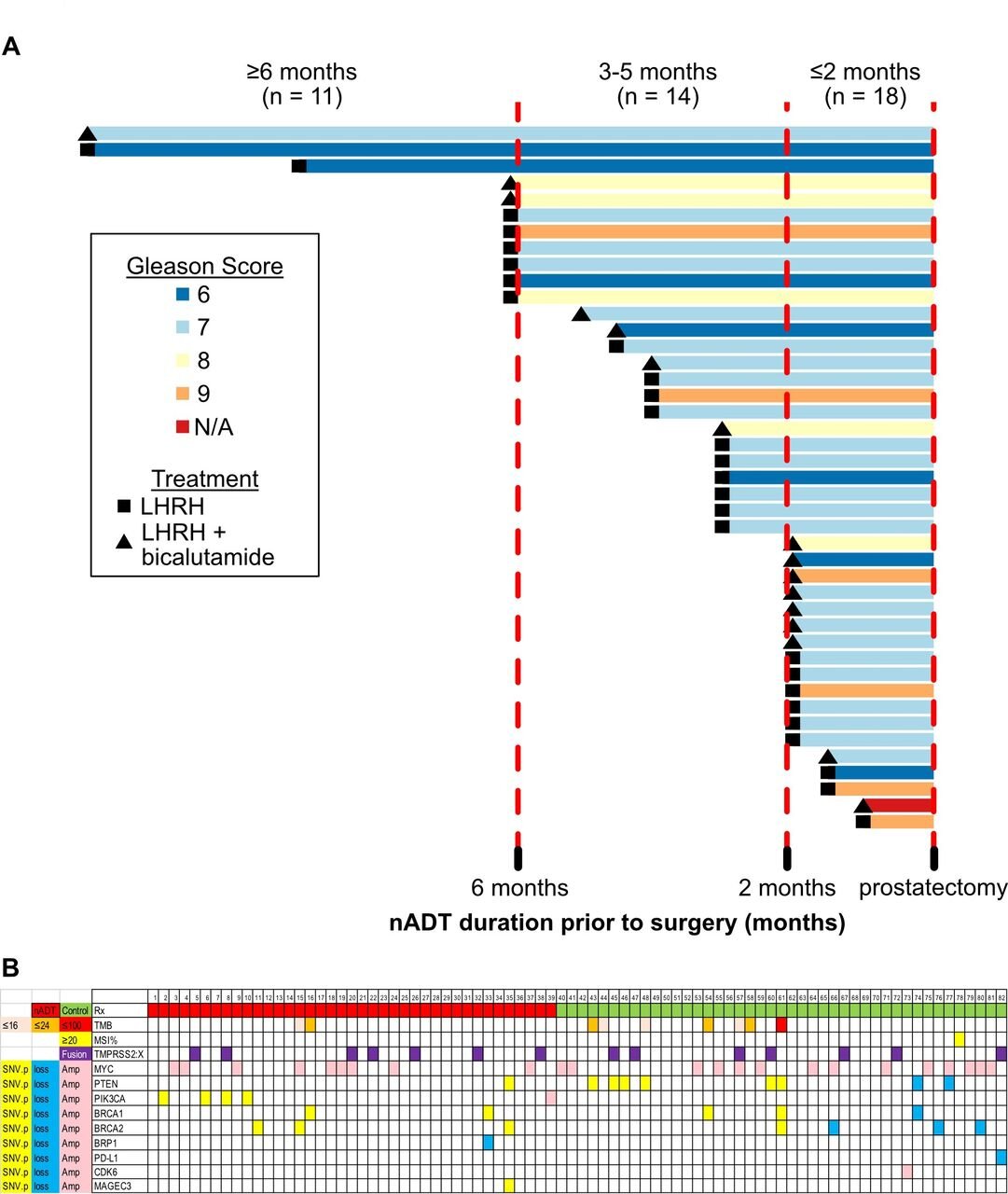
A multidisciplinary team of experts analyzed tumors from men who received ADT prior to prostate surgery. They found that immune and inflammatory pathways, particularly those involved in antigen presentation and adaptive immune response, were increased within months of ADT, activating tumor-killing cytotoxic lymphocytes. While they observed an influx of activated immune cells within several months of ADT, after six months of ADT, inhibitory immune cells increased and cytotoxic lymphocytes decreased. The active immune cells clustered near tumor cells soon after ADT, but were replaced by the inhibitory immune cells in tumors after six months of ADT.
"Our findings identify changes in the prostate tumor that explain established resistance to immunotherapies in patients already resistant to standard anti-androgen therapies," says Nastiuk, assistant professor of oncology in the Departments of Cancer Genomics and Urology.
"We show here that ADT hormonal therapy rapidly activates the immune cells inside the prostate, opening up the possibility that tumors may respond to a combination approach—first treating aggressive tumors with ADT, and then instead of waiting for the cancer to progress, rapidly following up the ADT-activated tumors with immunotherapies to better treat prostate cancer."
Source link