This article has been reviewed according to Science X's editorial process and policies. Editors have highlighted the following attributes while ensuring the content's credibility:
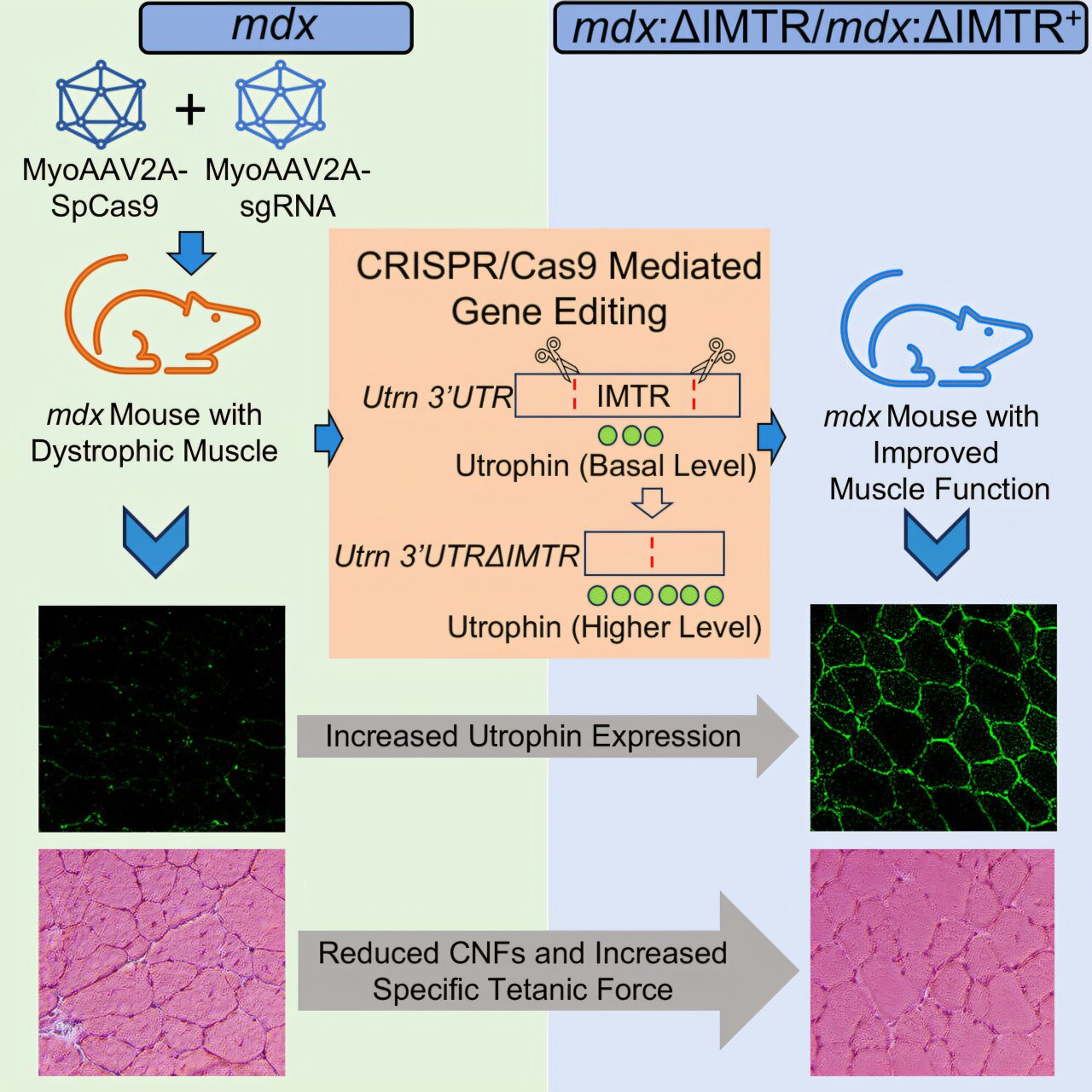
A new use of CRISPR gene editing has halted and even reversed the progression of a model of Duchenne muscular dystrophy, according to work led by scientists at the Perelman School of Medicine. The technique boosted a protein, utrophin, as a stand-in to take on the job of a different protein, dystrophin, which helps maintain healthy muscles and is in short supply in those with muscular dystrophy.
"Unfortunately, there are currently no safe and effective therapies that can cure Duchenne muscular dystrophy, or even treat everyone with the disease equally," says senior author Tejvir S. Khurana, a professor of physiology and a member of the Pennsylvania Muscle Institute. "But we believe that combining a pair of delivery systems already in use has great therapeutic potential and could lead to a significant change in how we treat this disease."
Duchenne muscular dystrophy affects roughly one in 5,000 children and typically leads to their death in their 20s. It is caused by a mutation in the DMD gene, which is responsible for creating the dystrophin protein and its associated partner proteins.
Without these proteins present to maintain and repair muscles during typical movements, muscle cells break down, turning to scar tissue. That results in progressive weakening and loss of muscles all over the body. However, in the absence of dystrophin, a significant amount of utrophin can actually take over what dystrophin is usually tasked with.
Source link